


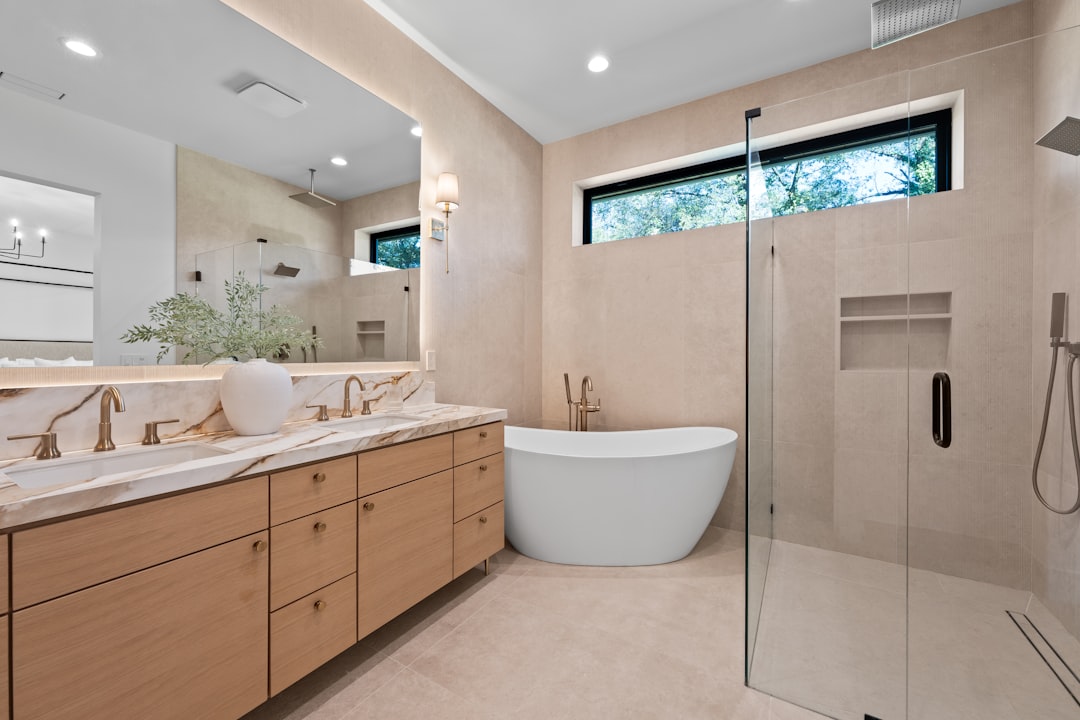
Don’t Slip Up on Your Next Bathroom Remodel
Why So Many Bathroom Remodels Go Wrong (And How to Avoid It)
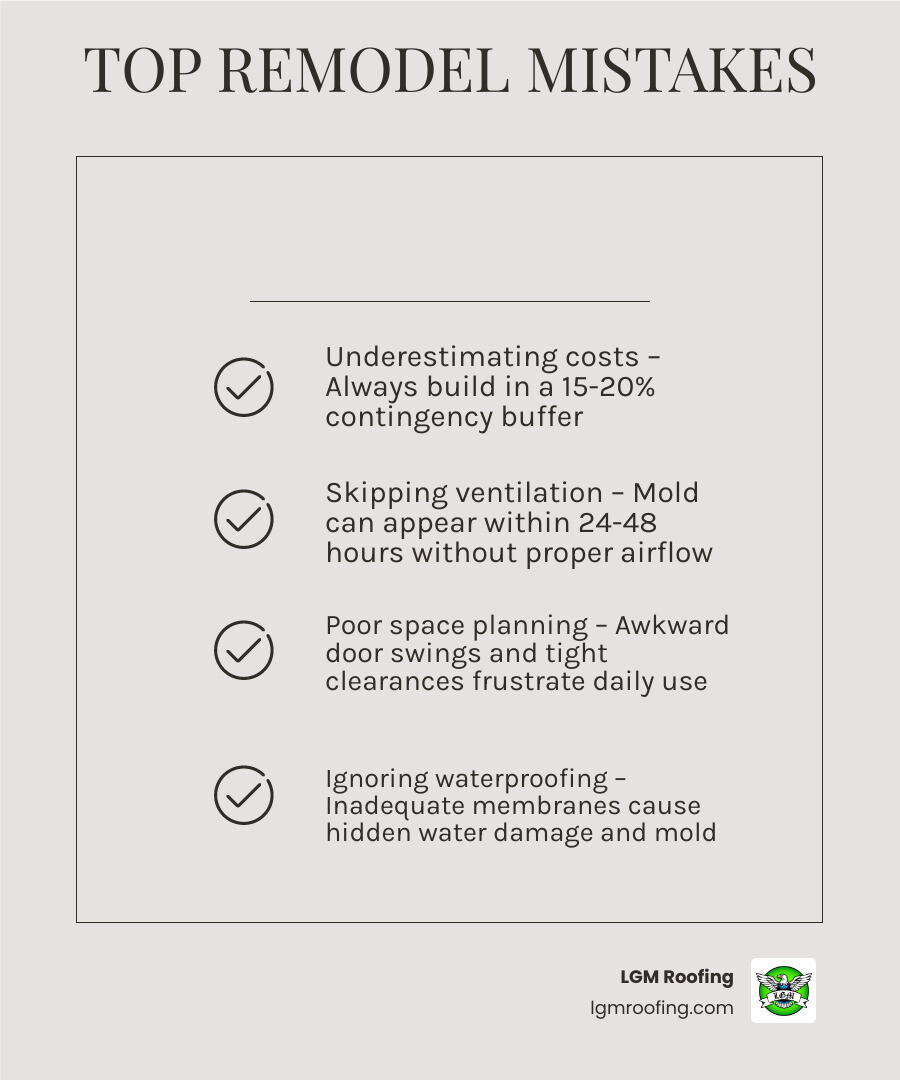
Bathroom remodel mistakes to avoid include underestimating your budget, skipping proper ventilation, choosing the wrong materials, ignoring waterproofing, and poor space planning. Here’s a quick overview:
- Underestimating costs – Always build in a 15-20% contingency buffer
- Skipping ventilation – Without proper airflow, mold can appear within 24-48 hours
- Poor space planning – Awkward door swings and tight clearances make bathrooms frustrating to use daily
- Wrong materials – Non-moisture-resistant materials warp, stain, and deteriorate fast
- Ignoring waterproofing – Inadequate membranes behind tiles lead to hidden water damage and mold
- DIY-ing complex tasks – Plumbing, electrical, and shower tiling require licensed professionals
- Chasing trends over function – Trendy choices date quickly and often sacrifice usability
- Neglecting storage – Too little storage leads to clutter that undoes even a beautiful remodel
Remodeling a bathroom sounds exciting — new tiles, fresh fixtures, a space that finally feels like yours. But industry data tells a sobering story: somewhere between 30% and 50% of homeowners end up blowing past their original budget, and that doesn’t even account for the frustration of a bathroom that looks great but functions poorly. As one contractor put it, a bathroom should be beautiful, but it should also be highly functional. The two aren’t mutually exclusive — but getting both right takes real planning, the right materials, and knowing exactly where DIY ends and professional help begins.
I’m Darwin Mizhirumbay, founder of LGM Roofing and a second-generation contractor with hands-on experience navigating the real-world pitfalls that derail home renovation projects — including the bathroom remodel mistakes to avoid that we see repeatedly across New Jersey homes. In the sections below, I’ll walk you through the most common and costly errors so you can go into your next remodel with confidence.
The Most Critical Bathroom Remodel Mistakes to Avoid
When we step into a home in Bloomfield NJ or Paterson NJ, the first thing we often see is a homeowner with a beautiful Pinterest board but a plan that hasn’t accounted for the “hidden” bathroom. It is easy to pick out a vanity; it is much harder to realize that the framing behind your old tub has been rotting for a decade.
One of the biggest bathroom remodel mistakes to avoid is starting without a comprehensive plan that looks beneath the surface. In April 2026, we are seeing a shift toward “wellness” bathrooms, but no amount of smart lighting can fix a structural issue. We recommend a 20% contingency buffer for every project. Why? Because nearly 68% of renovations uncover hidden issues like corroded pipes or water damage once the walls are opened. If you are feeling overwhelmed, check out our guide on how to navigate bathroom remodeling in West Orange without losing your mind to keep your sanity intact.
Budgeting and Timeline Errors
Many homeowners believe a standard bathroom remodel takes a week. In reality, a standard renovation usually takes 3 to 6 weeks, while complex projects involving layout changes can stretch to 8 or 12 weeks. You must also factor in New Jersey’s permit approval times, which can take anywhere from 2 to 6 weeks depending on your local municipality in Wayne or Piscataway.
Underestimating the budget is equally dangerous. The average budget overrun is about $3,500, often due to overlooked permits, labor costs, or material delivery delays. For a smooth transition from start to finish, see our breakdown of Fort Lee bathroom remodels from permits to perfection.
DIY vs. Professional Intervention
We love a good DIY spirit, but the bathroom is the one room in the house where a small mistake leads to a massive catastrophe. Plumbing is complex—toilet rough-ins are typically 12 inches from the finished wall, and missing that by even an inch can ruin your layout. Electrical safety is another non-negotiable; water and electricity don’t mix, and code compliance requires specific GFCI outlets and moisture-rated fixtures.
If you find yourself saying, “I want to completely redo my master bath who specializes in bathroom remodeling in Bloomfield,” it is likely time to call in a licensed contractor. Professionals handle out-of-level floors and tricky transitions that would leave a DIYer stuck for weeks.
Functional Failures: Layout, Storage, and Material Selection
A bathroom can look like a five-star spa, but if you hit your knees on the vanity every time you sit on the toilet, the remodel is a failure. Spatial planning is where many bathroom remodel mistakes to avoid happen because people prioritize aesthetics over the “workhorse” nature of the room.
| Feature | Porcelain Tile | Ceramic Tile |
|---|---|---|
| Water Absorption | < 0.5% (Very low) | 3% – 7% (Moderate) |
| Durability | High (Chip resistant) | Moderate |
| Best Use | Shower floors & wet areas | Walls & low-moisture areas |
| Slip Resistance | Often higher (DCOF 0.42+) | Varies |
For more local insights, our bathroom remodeling Jersey City NJ guide covers how to maximize these functional choices in urban spaces.
Spatial Planning and Bathroom Remodel Mistakes to Avoid
Inches matter in a bathroom. Industry standards and building codes dictate that you need at least 15 inches of clearance from the centerline of the toilet to any side wall or fixture. Furthermore, you should have at least 24 inches of clear space in front of the toilet.
We often see “awkward door swings” where the bathroom door or a cabinet drawer hits the toilet or the vanity. If you’re working with a tight space, consider a pocket door or a sliding barn door (though be careful with barn doors, as they don’t always provide the sound privacy people want for a bathroom). For those on a budget, we have compiled economical bathroom remodel Montclair NJ tips to help you plan your layout without breaking the bank.
Material Selection and Bathroom Remodel Mistakes to Avoid
Choosing the wrong materials is a recipe for a “renovation regret” within two years. For example, using unsealed natural stone or porous wood vanities in a high-humidity environment will lead to staining and warping.
We always recommend porcelain tile for wet areas. It has a water absorption rate of less than 0.5%, making it far superior to ceramic. Look for a Dynamic Coefficient of Friction (DCOF) rating of at least 0.42 to ensure the floor isn’t a slip hazard when wet. Quartz is an excellent, non-porous alternative to marble for countertops. For more on picking the right finishes, read our best bathroom remodeling Montclair NJ tips.
Technical Pitfalls: Ventilation and Waterproofing
The most expensive bathroom remodel mistakes to avoid are the ones you can’t see. Ventilation and waterproofing are the “insurance policies” of your renovation. If these fail, you aren’t just looking at a cosmetic fix; you’re looking at mold remediation and structural repairs.
Ventilation and Lighting Essentials
A bathroom without a fan is a mold factory. You need at least 1 CFM (cubic foot per minute) of airflow per square foot of space. A standard 50-square-foot bathroom needs a minimum 50 CFM fan, but we often suggest 80-100 CFM for better moisture clearing. Without this, mold can begin to grow within 24 to 48 hours of moisture exposure.
Lighting is the other half of the equation. Don’t rely on a single overhead light that casts shadows on your face while you’re at the mirror. Layer your lighting:
- Ambient: General overhead light.
- Task: Sidelights or sconces at the vanity for grooming.
- Accent: Soft lighting in niches or under cabinets for a “spa” feel.
Proper planning here prevents the “dungeon” feel common in older NJ basements. Learn more in our bathroom remodeling Bloomfield NJ guide.
Waterproofing and Drainage
Standard drywall—even the “green board”—is not enough for a shower. You need a continuous waterproof membrane behind your tiles. We’ve seen too many DIY shower pans leak because the drain slope was slightly off, leading to standing water and eventual rot.
Always ensure your shower floor slopes at least 1/4 inch per foot toward the drain. We also recommend installing plumbing access panels where possible, so if a leak does happen in the future, you don’t have to tear out your beautiful new tile to fix it. For emergency help or quick turnarounds, see our fast bathroom remodeling Jersey City tips.
Frequently Asked Questions about Bathroom Remodeling
What is the most common bathroom remodel mistake?
The most common mistake is inadequate waterproofing in the shower area. This leads to hidden water damage, mold, and structural deterioration that can cost thousands to fix. Underestimating the budget and failing to include a contingency fund is a close second.
How much contingency should I include in my bathroom budget?
While some suggest 10%, we strongly recommend a buffer of 15% to 20%. In older New Jersey homes, it is almost assured that you will find outdated pipework, improper previous electrical work, or rotted subflooring once the demolition begins.
Why is bathroom ventilation so important?
Ventilation removes moisture, odors, and airborne particles. Without at least 1 CFM of airflow per square foot, steam settles on walls and ceilings, leading to peeling paint, warped cabinetry, and visible mold within 48 hours.
Conclusion
Avoiding bathroom remodel mistakes to avoid comes down to one thing: preparation. By prioritizing function, choosing moisture-resistant materials, and ensuring your technical “bones”—like ventilation and waterproofing—are solid, you create a space that will last for decades.
At LGM Roofing, we bring over 25 years of experience as a leading New Jersey general contractor to every project. Whether you are in Wayne, Paterson, or Bloomfield, we understand the unique challenges of local building codes and the specific needs of NJ homes. If you’re ready to start your project with a team that values excellence and exceptional service, check out our Belleville bathroom remodeling: a fresh start for your home guide or get more info about our general contracting services today. Let’s build something beautiful together—without the “slip-ups.”
