


A–Z Guide to How Old Siding Affects Energy Efficiency
Why How Old Siding Affects Energy Efficiency Is a Problem New Jersey Homeowners Can’t Ignore
How old siding affects energy efficiency is one of the most underestimated problems in older homes. Homeowners often blame windows or attic insulation when rooms feel drafty, utility bills climb, or the house never feels comfortable. But the real culprit is often right on the outside walls.
Here is a quick breakdown of how aging siding directly impacts your home’s energy performance:
- Air leaks – Cracked seams, warped panels, and popped fasteners let conditioned air escape and outside air in, forcing your heating and cooling system to work harder year-round
- Moisture damage – Water behind failing siding can soak wall insulation, and wet insulation can lose much of its ability to resist heat transfer
- Broken thermal envelope – Your home’s ability to hold a steady indoor temperature depends on a continuous, sealed wall system; old siding compromises that seal
- Hidden structural damage – Rot, pest intrusion, and failed flashing often go undetected behind aging siding until replacement reveals the extent of the problem
- Increased HVAC load – These issues combine to strain your heating and cooling system, showing up as higher energy use month after month
About 68% of homes built before 1992 lack adequate air sealing and insulation. In New Jersey, where temperatures can swing sharply and coastal humidity adds moisture pressure, siding that is past its prime can become a serious liability. When the full wall assembly is addressed properly, homeowners can often improve comfort, reduce drafts, and support better energy performance.
I’m Darwin Mizhirumbay, founder of LGM Roofing, and through years of hands-on exterior work across New Jersey I’ve seen how old siding affects energy efficiency in ways that go far beyond what’s visible from the curb. In the guide below, I’ll walk you through the science of heat loss, common warning signs, and practical upgrade decisions so you can make a confident, informed choice for your home.
How old siding affects energy efficiency from A to Z
Old siding affects energy efficiency by weakening the outer layer of your home’s thermal envelope. That sounds technical, but the idea is simple: your home is supposed to separate indoor comfort from outdoor weather. When siding cracks, loosens, warps, absorbs moisture, or pulls away from trim, that separation becomes less reliable.
Your siding is not just decoration. It helps protect the wall system from wind, rain, sun, snow, pests, and temperature swings. When it starts failing, your home can lose heat in winter, gain heat in summer, and feel drafty even when the windows are closed.
In New Jersey homes, especially older homes in Wayne, Paterson, Bloomfield, Piscataway, and surrounding communities, we often see energy problems caused by a combination of:
- Aged siding materials
- Gaps at seams and corners
- Loose or missing panels
- Failed caulking around trim
- Poor window and door flashing
- Wet or compressed insulation
- Rotted sheathing
- Missing or damaged house wrap
- Storm-related movement or impact damage
The frustrating part is that siding-related energy loss is not always dramatic at first. It may show up as one cold bedroom, one wall that feels damp, or a furnace that seems to run longer than it used to. Small leaks add up quietly, like a slow drip in a faucet – only this drip is leaking comfort.

How old siding affects energy efficiency through air leaks and heat transfer
Air leakage is one of the biggest ways old siding hurts home performance.
When siding is in good condition and installed as part of a proper wall assembly, it helps reduce wind pressure against the inner layers of the wall. But when panels crack, seams separate, fasteners pop, or boards warp, outdoor air can move behind the siding and into vulnerable gaps around sheathing, windows, doors, vents, and utility penetrations.
In winter, that means heated indoor air escapes and cold outdoor air sneaks in. In summer, cooled indoor air escapes while hot, humid air enters. Your HVAC system then works harder to make up the difference.
Common air-leak trouble spots include:
- Gaps where siding meets window trim
- Loose corner posts
- Cracked seams between panels
- Warped boards pulling away from the wall
- Openings around hose bibs, vents, pipes, and electrical fixtures
- Poorly sealed transitions between siding and roofing
- Areas where siding has shifted after wind or storm exposure
Heat transfer is also part of the problem. Most siding materials have limited insulation value by themselves. The real energy performance comes from the layers behind the siding: insulation, air sealing, sheathing, house wrap, and flashing. When old siding no longer protects those layers, the wall loses its ability to slow heat movement.
The result? Cold walls in January, hot walls in July, uneven room temperatures, and a heating or cooling system that seems like it is always trying to catch up.
How old siding affects energy efficiency through moisture-damaged insulation
Moisture is the other major energy thief.
Insulation works because it traps air. That trapped air slows heat transfer. When water gets into the wall cavity and soaks insulation, those air pockets collapse or fill with moisture. Wet insulation can lose much of its thermal resistance, and in severe cases it may perform almost as if it is not there.
Failing siding can allow moisture intrusion through:
- Cracks and holes
- Separated seams
- Failed caulk joints
- Poor flashing around windows and doors
- Missing or damaged house wrap
- Storm-lifted panels
- Rotted trim or sheathing
Once moisture gets behind the siding, it may not dry quickly. In New Jersey’s humid summers and wet storm seasons, trapped dampness can linger. That can lead to musty odors, mold risk, wall cavity dampness, peeling interior paint, and reduced indoor comfort.
Moisture also affects structure. Damp sheathing and framing can soften, rot, or attract pests. When that happens, the energy problem becomes a building durability problem too.
Signs your siding is hurting home performance
If your siding is affecting energy efficiency, your home will usually give you clues. Some are obvious. Others are sneaky.
Watch for these warning signs:
- Drafts near exterior walls, outlets, windows, or baseboards
- Rooms that are colder or hotter than the rest of the house
- Rising utility bills without a clear reason
- Cold interior wall surfaces in winter
- Hot wall surfaces during sunny summer afternoons
- Visible cracks, gaps, holes, or missing siding
- Siding that is buckling, bubbling, or pulling away
- Peeling paint or wallpaper inside the home
- Water stains on interior walls or ceilings
- Mold, mildew, or musty odors near exterior walls
- Soft or spongy siding when pressed
- Separating seams or loose trim
- Repeated repairs in the same areas
- Pest entry points or insect damage
- Dark streaks, rot, or swelling near windows and doors
If you are noticing several of these at once, your siding may be past the “minor repair” stage. For a deeper look at exterior warning signs, read our guide: Don’t Let Your House Shed Its Skin: Signs You Need New Siding.
Why the full wall assembly matters more than siding alone
Here is the part many homeowners miss: siding is important, but siding alone does not make a home energy-efficient.
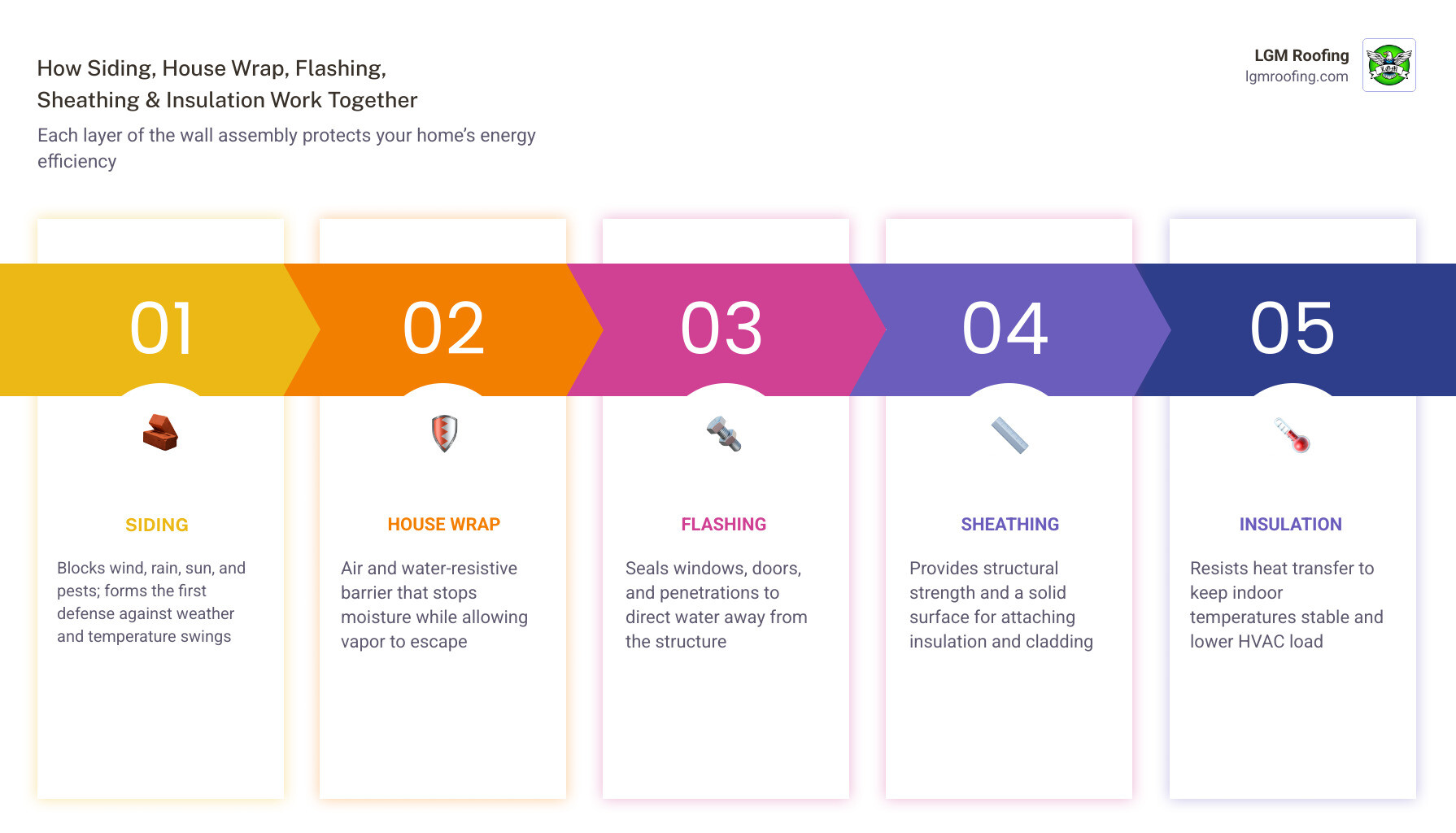
Your exterior wall is a system. We call it the wall assembly. It includes:
- Exterior cladding, or siding
- Drainage space behind the siding
- House wrap or another water-resistive barrier
- Flashing around windows, doors, and transitions
- Sheathing
- Air sealing
- Insulation
- Interior drywall and finishes
- Vapor control, depending on the wall design
When these layers work together, the home stays drier, tighter, and more comfortable. When one layer fails, the rest of the system can suffer.
Siding is the shield, not the whole insulation system
Siding is the shield. It takes the first hit from rain, wind, sun, snow, and debris. But it is not the whole insulation system.
Most standard siding materials have relatively low standalone R-value. That does not mean siding is unimportant. It means siding helps energy efficiency mostly by protecting what is behind it.
Good siding helps:
- Deflect rain and snow
- Reduce wind pressure on the wall
- Protect the water-resistive barrier
- Preserve dry insulation
- Support a small air space behind the cladding
- Reduce direct weather exposure on sheathing
- Improve the durability of the wall system
Insulated vinyl siding can add measurable R-value, often in the range of about R-2 to R-4 depending on the product. Continuous exterior insulation, such as rigid foam or mineral wool installed beneath siding, can do even more by reducing thermal bridging through studs. But the biggest gains come when air leaks, moisture paths, and insulation gaps are addressed together.
House wrap, flashing, and sheathing control air and water
House wrap, flashing, and sheathing may not be glamorous, but they do the heavy lifting behind the scenes.
The house wrap or water-resistive barrier helps shed water that gets behind the siding. Flashing directs water away from vulnerable areas, especially around windows, doors, roof-to-wall intersections, decks, vents, and trim. Sheathing provides structural support and a surface for air and water control layers.
If these components are missing, damaged, or poorly connected, new siding may look beautiful but still underperform.
Important control points include:
- Window and door flashing that laps correctly
- Sealed penetrations around pipes, vents, and wires
- A continuous water-resistive barrier
- Taped or sealed seams where appropriate
- Drainage gaps or rainscreen details in moisture-prone conditions
- Solid, dry sheathing
- Proper transitions where siding meets roofing, masonry, and trim
In building science terms, the wall must manage bulk water, air movement, heat flow, and vapor. In homeowner terms: keep rain out, stop drafts, slow heat loss, and let the wall dry safely.
Hidden issues often found during siding replacement
One of the biggest benefits of siding replacement is access. Once old siding comes off, the hidden condition of the wall becomes visible.
We often find issues such as:
- Rotted sheathing
- Damp or stained framing
- Missing insulation
- Compressed or poorly fitted batts
- Pest tunnels or nesting
- Failed window flashing
- Old nail holes and air gaps
- Mold-prone damp areas
- Soft trim or framing around openings
- Areas where previous repairs covered symptoms but not causes
These problems can directly affect energy efficiency. For example, compressed insulation does not perform as intended. Gaps around framing can act like tiny wind tunnels. Rotted sheathing can allow air and moisture to move through the wall more easily.
Siding replacement is not just an exterior facelift. It is often the best opportunity to correct the wall assembly before new materials are installed.
When repairs, replacement, and modern materials improve energy performance
Not every siding issue requires full replacement. Sometimes a targeted repair can restore protection. Other times, patching old siding is like putting a Band-Aid on a leaky canoe: technically something was done, but nobody should feel too relaxed.
The right choice depends on the age of the siding, the extent of damage, moisture conditions, and your comfort goals.
For help comparing options, see our homeowner guide: Siding Selection 101: A Homeowner’s Comparison Guide.
| Siding material | Energy-efficiency benefit | Best performance notes |
|---|---|---|
| Insulated vinyl | Adds modest R-value and helps reduce thermal bridging | Works best with proper house wrap, sealed penetrations, and good panel fit |
| Fiber cement | Durable, stable, and strong against weather exposure | Energy gains come mainly from the wall layers behind it |
| Engineered wood | Can provide a wood look with improved consistency | Requires correct moisture management and installation details |
| Natural wood | Offers natural insulating qualities | Needs maintenance to prevent rot, gaps, and moisture intrusion |
| Metal siding | Durable and long-lasting when properly detailed | Should be paired with thermal breaks and quality insulation planning |
| Composite siding | Can offer durability, low maintenance, and weather resistance | Performance depends on product type and full assembly design |
When repair is enough—and when replacement delivers better long-term value
Repair may be enough when damage is isolated. For example, a few cracked panels, one damaged corner, or a localized flashing issue may be addressed without replacing the entire exterior.
Repair is more likely to make sense when:
- Damage is limited to a small area
- The rest of the siding is in good condition
- There is no evidence of widespread moisture intrusion
- The siding is not near the end of its expected lifespan
- Matching materials are available
- The wall behind the damage is sound
Replacement becomes the better long-term option when:
- Damage appears on multiple sides of the home
- Panels are repeatedly cracking, warping, or separating
- Moisture has reached sheathing or insulation
- Repairs are becoming frequent
- The siding is outdated and no longer protecting the wall reliably
- Energy and comfort problems are tied to exterior wall issues
- You want to improve curb appeal and long-term resale confidence
A useful rule of thumb: if you are repairing the same areas again and again, the siding may not be the only problem. The system behind it may need attention.
Siding materials that support better efficiency
The best siding material is not just the one with the highest insulation number. It is the one that fits your home’s design, New Jersey’s climate, maintenance expectations, and wall assembly.
Common energy-supporting choices include:
- Insulated vinyl siding: Adds a layer of foam backing that can improve thermal performance and reduce some heat transfer through framing.
- Fiber cement siding: Known for durability and stability. It does not add much insulation by itself, but it protects the wall assembly well when installed correctly.
- Engineered wood siding: Offers dimensional consistency and a warm appearance, with proper detailing required for moisture protection.
- Wood siding: Has natural insulating qualities but needs careful maintenance to avoid rot, gaps, and water intrusion.
- Metal siding: Durable and weather-resistant, but it should be installed with attention to thermal breaks and moisture control.
- Composite siding: Designed for durability and lower maintenance, with energy performance depending on the product and installation system.
In many homes, the best energy improvement comes from pairing new siding with upgraded house wrap, improved flashing, better air sealing, and sometimes continuous exterior insulation.
Installation practices that make the biggest difference
Installation quality can make or break energy performance.
Even high-quality siding can underperform if the wall layers behind it are not handled properly. The goal is to create a continuous, durable barrier against water and air while allowing the wall to dry appropriately.
The most important installation practices include:
- Installing a continuous water-resistive barrier
- Integrating house wrap with window and door flashing
- Sealing penetrations for vents, pipes, wires, and exterior fixtures
- Repairing damaged sheathing before covering it
- Using proper flashing at roof-to-wall intersections
- Creating a drainage plane behind siding
- Considering a rainscreen gap where moisture management is critical
- Adding continuous exterior insulation when appropriate
- Coordinating siding work with window or door replacement when needed
- Following manufacturer requirements for fastening, clearances, and expansion
New-construction style window integration can also be valuable during major exterior projects because it allows better connection between windows, flashing, and the wall’s air and water control layers.
How much comfort and energy performance can improve
The improvement depends on what is wrong with the current siding and what gets upgraded during the project. If old siding is only faded but the wall system is dry, tight, and well insulated, energy savings may be modest. If the old siding is leaky, wet, poorly flashed, and hiding insulation gaps, the comfort improvement can be significant.
Homeowners may notice:
- Fewer drafts
- More even room temperatures
- Warmer exterior walls in winter
- Less humidity near exterior walls
- Reduced musty odors
- Quieter interiors
- Less HVAC cycling
- Better protection against future moisture damage
- Stronger curb appeal
Research on re-siding with added insulation has shown that exterior insulation upgrades can reduce wasted wall energy and may lower utility use meaningfully when the home is under-insulated. Still, we always encourage homeowners to think beyond the utility bill alone. Comfort, durability, moisture protection, and home value matter too.
New siding can also strengthen buyer confidence because the exterior is one of the first things people notice. For more ideas on exterior improvements that support value, visit How to Boost Your Home Value Without Breaking the Bank.
New Jersey climate factors that change how siding affects efficiency
New Jersey weather is not gentle on siding. We get humid summers, cold winters, wind-driven rain, coastal air in some areas, UV exposure, freeze-thaw cycles, and storms that can loosen materials without leaving obvious damage.
That means siding in New Jersey has to do more than look good. It has to manage moisture, movement, and temperature swings year after year.
Wet, humid, and coastal conditions
Moisture management is a major concern in New Jersey. Heavy rain, humid air, and coastal exposure can all test a siding system.
In wet conditions, siding must shed water quickly while the layers behind it direct any incidental moisture safely down and out. If water gets trapped, the wall may stay damp long enough to damage insulation, sheathing, or framing.
Important moisture-control features include:
- Properly lapped house wrap
- Reliable window and door flashing
- Drainage space behind siding
- Clearances from grade, roofing, and hard surfaces
- Rot-resistant trim details
- Ventilation behind moisture-prone cladding
- Materials suited to local exposure
In coastal or high-humidity areas, drying potential matters. A wall should resist water entry, but it should also be able to release incidental moisture safely. Otherwise, small leaks can become long-term comfort and durability problems.
Cold winters, freeze-thaw cycles, and wind-driven drafts
Winter exposes weak siding quickly.
As temperatures drop, materials contract. If siding is already brittle, poorly fastened, or stressed, cracks and gaps can widen. Wind-driven drafts can push cold air into wall cavities and around openings. Snow and ice can add moisture pressure, especially at transitions and lower wall areas.
Freeze-thaw cycles are especially hard on small cracks. Water enters, freezes, expands, and makes the opening worse. Over time, this can lead to larger gaps, damaged trim, and moisture behind the wall.
If your home feels drafty during Northeast winter weather, the siding and wall assembly deserve attention. Read more here: Will Your Siding Survive a Northeast Winter?.
Hot summers, sun exposure, and color choices
Summer creates the opposite problem: heat gain.
Sun-exposed walls can absorb heat, especially on south- and west-facing elevations. Older siding that has faded, warped, or become brittle may move more under heat stress. Darker colors can absorb more solar heat than lighter colors, although material, insulation, ventilation, and wall design matter more than color alone.
In hot weather, siding problems can increase cooling load by allowing warm, humid outdoor air into the wall assembly and living space. If insulation is damp or gaps are present, your air conditioner has to work harder to keep rooms comfortable.
Shade, roof overhangs, attic ventilation, wall insulation, and siding color all play supporting roles. No single factor does everything, but together they shape summer comfort.
Storm damage that quietly reduces efficiency
Storm damage is not always obvious. A panel can shift slightly. A seam can lift. Flashing can loosen. Wind-driven debris can crack siding in places that are easy to miss from the ground.
After storms, hidden siding damage can allow water and air into the wall system. That means energy efficiency may decline even if the home still looks mostly intact.
Common storm-related issues include:
- Lifted siding panels
- Cracked corners
- Loose trim
- Impact marks from debris
- Damaged flashing
- Open seams
- Water stains behind siding
- Gaps at roof-to-wall transitions
A professional post-storm inspection can catch small problems before they become wall-wide damage. Learn what to look for in How Storms Affect Your Roof and Siding Without You Knowing.
Frequently Asked Questions about how old siding affects energy efficiency
Does new siding alone make a home energy-efficient?
Not usually. New siding helps, but the full wall assembly matters more.
Siding is the outer shield. The biggest energy improvements usually come from combining new siding with air sealing, sound sheathing, quality house wrap, proper flashing, dry insulation, and good drainage details. If the wall behind the siding is leaky or wet, simply covering it with new cladding will not solve the root issue.
That said, new siding can make a noticeable difference when the old siding is cracked, warped, loose, or allowing moisture into the wall. The best results happen when the project addresses both the visible siding and the hidden layers behind it.
What are the biggest signs siding is causing drafts or heat loss?
The biggest signs include:
- Drafts near exterior walls
- Rooms that never stay comfortable
- Higher utility bills without lifestyle changes
- Cold wall surfaces in winter
- Hot wall surfaces in summer
- Visible gaps or cracked seams
- Warped, loose, or missing siding
- Musty smells near exterior walls
- Water stains or peeling interior paint
- Mildew or dark staining on siding
- Repeated siding repairs
- Soft or spongy wall areas
If comfort problems line up with damaged exterior walls, siding may be part of the issue.
Is siding replacement worth it for energy savings and ROI?
Siding replacement is often worth it when you consider the full picture: energy performance, comfort, moisture protection, curb appeal, durability, and home value.
For energy savings alone, the answer depends on the condition of your current siding and wall assembly. If the wall is already tight and insulated, savings may be limited. If the siding is failing and the wall has air leaks, wet insulation, or hidden damage, replacement with proper wall upgrades can create meaningful comfort and performance improvements.
Siding also supports resale confidence. Buyers tend to notice a well-maintained exterior, and a fresh siding system can signal that the home has been protected. Just as important, replacing failing siding can help prevent hidden damage from getting worse.
Conclusion
Old siding can affect energy efficiency in several connected ways: air leaks, heat transfer, moisture intrusion, damaged insulation, weakened sheathing, and increased HVAC strain. But the most important takeaway is this: siding works as part of a system.
To improve comfort and performance, homeowners should look beyond the visible panels and evaluate the full wall assembly, including house wrap, flashing, sheathing, insulation, drainage, and air sealing.
At LGM Roofing, we bring 25+ years of construction experience to exterior projects across New Jersey, including Wayne, Paterson, Bloomfield, and Piscataway. As a GAF Master Elite contractor, we are committed to high installation standards, strong warranty support, and exterior solutions built for long-term protection.
If your home feels drafty, your siding is showing its age, or you suspect hidden wall damage, we can help you understand your options clearly and confidently.
Start here: Explore LGM Roofing siding installation
