
Siding Selection 101: A Homeowner’s Comparison Guide
Learn how to choose the right siding for your home in NJ. Compare materials, boost curb appeal, and ensure durability for Jersey City weather.

Siding Selection 101: A Homeowner’s Comparison Guide
Why Knowing How to Choose the Right Siding for Your Home Can Save You Thousands
Knowing how to choose the right siding for your home starts with matching your material to your climate, budget, maintenance tolerance, and style — here’s a quick breakdown:
- Define your priorities — durability, low maintenance, cost, or curb appeal
- Match material to climate — New Jersey’s freeze-thaw cycles, humidity, and coastal salt air demand resilient materials like fiber cement or insulated vinyl
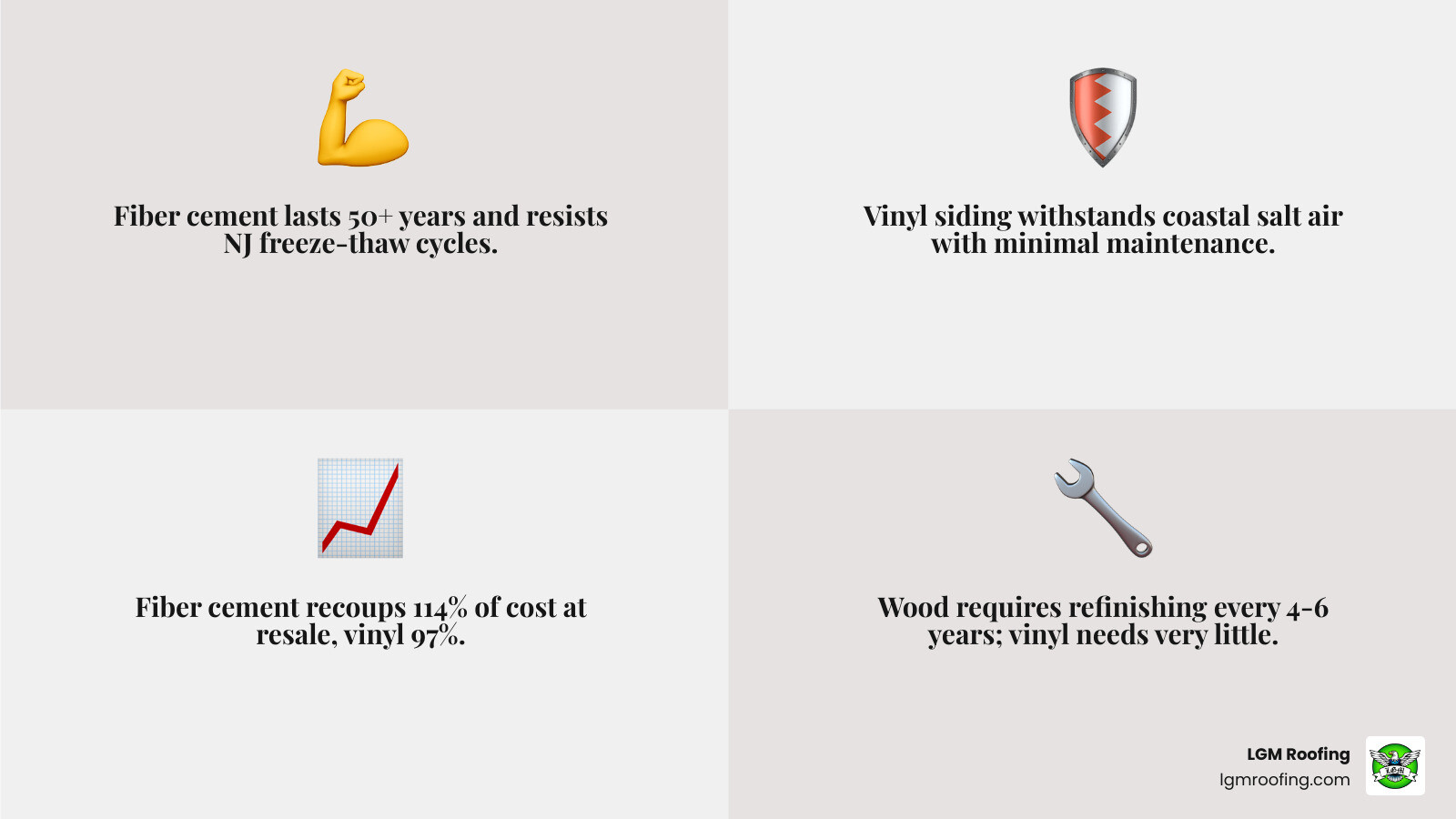
- Consider lifespan vs. upfront cost — fiber cement lasts 50+ years; vinyl lasts 20–40 years
- Think about maintenance — wood needs refinishing every 4–6 years; vinyl and fiber cement need very little
- Factor in resale value — fiber cement siding recoups 114% of its cost at resale, vinyl recoups 97%
- Check your home’s style — board and batten suits modern farmhouse looks; clapboard fits traditional and colonial homes
- Hire a qualified local contractor — proper installation is just as important as the material you choose
Your home’s exterior works hard every single day. It takes the brunt of wind, rain, UV rays, and in New Jersey, everything from nor’easters to scorching summer humidity. The siding you choose doesn’t just determine how your home looks from the street — it determines how well your home holds up over the next several decades. Get it right and you’re protecting your investment, lowering energy bills, and boosting curb appeal all at once. Get it wrong and you’re looking at early replacement, moisture damage, and costly repairs that could have been avoided.
According to a 2022 survey, 76% of homeowners said the possibility of extreme weather had a direct impact on their exterior renovation plans. That number makes sense — especially here in New Jersey, where the climate is genuinely demanding and unforgiving on exterior materials.
I’m Darwin Mizhirumbay, founder of LGM Roofing and a second-generation New Jersey contractor with hands-on experience helping homeowners navigate decisions exactly like how to choose the right siding for your home. Whether you’re replacing worn-out vinyl or upgrading to fiber cement for the first time, this guide will walk you through everything you need to make a confident, informed choice.
I’m looking to upgrade my exterior. How to choose the right siding for your home in Jersey City?
Upgrading your home’s exterior is one of the most impactful renovations you can undertake. In a bustling urban environment like Jersey City, your siding needs to do more than just look good; it needs to withstand the unique pressures of city life, including pollution, wind tunnels between buildings, and the occasional coastal storm. At LGM Roofing, we’ve seen how the right choice can transform a property from “just another house” into the neighborhood standout.
When we talk about Siding Installation, we aren’t just talking about nailing boards to a wall. We are talking about creating a protective envelope for your family. The decision often comes down to balancing your aesthetic desires with the practical realities of New Jersey weather.
| Siding Material | Average Lifespan | Maintenance Level | NJ Climate Suitability |
|---|---|---|---|
| Vinyl | 20–40 Years | Very Low | Good (if insulated) |
| Fiber Cement | 50+ Years | Low | Excellent |
| Natural Wood | 15–25 Years | High | Moderate |
| Metal (Steel/Alum) | 40+ Years | Low | Excellent (Coastal) |
| Stone Veneer | 50–100 Years | Low | Excellent |
| Stucco | 50+ Years | Moderate | Better for dry climates |
Which materials should I consider when I choose the right siding for your home?
The “best” material depends entirely on your specific goals. If you are looking for the most popular and cost-effective option, vinyl siding is a staple in Jersey City and Bloomfield. Modern vinyl is a far cry from the plastic-looking panels of the 1970s. It’s now available in textures that mimic wood grain and can stay attached in winds exceeding 150 mph.
For those prioritizing longevity and fire resistance, fiber cement is the gold standard. Often referred to by the brand name James Hardie, this material is composed of cement, sand, and cellulose fibers. It is virtually immune to termites and rot, which is a major win for New Jersey homeowners. It can last half a century or more, making it a “once-in-a-lifetime” installation.
If you want a high-end, classic look, natural wood (like cedar or redwood) offers exceptional beauty. However, it requires a commitment. You’ll need to refinish it every four to six years to prevent rot. For a similar look with less work, engineered wood or stone veneer are fantastic alternatives that provide that premium “wow factor” without the constant upkeep. Our Siding Contractors Jersey City Ultimate Guide goes into even more detail on how these materials perform in our specific North Jersey neighborhoods.
How do I match my house style when I choose the right siding for your home?
Your home has a personality, and the siding should complement it. A sleek, modern townhome in Jersey City might look best with modern lines—think smooth, large-format fiber cement panels or vertical metal siding. Conversely, a classic Victorian or Colonial in Montclair or Bloomfield calls for traditional horizontal lap siding or clapboard.
One of the hottest trends we are seeing in April 2026 is the board and batten look. This vertical style, once reserved for barns, has become a favorite for the “modern farmhouse” aesthetic. It adds height and visual interest to a home’s profile.
Color is equally important. When you choose the right siding for your home, consider the “temperature” of your roof. If you have a cool gray roof, cool blue or white siding usually works best. If your roof is a warm brown or terra cotta, look for creams, tans, or deep greens. Don’t forget that light colors can make a smaller house appear larger, while dark, bold colors are currently trending for a more dramatic, high-end feel. For more inspiration on refreshing your home’s look, check out our Siding Replacement Bloomfield NJ Guide.
Performance Factors and Climate Resilience in New Jersey
New Jersey’s weather is notoriously fickle. One week we’re dealing with a humid 95-degree heatwave, and the next, we’re bracing for a nor’easter with freezing rain. This creates a “freeze-thaw cycle” that can be brutal on exterior materials. When water gets behind siding and freezes, it expands, which can cause cheaper materials to crack or pull away from the wall.
Fiber cement excels here because it doesn’t expand and contract as drastically as vinyl or wood. It’s also a favorite in coastal counties like Hudson or near the water in Jersey City because it resists salt air corrosion. For inland areas like Wayne or Paterson, where heavy snow is common, the impact resistance of your siding matters. Consumer Reports tests siding by dropping weights on it at 0°F—this simulates a frozen branch hitting your house during a winter storm.
UV resistance is another big factor. The sun’s rays can cause dark-colored vinyl to fade or even warp if it absorbs too much heat. High-quality modern sidings now come with factory-applied finishes that carry 15-year warranties against fading. If you’re in a sunny, exposed spot, look for these premium coatings. Our Siding Contractors Montclair NJ Guide provides more localized tips on picking materials that stand up to our specific regional weather patterns.
Energy Efficiency and Moisture Management
Siding is your home’s skin, but what’s underneath matters just as much. Many homeowners don’t realize that siding alone isn’t a great insulator. To truly lower your utility bills, you should consider insulated vinyl siding. This adds a layer of foam backing that provides an R-value of R-2 to R-6. This helps stop “thermal bridging,” which is when heat escapes through the wooden studs in your walls.
Moisture management is the most critical technical aspect of any siding job. Even the best siding will fail if the house wrap and flashing underneath aren’t installed correctly. Siding is designed to shed water, but a small amount can always get behind it. A proper moisture barrier allows that water to drain away safely rather than soaking into your home’s wooden frame.
We also emphasize the importance of caulking around windows and doors. As we often say, five dollars’ worth of caulk can save you thousands in structural repairs down the road. If you notice water stains under your eaves or peeling paint inside your home, you might already have a moisture issue. In those cases, you should look into Siding Repair in Bloomfield NJ immediately to prevent mold and rot from spreading.
Frequently Asked Questions about Siding Selection
Choosing siding is a big investment, and it’s natural to have questions. Here are some of the most common inquiries we hear from homeowners in Piscataway and Paterson. For a deeper dive into local contractor selection, see our Siding Contractors Bloomfield NJ Guide.
What is the most durable siding for NJ weather?
In our 25+ years of experience across New Jersey, fiber cement and brick consistently top the list for durability. Fiber cement is non-combustible (which can even lower your insurance premiums in some areas) and won’t be eaten by termites or woodpeckers. While brick can last over a century, fiber cement offers a similar lifespan with much more versatility in style and color.
Should I remove old siding before installing new?
While some contractors might suggest “layering” new siding over old to save time, we almost always recommend a full tear-off. Removing the old siding allows us to inspect the sheathing (the wood underneath). If there is hidden rot or insect damage, covering it up with new siding is like putting a band-aid on a broken bone—it doesn’t fix the underlying problem. A fresh start ensures your new siding has a flat, secure surface to attach to.
How does siding impact home resale value?
Siding has one of the highest returns on investment (ROI) of any home improvement project. According to industry data, replacing vinyl siding can recoup about 97% of its cost at resale. Fiber cement performs even better, often recouping over 100% of the cost. Beyond the numbers, fresh siding provides an immediate boost to “curb appeal,” which helps your home sell faster in competitive markets like Jersey City or Montclair.
Conclusion
At the end of the day, learning how to choose the right siding for your home is about finding the sweet spot between what you love to look at and what will protect your family for the next thirty years. Whether you are leaning toward the low-maintenance ease of vinyl or the rugged durability of fiber cement, the key is professional installation and high-quality materials.
LGM Roofing has been a GAF Master Elite general contractor in New Jersey for over 25 years. We live and work in the same communities you do—from Wayne to Piscataway—and we understand the local building codes and climate challenges better than anyone. Our commitment to excellence and our solid warranty mean you can rest easy knowing your home’s exterior is in expert hands.
Ready to give your home the “glow up” it deserves? Whether you need a full replacement or a specialized repair, we are here to help you navigate the process from start to finish.
Ready for a roof you can trust?
Get a free, no-pressure estimate. Family-owned since 2006, GAF Master Elite, and rated 4.9 by 130 homeowners on Google.