


Detailed Guide to When to Repair vs Replace Your Windows
Key Evaluation Factors for When to Repair vs Replace Your Windows
Evaluating the performance of your home’s exterior components requires a trained eye and a systematic approach. Deciding when to repair vs replace your windows depends heavily on whether the structural assembly remains sound or if core functional components have deteriorated beyond practical recovery.
Windows operate as an integrated system consisting of frames, sashes, glass, seals, and operational hardware. When evaluating window performance, homeowners should review four critical categories: structural integrity, perimeter seals, mechanical operation, and thermal resistance.
Structural integrity is the most foundational element. If a frame has split, decayed, or shifted out of square, simple surface fixes will not prevent ongoing water intrusion or air leaks. Conversely, isolated hardware failures on a structurally firm frame are excellent candidates for professional repair. To recognize early signs of failure, review The Window Warning Signs You Should Not Ignore for a detailed look at structural red flags.
Minor Window Issues: When to Repair vs Replace Your Windows
Not every window complication demands complete removal and replacement. Minor mechanical or surface issues can often be effectively addressed by qualified technicians, restoring smooth operation and tight seals without disturbing the surrounding exterior wall or siding.
- Hardware and Lock Maintenance: Broken sash locks, stripped crank operators on casement windows, or worn balance springs on double-hung windows can usually be serviced or replaced individually.
- Weatherstripping Refresh: Over years of exposure to North Jersey weather, weatherstripping can become brittle, flattened, or torn. Replacing worn seals around the sash perimeter stops localized drafts.
- Sash realignments: Wooden or vinyl sashes that stick due to slight seasonal shifting, dirt accumulation, or paint buildup often require professional adjustment and track clearing rather than total unit replacement.
- Isolated Glass Cracks: If a single pane in a single-hung or historic storm window breaks while the surrounding wood or vinyl sash remains tight and solid, installing a fresh panel of glass is a straightforward solution.
Severe Structural Damage and Complete Replacement Triggers
While minor hardware glitches are simple to fix, certain core failures mean that replacement is the safest and most efficient path forward.
- Wood Frame Decay and Rot: Water that penetrates soft exterior capping or cracked caulking can cause structural wood rot. Once decay reaches deep into the frame or sill, the window loses its ability to anchor glass securely or resist weather infiltration.
- Frame Warping and Bowing: Vinyl or aluminum frames subjected to severe thermal expansion cycles can warp out of shape. Warped frames create persistent gaps that cannot be sealed by standard weatherstripping.
- Structural Sagging: Settling foundations or past water intrusion can cause wall framing around the opening to shift. When window openings out of square bind the sash completely, full-frame replacement with proper structural shimming is necessary.
- Widespread Seal Failure Across Multiple Units: When insulated glass units throughout a home lose their hermetic seal simultaneously, replacing individual glass packages across every window becomes inefficient compared to upgrading to modern energy-efficient units.
Diagnosing Window Symptoms: Drafts, Condensation, and Energy Losses
Identifying the root cause of window performance failures allows homeowners to make informed decisions. Symptoms such as draftiness, persistent fogging, or rising energy consumption point directly to specific underlying failures.
Air infiltration occurs when perimeter caulking, sash weatherstripping, or frame joints degrade. Thermal loss, on the other hand, often relates directly to the insulating capability of the glass unit itself—such as aging single-pane glass or double-pane glass that has lost its argon gas charge.
To help diagnose window issues, consult the framework below:
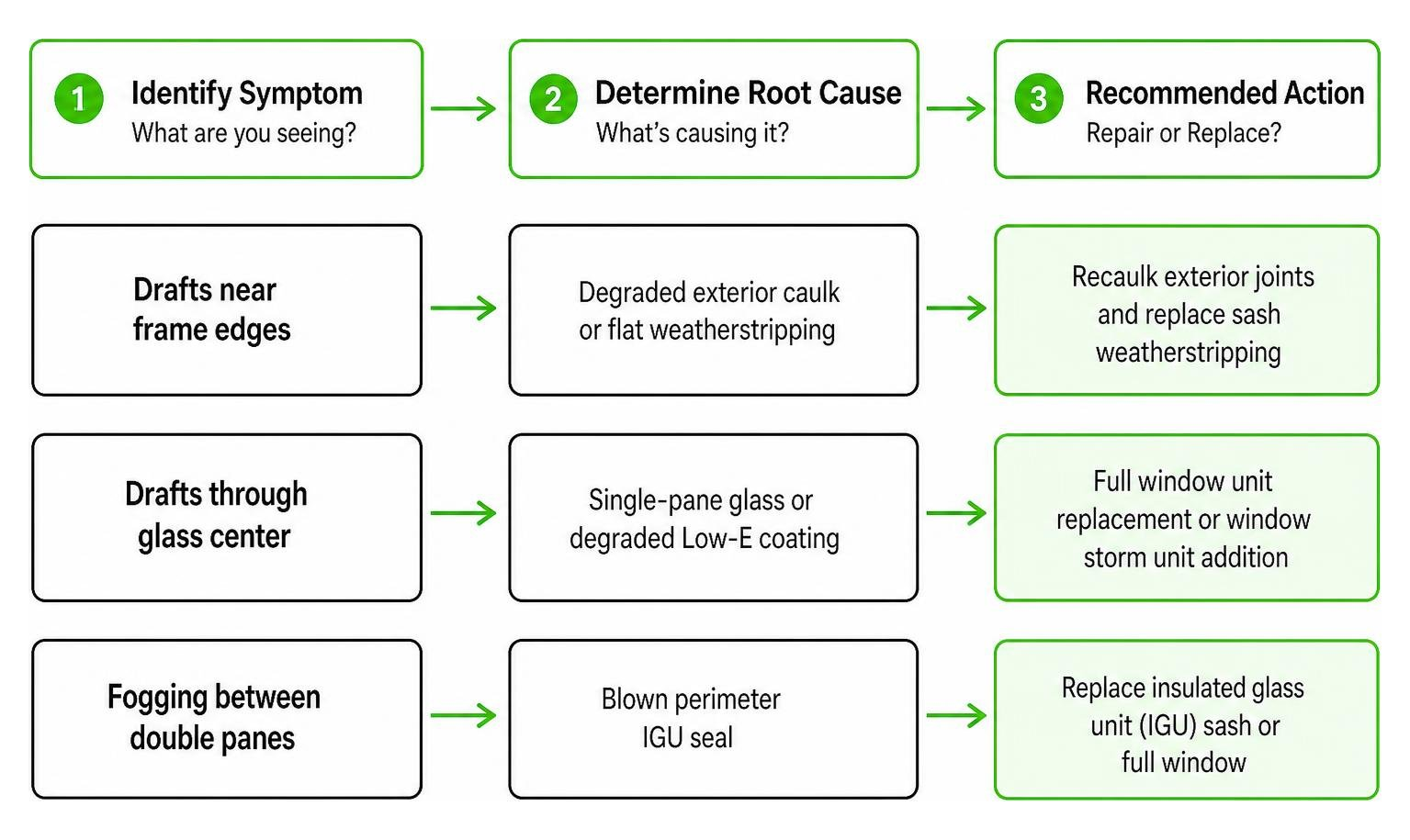
| Window Symptom | Primary Root Cause | Recommended Action |
|---|---|---|
| Drafts near frame edges | Degraded exterior caulk or flat weatherstripping | Recaulk exterior joints and replace sash weatherstripping |
| Drafts through glass center | Single-pane glass or degraded Low-E coating | Full window unit replacement or window storm unit addition |
| Fogging between double panes | Blown perimeter IGU seal | Replace insulated glass unit (IGU) sash or full window |
| Moisture on interior glass surface | High interior humidity and cold glass surface | Adjust indoor humidity levels and improve home ventilation |
| Soft, spongy frame timber | Structural moisture rot | Full-frame window replacement |
| Difficulty opening or locking sash | Worn hardware balances or paint accumulation | Lubricate tracks, replace hardware balances, or align sash |
Understanding Window Condensation Types
Condensation is one of the most common complaints homeowners report, yet not all surface moisture indicates a broken window. Understanding where moisture accumulates helps pinpoint whether you are dealing with an indoor air quality balance issue or an actual window seal failure.
- Interior Glass Surface Condensation: Water droplets on the indoor face of the glass typically occur during winter when warm, humid indoor air meets a cold glass surface. This is generally an indoor humidity control issue rather than a structural window defect.
- Exterior Glass Surface Condensation: Condensation forming on the outside face of the glass during humid summer mornings is actually a sign that your window is insulating effectively. It proves that outdoor heat is not penetrating the glass to warm the outer pane.
- Condensation Between Glass Panes: Persistent cloudiness, moisture droplets, or mineral film trapped between the two panes of an insulated glass unit (IGU) signals complete seal failure. The inert insulating gas has escaped, allowing moist air to enter. Learn more about resolving this issue in our guide on How to Get Rid of Condensation Between Window Panes.
Drafts and Thermal Performance Impacts
Air leakage through aging windows forces home heating and cooling equipment to work harder, directly impacting home comfort and utility demands.
Single-pane windows and older builder-grade units lack modern thermal barriers. Upgrading window systems eliminates draft zones, stabilizes room temperatures, and improves building security. For high-income communities like Short Hills or Montclair, high-performance architectural windows elevate indoor comfort while complementing high-end custom home designs. In mid-income neighborhoods across Paterson, Wayne, and Piscataway, replacing drafty units offers long-term reliability and noticeable improvements in overall building performance. Learn more about optimizing your home exterior in The Ultimate Guide to Better Security and Lower Bills.
Window Lifespans, Glass Options, and Material Considerations
Understanding the natural lifespan of various window materials allows homeowners to evaluate where their current units sit within their operational lifecycle.
Most residential window systems deliver optimal performance for 15 to 30 years, depending on frame construction, climate exposure, and installation precision. As windows age, frame materials expand, contract, and wear differently under local weather patterns.
Age and Material Lifespan: When to Repair vs Replace Your Windows
- Vinyl Windows (15–30 Years): Vinyl is low-maintenance and resistant to moisture. However, budget vinyl units exposed to strong sunlight can expand and contract, leading to frame warping or seal loss after 15 to 20 years. Premium vinyl formulations maintain structural rigidity significantly longer.
- Wood Windows (30+ Years with Maintenance): Traditional wood offers excellent natural insulation and classic beauty. While wood sashes can last for decades, they require regular painting and sealing. If wood frames are kept free of moisture rot, isolated hardware or glass repairs are highly effective.
- Fiberglass and Composite Windows (30–50 Years): Modern fiberglass frames expand and contract at virtually the exact same rate as glass. This minimal movement places far less stress on perimeter seals, extending the unit’s operating life.
- Aluminum Windows (15–25 Years): Common in mid-century construction, aluminum frames are structurally durable but highly conductive, easily transferring outdoor cold into the interior. Older aluminum frames frequently develop condensation and draft issues that justify complete replacement.
Glass Replacement vs Full Frame Replacement
When window problems are limited to the glass unit, homeowners can choose between targeted glass replacement and complete unit replacement.
An Insulated Glass Unit (IGU) replacement involves removing the failed glass packet from the existing sash and installing a new factory-sealed glass unit. This restores clear visibility and thermal efficiency if the frame, sill, and operating sashes are in excellent condition.
However, if the surrounding frame is warped, rotted, or leaking air around the perimeter, installing new glass into a damaged frame will not resolve underlying drafts. In those situations, full-frame window replacement—removing the assembly down to the original rough opening studs—ensures proper flashing, air sealing, and insulation integration.
Economic and Strategic Factors: Replacement Timing, Rebates, and Sustainability
Deciding when to repair vs replace your windows involves considering overall home exterior planning, environmental footprint, and long-term property performance.
Replacing windows in conjunction with complementary home updates—such as roof repair, emergency roof repair services, siding installation, or door replacements—streamlines scheduling and ensures airtight protection across the entire building envelope. As GAF Master Elite contractors, our team approaches every exterior evaluation with a focus on whole-home protection, ensuring window installations integrate seamlessly with overall roof repair, flashing, and siding systems.
When planning your project, consider these key factors:
- Whole-Home Efficiency: Replacing all aging windows simultaneously ensures consistent appearance, unified glass performance, and complete elimination of envelope leaks.
- Seasonal Timing: Spring and early autumn provide ideal installation conditions, though experienced crews can successfully execute window replacements year-round using thermal barrier techniques during installation.
- Strategic Phasing: If a complete home update is scheduled in steps, prioritizing weather-exposed north and west elevations maximizes comfort improvements right away.
- Incentive Eligibility: Energy-efficient replacement windows meeting strict ENERGY STAR guidelines often qualify for federal tax credits and regional utility efficiency incentives. Explore available opportunities in our NJ Energy Efficient Siding Windows Rebates Guide and learn How to Get Paid for Making Your NJ Home More Efficient.
Long-Term Value and Financial Return
Upgrading outdated windows pays dividends through increased interior comfort, reduced HVAC strain, and enhanced curb appeal. Quality window replacements consistently yield a solid return on investment upon home resale, while protecting structural framing from severe moisture damage.
To understand how targeted exterior upgrades protect property performance, read our resources on How to Boost Your Home Value Without Breaking the Bank and Stop Wasting Money on Renovations That Don’t Add Value.
Historic Restoration vs Environmental Footprint
For owners of older historic homes, choosing between window repair, restoration, and replacement involves additional considerations.
Historic windows built from old-growth timber feature exceptional grain density and natural decay resistance. When properly maintained, re-glazed, and fitted with quality storm windows, historic wood sashes can offer high thermal resistance and last for generations. Restoring historic windows preserves authentic architectural character and keeps original building materials out of landfills.
However, if original timber frames have suffered severe structural rot or lack historical distinction, upgrading to modern custom-crafted composite or clad-wood units provides superior energy efficiency, UV protection, and low-maintenance operation.
Frequently Asked Questions About Window Repair and Replacement
Is it better to replace all home windows at once or in phases?
Replacing all home windows at once is generally the most efficient strategy. Executing the project in a single installation phase ensures uniform aesthetic styling, consistent thermal performance, and streamlined project management. However, if a phased approach fits your schedule better, prioritizing the most severely degraded units or targeting the draftiest side of the home first is an effective strategy.
Can fogged double-pane glass be fixed without replacing the entire window?
Yes. If the window frame, sill, and operating sashes are in good condition, a professional contractor can replace just the failed Insulated Glass Unit (IGU) or the individual sash. This restores glass clarity and thermal performance without requiring the removal of exterior trim or siding. However, if the frame itself is drafty, warped, or rotted, replacing the entire window assembly is the better choice.
How do I choose a qualified contractor for a window assessment?
Choose a fully licensed and insured exterior contractor with proven local experience, strong manufacturer certifications, and comprehensive written warranties. A reliable professional will thoroughly inspect your window frames, sashes, caulking, and rough openings to give you an honest recommendation on repair versus replacement options. For more insights on choosing local specialists, see 5 Ways to Know If Window Remodeling in Montclair NJ Is Right for You.
Conclusion
Determining when to repair vs replace your windows is an important step in maintaining home comfort, energy efficiency, and structural protection. While minor hardware adjustments and weatherstripping updates can extend the service life of sound window frames, severe rot, structural warping, and widespread seal failure require professional replacement to safeguard your property.
At LGM Roofing, we bring over 25 years of general contracting excellence to every home project. Our GAF Master Elite certification reflects our commitment to superior craftsmanship, rigorous standards, and industry-leading warranty protection across all exterior services, including roofing, siding, doors, and window replacement. Whether you live in Bloomfield, Paterson, Wayne, Piscataway, or surrounding New Jersey communities, our team provides clear, reliable recommendations tailored to your home’s unique needs.
Contact LGM Roofing today to request an expert evaluation of your home’s windows and discover how our professional exterior updates can enhance your living space. Learn More About Professional Window Remodeling Services.

Comments are closed