


Don’t Get Soaked by Bad Timing for Your New Roof
What is the Best Time of Year to Replace Your Roof?
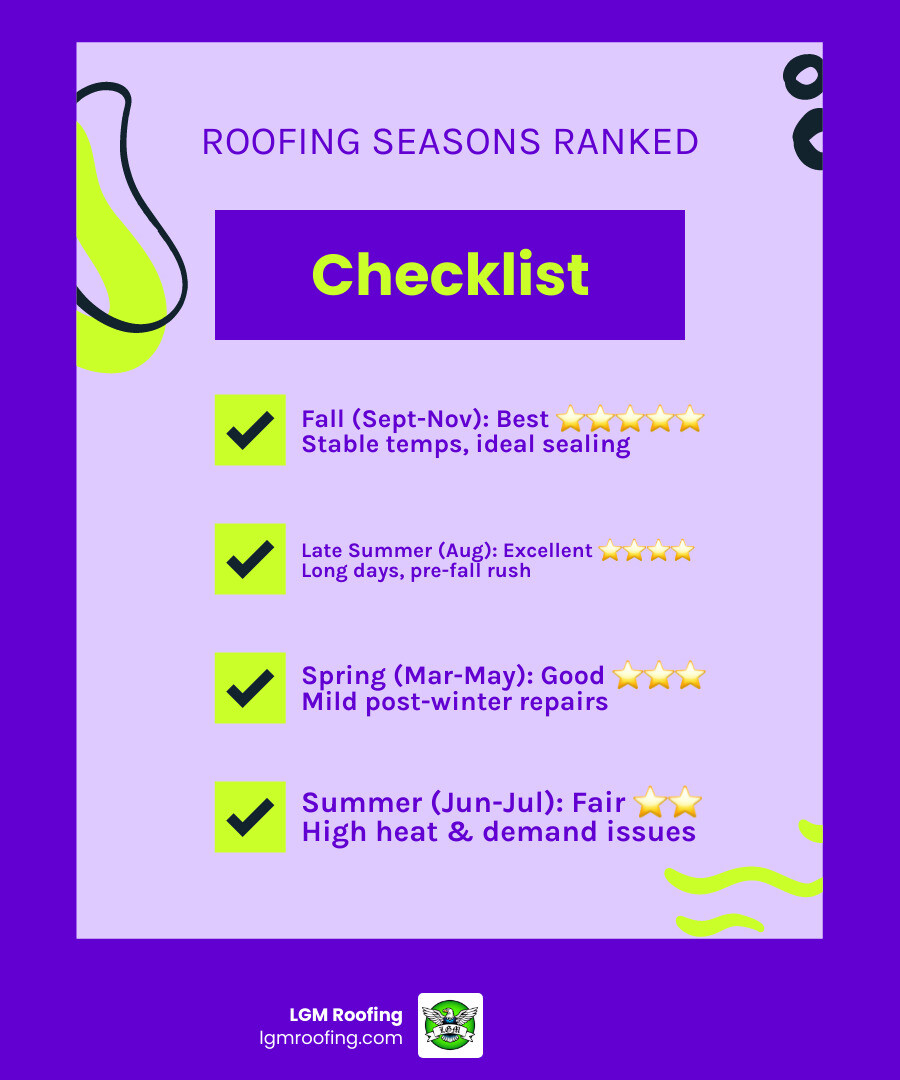
The best time of year to replace your roof is late summer through early fall — roughly August through October — when temperatures are mild, weather is predictable, and asphalt shingles can seal properly in the 45°F to 85°F range.
Here’s a quick breakdown by season:
| Season | Overall Rating | Key Reason |
|---|---|---|
| Fall (Sept–Nov) | Best | Stable temps, ideal shingle sealing, dry conditions |
| Late Summer (Aug) | Excellent | Long days, warm weather, beat the fall rush |
| Spring (Mar–May) | Good | Mild temps, good for post-winter repairs |
| Summer (Jun–Jul) | Fair | High demand, extreme heat can soften shingles |
| Winter (Dec–Feb) | Least Ideal | Cold affects adhesion, safety risks increase |
That said, if your roof is actively leaking, sagging, or losing shingles, the best time to replace it is right now — no matter the season. Waiting for perfect conditions on a compromised roof can lead to interior water damage that costs far more than the replacement itself.
For New Jersey homeowners, timing your roof replacement also means working around the state’s specific weather patterns — hot, humid summers, unpredictable spring rain, and harsh winters with nor’easters that can push a damaged roof past its limit. Choosing the right window isn’t just about comfort; it affects how well your new roof performs for the next 20 to 30 years.
I’m Darwin Mizhirumbay, co-owner of LGM Roofing and a second-generation roofing professional who grew up watching my father navigate New Jersey’s tricky seasons to deliver quality installs year after year — that experience is exactly why I understand what is the best time of year to replace your roof in the Garden State. In the sections below, I’ll walk you through everything you need to make a confident, well-timed decision for your home.
When we talk about the “best” time, we are usually looking for the sweet spot where weather, material physics, and contractor availability align. In April 2026, as we look at the current roofing landscape in New Jersey, that sweet spot remains the autumn months. However, every season offers a different set of variables.
| Factor | Spring | Summer | Fall | Winter |
|---|---|---|---|---|
| Installation Speed | Moderate | Fast (Long Days) | Moderate | Slow |
| Material Performance | High | Moderate (Heat risk) | Optimal | Low (Cold risk) |
| Contractor Availability | Low (Busy) | Low (Peak) | Very Low (Peak) | High |
| Weather Predictability | Low (Rain) | Moderate (Storms) | High | Low (Snow/Ice) |
For a successful Roof Replacement, the temperature is the most critical technical factor. Most roofs in Bloomfield or Paterson use asphalt shingles, which rely on a strip of adhesive that needs “thermal sealing.” This means the sun’s warmth must activate the glue to bond the shingles together. If it’s too cold, they won’t stick; if it’s too hot, they can become overly soft and easily damaged during the walk-around.
Fall provides that “Goldilocks” environment—not too hot, not too cold, and generally drier than the stormy spring months. This predictability allows us to stay on schedule, ensuring your home isn’t exposed to the elements longer than necessary.
Seasonal Pros and Cons for New Jersey Homeowners

Living in the Garden State means we deal with a unique climate. From the humid summers in Piscataway to the biting winter winds in Wayne, our roofs take a beating. Understanding the seasonal nuances helps you plan your project without getting caught in a scheduling nightmare.
In our Roof Replacement Bloomfield Complete Guide, we often emphasize that New Jersey weather is famous for Nor’easters. These powerful storms can strike in late fall or winter, bringing heavy rain and wind. If your roof is already aging, these storms act like a “stress test” you don’t want to fail.
- Spring Pros: Excellent for catching damage caused by winter ice dams or heavy snow. The mild temperatures are comfortable for crews, leading to high-quality workmanship.
- Spring Cons: “April showers” aren’t just for flowers; they cause frequent work stoppages. High humidity can also affect how some underlayments lay on the roof deck.
- Winter Pros: If you have an emergency, we can absolutely work in winter. It is often a slower time for the industry, meaning you might get on the schedule faster.
- Winter Cons: Shingles become brittle in the cold. Working around snow and ice is dangerous for the crew and requires specialized safety equipment and slower pacing.
Why Fall is the Best Time of Year to Replace Your Roof
There is a reason why September is historically one of the most booked months for roofers. Fall offers the most consistent weather window for asphalt shingles to reach their full potential. The ideal temperature range for installation is between 45°F and 85°F. Within this bracket, the shingles are flexible enough to be nailed without cracking, yet firm enough that they won’t scuff under a roofer’s boots.
We often tell our clients that Why August is the Perfect Month to Schedule a Roof Replacement in NJ is because it allows you to beat the massive rush that happens in September and October. By booking in August, you ensure your adhesive cures properly before the first frost hits.
A solid End of Summer Roof Check: Why August is the Best Time for an Inspection in NJ can reveal if your roof is ready for the upcoming winter. If we find issues then, we have plenty of time to get you on the schedule for a full replacement before the snow flies. This proactive approach prevents the panic of a mid-January leak.
Navigating Spring and Summer Installations in NJ
If you missed the fall window, don’t worry. Spring and summer are perfectly viable, though they require a bit more tactical planning. In the spring, we keep a very close eye on the radar. Rain delays are part of the job, but an experienced team knows how to dry-in a roof quickly so your interior stays safe.
Summer brings its own challenges. While Free Roof Inspections in Bloomfield NJ: Why Summer is the Ideal Time to Book One are popular because the weather is generally clear, the heat can be intense. On a 90°F day in Paterson, the temperature on your roof can easily soar past 130°F.
This heat can lead to 5 Signs the Summer Heat is Damaging Your Roof (and What to Do About It), such as blistering or accelerated granule loss. During summer installs, our crews typically start at the crack of dawn—sometimes as early as 6:00 AM—to get the bulk of the heavy lifting done before the afternoon sun makes the shingles too soft to handle safely.
Material Considerations and Climate Impact
The “perfect” season can actually change depending on what you are putting on your house. While 80% of our New Jersey neighbors choose asphalt, other materials have different “feelings” about the weather.
- Asphalt Shingles: These are the most sensitive to temperature. They need that 45°F+ window to seal. They typically last 20 to 30 years in our climate, provided they are installed in the right conditions.
- Metal Roofs: One of the big perks of metal is that it can be installed in much colder temperatures than asphalt. Metal doesn’t need to “seal” with heat; it is mechanically fastened. Metal roofs can last 40 to 70 years and are great for shedding snow in Wayne or Bloomfield.
- Slate and Tile: These are heavy, “forever” roofs. Slate can last over 100 years. Because these materials don’t rely on adhesives, they can be installed year-round, though ice and snow make the process much slower and more expensive due to the safety risks involved.
- Cedar Shake: Popular in some of our more traditional NJ neighborhoods, cedar lasts 20 to 40 years. It’s best installed in drier months to prevent moisture from being trapped during the initial layering.
To understand how your specific choice stacks up, check out our guide on How Often Should You Replace Your Roof? A Breakdown by Material & Climate.
Choosing the Best Time of Year to Replace Your Roof Based on Material
If you are set on asphalt shingles but it’s currently January, you have to consider the manufacturer’s warranty. Most manufacturers specify that shingles must be installed in temperatures that allow for immediate sealing. If we install them in 20°F weather, they might stay “loose” until spring. A big wind storm in the meantime could blow them right off because the adhesive never bonded.
When we ask, Is Your Roof Ready for Summer Storms? How to Prevent Wind & Water Damage in NJ, we are checking for the integrity of those seals. For winter installations of asphalt, we sometimes have to “hand-seal” every single shingle with a dab of roofing cement. It’s effective, but it’s labor-intensive and usually unnecessary if you can wait until the thermometer hits that 45°F mark.
Signs You Can’t Wait for the “Perfect” Season
We’ve spent a lot of time talking about the “ideal” window, but mother nature doesn’t always check the calendar. Sometimes, your roof decides it’s done in the middle of a February blizzard. If your roof is failing, the “best time” is immediately.
Here are the signs that you need to call us for a Roof Replacement regardless of what the weather is doing:
- Active Leaks: If you see water stains on your ceiling or walls, the barrier is broken. Water can cause mold, rot your rafters, and ruin insulation within days.
- Sagging: A sagging roofline is a structural emergency. It usually means the decking underneath is rotted or the support beams are failing.
- Massive Granule Loss: Check your gutters. If they look like they are filled with coffee grounds, your shingles have lost their UV protection and will fail rapidly. Our End of Summer Roof Maintenance Checklist for NJ Homeowners covers how to spot this early.
- Daylight in the Attic: If you go into your attic and can see the sun peeking through the boards, you aren’t just losing air conditioning—you’re a sitting duck for the next rainstorm.
- Missing Shingles: After a big storm in Paterson or Piscataway, if you find shingles on your lawn, your roof’s “armor” is compromised.
Frequently Asked Questions about Roofing Timing
When is the cheapest time of year to replace a roof?
Generally, the “off-peak” seasons of winter and very early spring (late February to March) are the most budget-friendly. Because demand is lower, contractors are more likely to offer scheduling discounts to keep their crews busy. However, keep in mind that “cheap” can sometimes come with “slow” if snowstorms delay the project. Booking your project 4–8 weeks in advance for a late winter slot is often the best way to save.
What temperature is too cold for asphalt shingle installation?
The general industry rule is that 40°F is the “danger zone.” When temperatures drop below 40°F, asphalt shingles become brittle and can crack when a nail gun hits them. Furthermore, the self-sealing adhesive strips will not bond until the shingle reaches a much higher temperature. While we can use specialized winter techniques like hand-sealing, it is always better to wait for a 45°F+ day if the roof isn’t actively leaking.
How far in advance should I schedule a roof replacement?
For the peak fall season, you should ideally reach out to us in June or July. The “Fall Rush” is very real in New Jersey, and the best contractors often have their calendars filled by mid-August. For spring or summer projects, a 4-week lead time is usually sufficient. Planning ahead ensures you get your choice of materials and colors, as supply chain delays can still occasionally pop up for specialized shingles.
Why Choose LGM Roofing for Your Next Installation
At LGM Roofing, we believe that a well-informed homeowner is our best customer. With over 25 years of experience as a leading general contractor in New Jersey, we have seen every weather scenario the Garden State can throw at a home. Whether you are in Wayne, Paterson, Bloomfield, or Piscataway, our commitment to excellence remains the same.
While fall is technically the best time of year to replace your roof due to the perfect balance of temperature and dryness, we are equipped to handle your project year-round. Our solid warranty and unmatched service mean that whether we install in the heat of July or the chill of March, your home will be protected by the highest quality craftsmanship.
Don’t wait for a leak to tell you it’s time for a change. If you’re questioning the age or stability of your roof, reach out to us today. We’ll help you navigate the timing, the materials, and the process to ensure your home stays dry and beautiful for decades to come. Ready to get started? Explore our options for Roof Replacement and let’s get your home covered.
