


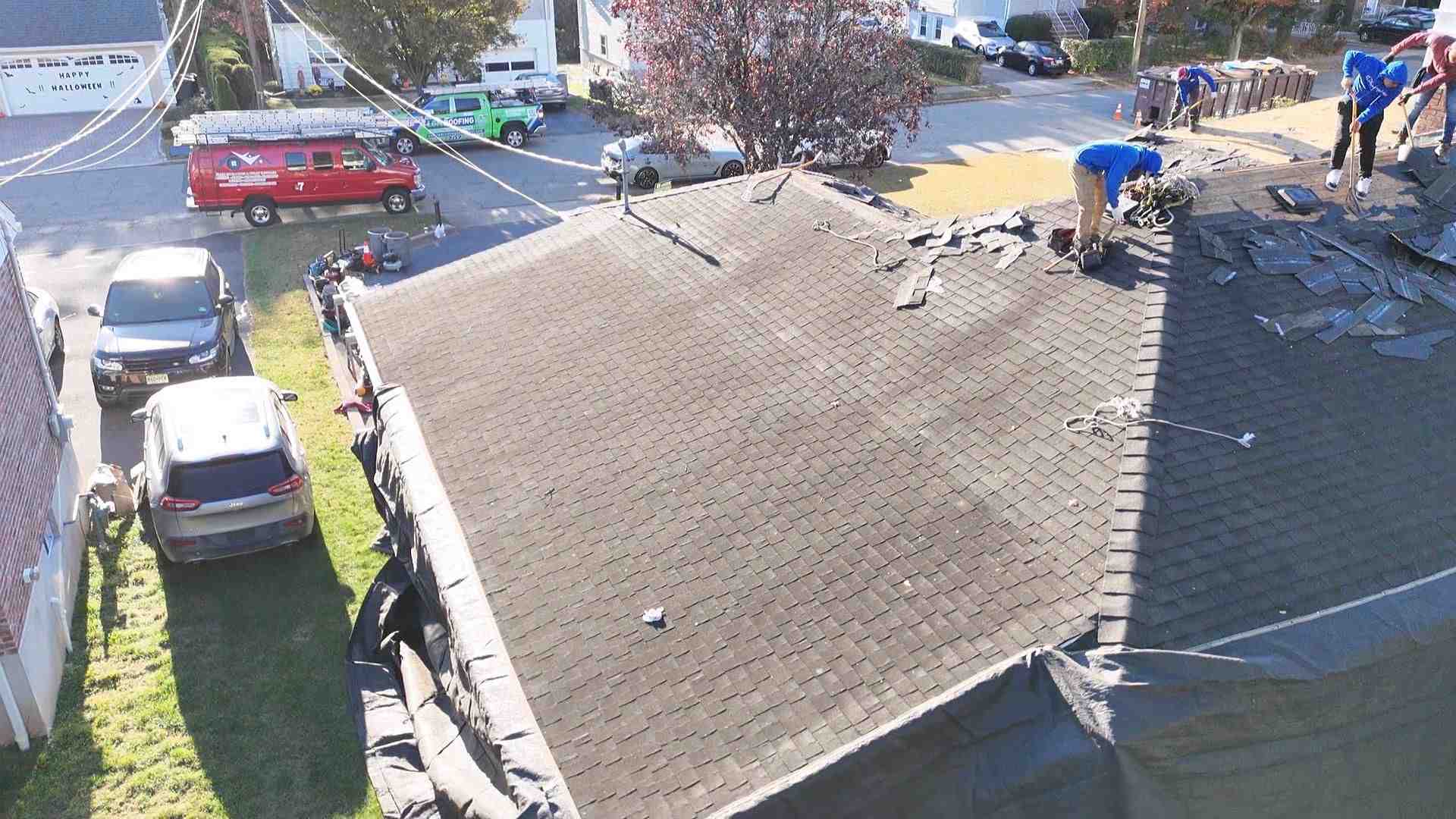
When to Raise the Roof in New England
Why Timing Matters for Roof Replacement in the Northeast
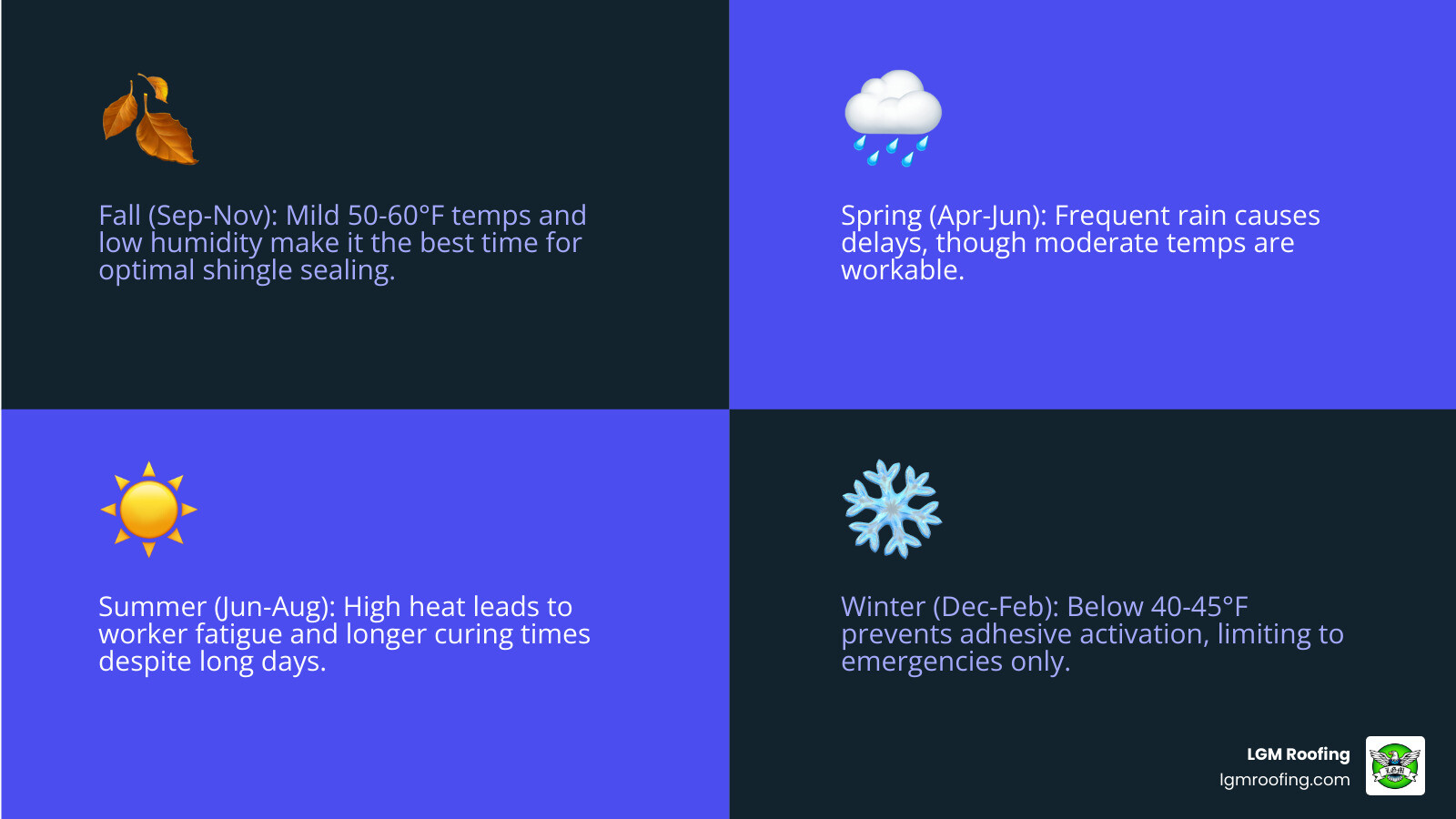
The best time of year for roof replacement in the northeast is late September through October. Here’s a quick breakdown by season:
| Season | Conditions | Verdict |
|---|---|---|
| Fall (Sep-Nov) | Mild temps (50-60°F), low humidity, dry days | Best overall |
| Spring (Apr-Jun) | Moderate temps, but frequent rain delays | Good alternative |
| Summer (Jun-Aug) | Long days, but high heat and peak demand | Workable, with trade-offs |
| Winter (Dec-Feb) | Cold, brittle shingles, sealing failures | Emergency only |
Replacing a roof isn’t just a construction project — it’s a weather-sensitive installation where temperature, humidity, and moisture levels directly affect how well your new roof performs for the next 20-25 years. Asphalt shingles, which cover the vast majority of homes across New Jersey and the broader Northeast, need sustained temperatures above 40-45°F to seal properly. Too cold, and the adhesive strips won’t activate. Too hot and humid, and curing takes far longer than it should.
The Northeast throws a lot at your roof — nor’easters, humid summers, freeze-thaw cycles, and unpredictable spring rain. Knowing when to schedule your replacement isn’t just about convenience. It’s about protecting your home and your investment.
I’m Darwin Mizhirumbay, founder of LGM Roofing and a second-generation roofing contractor who has spent years learning the nuances of the best time of year for roof replacement in the northeast through hands-on experience across New Jersey’s varied climate conditions. In this guide, I’ll walk you through exactly what each season means for your roof replacement project, so you can make a confident, well-timed decision.
The Best Time of Year for Roof Replacement in the Northeast
When we talk about the best time of year for roof replacement in the northeast, we are really talking about the intersection of material science and local meteorology. As of April 2026, we’ve seen weather patterns in New Jersey become increasingly unpredictable, but the fundamental physics of Roof Replacement remain the same.
In towns like Wayne and Paterson, we deal with high humidity in the summer and biting frost in the winter. These extremes dictate our scheduling windows. The “sweet spot” is almost always the autumn peak. During this time, the air is dry, the sun is out, but the heat isn’t punishing.
| Weather Factor | Impact on Installation | Optimal Season |
|---|---|---|
| Temperature | Affects shingle flexibility and adhesive seal | Fall/Late Spring |
| Humidity | Prolongs the curing time of sealants | Fall |
| Precipitation | Can lead to deck rot if moisture is trapped | Fall/Summer |
| Wind | Increases safety risks and blows off unsealed shingles | Summer/Early Fall |
While we can physically tear off a roof in many conditions, the quality of the final product depends on a process called thermal sealing. This is when the sun’s heat activates the adhesive strip on each shingle, bonding it to the one below it. Without this bond, your roof is vulnerable to the first Nor’easter that blows through Piscataway.
Why Autumn is the Best Time of Year for Roof Replacement in the Northeast
September and October are the champions of the roofing calendar. In the Northeast, these months offer a “Goldilocks” climate—not too hot, not too cold. Temperatures consistently hover in the 50-60°F range during the day. This is the ideal environment for asphalt shingles to settle and bond.
Low humidity is another major plus. When we install shingles in the crisp autumn air, they seal much faster than they would in the muggy atmosphere of July. Furthermore, replacing your roof in the fall serves as a proactive defense. By getting the work done in October, you ensure your home is buttoned up tight before the first heavy snow of December hits. If you’ve been wondering Why August is the Perfect Month to Schedule a Roof Replacement in NJ, it’s often because booking in August ensures you get one of those coveted September or October slots before the contractor’s calendar fills up.
Challenges of Finding the Best Time of Year for Roof Replacement in the Northeast During Winter
Winter is arguably the most difficult season for roofing in New Jersey. Between December and February, temperatures frequently drop below 40°F. At these temperatures, asphalt shingles become brittle. If a roofer tries to nail them down, they can crack or shatter like a cracker.
Thermal sealing is almost impossible in the dead of winter. The adhesive strips stay cold and dormant, meaning the shingles don’t “lock” together until the first warm spell of spring. This leaves the roof highly susceptible to wind uplift. We generally recommend winter work only for emergency repairs. If you find yourself in a situation where you have a major leak in January, you’ll have to weigh Roof Repair vs. Replacement in NJ: How to Decide. For a full replacement in winter, specialized techniques and extra care are required to ensure the roof stays intact until spring.
Seasonal Breakdown: Pros and Cons for Northeast Homeowners
Every season in the Northeast has its own personality, and your roof has to live through all of them. From the heavy rains of April to the humid heat waves of August, the timing of your installation can impact the roof’s longevity. When considering Northeast Weather vs. Your Roof: Which Material Wins?, you’ll find that while metal roofs are more temperature-forgiving, asphalt shingles—the regional favorite—are highly sensitive to the calendar.

Spring and Summer Trade-offs in the Northeast
Spring (April through June) is a popular time for homeowners in Bloomfield to address damage caused by the previous winter’s ice dams. The temperatures are rising, which is great for shingle adhesion. However, the Northeast is famous for “April showers.” Rain is the enemy of a roof replacement. If moisture gets trapped under the shingles or the underlayment, it can lead to mold, rot, and “blistering” where the shingles bubble up.
Summer brings its own set of problems. July and August offer long daylight hours, allowing crews to work longer shifts. But when the thermometer hits 90°F, the roof surface can easily exceed 150°F. This makes shingles soft and prone to “scuffing” if workers walk on them. Heat exhaustion is also a real risk for the crew, which can slow down the project. If you are looking for a Roof Replacement Bloomfield Complete Guide, you’ll see that summer requires early morning starts to beat the peak afternoon heat.
Contractor Availability and Scheduling by Season
Because fall is the best time of year for roof replacement in the northeast, it is also the busiest. If you wait until September to call a reputable contractor in Paterson or Piscataway, you might find they are booked until Thanksgiving.
Lead times for materials can also fluctuate. During the peak summer and fall months, specific shingle colors or styles might be on backorder. Planning ahead is vital. We often suggest that homeowners start their research 6 months in advance and book their project at least 2-3 months out. Understanding How Often Should You Replace Your Roof: A Breakdown by Material & Climate can help you anticipate when your roof’s “expiration date” is approaching so you aren’t caught in a last-minute rush for a popular season.
Technical Factors: Temperature, Humidity, and Shingle Sealing
To understand why we emphasize the 40-45°F threshold, you have to look at how a shingle is made. Each asphalt shingle has a strip of heat-sensitive adhesive. For this adhesive to bond, it needs “thermal activation.”
In ideal conditions (70-80°F), shingles can seal in just a few hours. In the cooler temperatures of early spring or late fall (below 70°F), it might take a full day or more. If the humidity is high, that sealant takes even longer to cure—sometimes days or even weeks. This is why we watch the weather apps like hawks. We want a window of dry, mild weather to ensure that the roof becomes a single, monolithic shield against the elements.
Code Requirements and Material Layers in the Northeast
In New Jersey, local building codes are strict about how many layers of shingles you can have on your home. Most municipalities allow a maximum of two layers, but many modern roofing experts—ourselves included—strongly recommend a full tear-off.
Installing a new roof over an old one might save time in the short term, but it prevents us from inspecting the roof deck for rot or structural issues. You can read more about Can You Install a New Roof Over an Old One? Pros, Cons & NJ Regulations to understand the risks. Furthermore, knowing How Many Shingle Layers Are Actually Allowed by Code? is essential for staying compliant with NJ regulations and ensuring your home insurance remains valid.
When You Can’t Wait for the Perfect Season
Sometimes, the “perfect season” doesn’t matter because your roof has other plans. If you have an active leak that is dripping into your attic or onto your ceiling, you cannot wait until October. Water damage spreads fast, saturating insulation and rotting the wooden roof deck.
Storm damage from a sudden Nor’easter or a summer hail storm often triggers insurance claims that have specific timelines. In these cases, the “best time” is right now. If you aren’t sure if your situation is an emergency, check out Can My Roof Be Repaired or Does It Need to Be Replaced? 7 Ways to Tell.
In emergency situations, we take extra precautions. If we have to replace a roof in the rain or cold, we work in smaller sections, keeping the house “dried in” with tarps and synthetic underlayment at all times. We also have to be honest about the long-term outlook. For example, Is Shingling Over Your Old Roof a Smart Move? Usually, the answer is no, especially in emergency scenarios where the underlying deck is likely compromised.
Frequently Asked Questions about Northeast Roofing
Can you replace a roof in the rain?
Absolutely not. A reputable contractor will never install shingles during active rain. Not only is it a safety hazard for the crew, but it also traps moisture against the roof deck. Trapped moisture is a recipe for mold, rot, and premature shingle failure. If a surprise shower pops up, we immediately stop work and use heavy-duty tarps to protect the exposed areas until the sun comes back out.
How long does a roof replacement take in the Northeast?
For a standard residential home in New Jersey, the actual installation usually takes 1 to 3 days. However, the timeline can be extended by the complexity of the roof (lots of dormers, steep pitches, or multiple valleys) and, of course, the weather. A large architectural project in Wayne might take 4 or 5 days, while a simple ranch in Piscataway could be done in a single long day.
Does humidity affect shingle installation?
Yes. High humidity is a major factor in the Northeast. It extends the time it takes for sealants and adhesives to cure. In very humid conditions, the “sealing” process can be delayed for weeks. If the shingles don’t seal properly, they can develop “blisters” where air and moisture are trapped inside the shingle, leading to a much shorter lifespan for your roof.
Expert Guidance for Your Northeast Roof Replacement
Choosing the best time of year for roof replacement in the northeast is a balancing act between the weather, your budget, and the availability of a skilled crew. While fall is the gold standard for quality and durability, we’ve spent over 25 years helping homeowners navigate every season of the New Jersey climate.
At LGM Roofing, we pride ourselves on being more than just installers; we are consultants who help you protect your biggest investment. Whether you are in Wayne, Paterson, Bloomfield, or Piscataway, we bring a commitment to excellence and a solid warranty to every project. Don’t wait for a leak to tell you it’s time for a new roof.
Ready to ensure your home is protected for decades to come? Explore our professional roofing services and let us help you find the perfect window for your roof replacement.
