
Is Shingling Over Your Old Roof a Smart Move?
Discover if can you install a new roof over an old one in NJ. Pros, cons, IRC rules & when to tear off for safety. Expert guide!

Is Shingling Over Your Old Roof a Smart Move?
Is Shingling Over Your Old Roof Actually a Smart Move in New Jersey?
Can you install a new roof over an old one? Yes — in many cases it is technically legal and possible, but whether it is the right choice depends on several important factors. Here is a quick summary:
- Legally allowed: Most building codes, including the IRC, permit one additional layer of asphalt shingles over an existing single layer (two layers maximum total)
- When it works: The existing roof has only one layer, shingles are flat and undamaged, the deck is structurally sound, and local NJ codes permit it
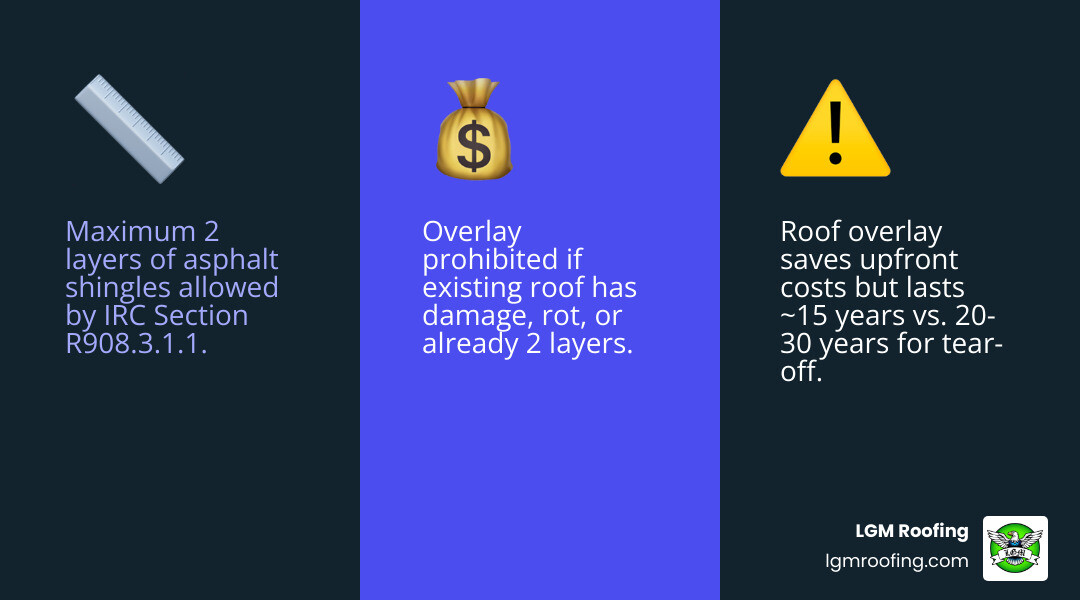
- When it does not work: Two layers already exist, there is water damage or rot, shingles are curling or buckling, or you are changing roofing materials
- Key trade-off: An overlay costs less upfront but typically lasts around 15 years — compared to 20–30 years for a full tear-off replacement
- Bottom line: A professional inspection is the only reliable way to know which option is right for your home
For New Jersey homeowners, this question comes up constantly — and understandably so. Replacing a roof is one of the largest investments you will make in your home, and the idea of skipping a full tear-off to save time and money is genuinely appealing. But the answer is not as simple as a yes or no. The condition of your existing roof, your local building codes, your home’s structural capacity, and your long-term plans all factor into whether a roof overlay is a smart shortcut or a costly mistake waiting to happen.
I’m Darwin Mizhirumbay, co-owner of LGM Roofing and a GAF Master Elite Contractor serving New Jersey — and questions about can you install a new roof over an old one are among the most common ones we hear from homeowners weighing their options. In this guide, I’ll walk you through everything you need to know to make a confident, informed decision.
Understanding the Rules: Can You Install a New Roof Over an Old One?
Before you decide to layer up, you have to know the law. In construction, the International Residential Code (IRC) serves as the primary rulebook. Specifically, IRC Section R908.3.1.1 dictates that a roof can have a maximum of two layers of asphalt shingles. If your home in Paterson or Wayne already has two layers of shingles, a full tear-off is your only legal option. Adding a third layer is never permitted because of the extreme weight it places on your home’s structure.
A second layer of shingles adds a massive amount of weight—roughly 600 to 700 pounds per “square” (a 100-square-foot area). For a standard 2,000-square-foot home in New Jersey, that’s an additional 12,000 to 14,000 pounds of pressure on your rafters and foundation. This is why we always recommend a professional Roof Inspection Near Me before proceeding. We need to verify that your roof’s structural load capacity can handle the equivalent of several SUVs sitting on your house.
Furthermore, local building codes in NJ can be even stricter than the national IRC. Some municipalities may require a permit that specifically evaluates the condition of the underlying deck. If the original shingles are asphalt, you can generally overlay them with new asphalt shingles, but you cannot overlay materials like slate, wood shakes, or tile. These materials are too heavy or uneven to serve as a base for a new layer.
The Pros and Cons of Choosing a Roof Overlay
When deciding if you can you install a new roof over an old one, it helps to look at the immediate benefits versus the long-term consequences.
| Feature | Roof Overlay (Reroofing) | Full Tear-Off Replacement |
|---|---|---|
| Upfront Cost | 20% to 40% lower | Standard investment |
| Installation Speed | 1–2 days | 2–4 days |
| Lifespan | ~15 years | 20–30+ years |
| Weight | Double (Heavy) | Single (Standard) |
| Warranty | Often limited or voided | Full manufacturer backing |
| Future Cost | Higher (Double tear-off) | Standard replacement cost |
The most obvious “pro” is labor efficiency. By skipping the tear-off process, we don’t have to spend hours stripping old materials and hauling them to a dumpster. This leads to a significant disposal fee reduction, as you aren’t paying for $1 to $4 per square foot in landfill costs. For homeowners in Bloomfield looking for a quick fix, our Roof Installation Cost Bloomfield Guide explains how these savings manifest.
However, the “cons” are substantial. An overlay traps heat between the old and new shingles. Since the heat has nowhere to go, it “bakes” the new shingles from both sides, leading to a 20% to 40% shorter lifespan. Additionally, if you need financial flexibility for a more durable solution, you can always Apply for Financing to ensure you get the best long-term protection for your home.
Why Homeowners Ask: Can You Install a New Roof Over an Old One for Faster Results?
Time is a major factor. A roof overlay can often be completed in just one day, providing immediate curb appeal. This is particularly attractive for homeowners in Piscataway who are planning to sell their house soon and want the roof to look brand new without the disruption of a multi-day construction project.
It is an economical option for those who have a structurally sound roof but need to address surface wear before it becomes a leak. If you are debating between these paths, our guide on Roof Repair vs. Replacement: How to Know What Your NJ Home Really Needs can help you determine if your current roof qualifies for a simple “refresh.”
The Structural Risks: Can You Install a New Roof Over an Old One Safely?
The biggest danger of an overlay is what you can’t see. When we perform a full tear-off, we inspect the plywood decking for rot, mold, and soft spots. When you overlay, those issues stay hidden. If there is trapped moisture under the old layer, it will continue to rot the wood, eventually leading to a sagging roofline or even a structural failure.
There is also the issue of “telegraphing.” Shingles are designed to lay flat. If your old shingles are curling or buckled, those bumps will show through the new layer, making the new roof look uneven from the street. This isn’t just an aesthetic issue; it prevents the new shingles from sealing properly, making them more susceptible to wind damage. You can learn more about identifying these issues in our article on Signs of Roof Damage.
Finally, consider the future. When this double-layered roof eventually fails, the next replacement will require a “double tear-off.” This adds $1,000 to $3,000 in extra labor and disposal costs later on.
When a Full Tear-Off is Necessary for Your Property
Sometimes, the choice is made for you. As of April 2026, we strongly advise against overlays if any of the following conditions exist:
- Multiple Layers: If you already have two layers, you must strip them.
- Water Damage: If you have active leaks or signs of interior water damage, you must see the deck to fix the source.
- Sagging: A sagging roofline indicates structural weakness or rotted rafters that cannot support another pound of weight.
- Material Changes: You cannot put shingles over cedar shakes or slate.
For a deeper dive into these warning signs, check out Can My Roof Be Repaired or Does It Need to Be Replaced? 7 Ways to Tell. In most NJ climates, from Paterson to Wayne, a full Roof Replacement is the gold standard because it allows us to install modern ice and water shields directly onto a clean deck, which is vital for our snowy winters.
Preparation and Ventilation Requirements for Overlays
If you and your contractor decide that an overlay is the right move, preparation is everything. We don’t just nail new shingles over the old ones. The surface must be flattened—any curling shingles must be nailed down or trimmed. We also must ensure the roof is clear of moss, debris, and fungus.
Ventilation is the most overlooked part of an overlay. Because the double layer traps more heat in the attic, you must have excellent attic airflow. This often requires the installation of a new ridge vent and ensuring intake vents (soffits) are not blocked. Without this, your shingles will curl prematurely, and your energy bills will skyrocket.
Other technical requirements include:
- Longer Fasteners: We must use nails long enough to penetrate both layers of shingles and go at least 3/4 of an inch into the wooden roof deck.
- Drip Edge Alignment: A new, uniform drip edge must be installed to ensure water sheds correctly into the gutters.
- Flashing Replacement: We don’t just reuse old, rusty flashing. New flashing should be integrated to prevent leaks at the chimneys and valleys.
If your roof is currently leaking but you aren’t ready for a full overlay, a targeted Roof Repair might be a better temporary solution. The lifespan of your roof is heavily dictated by your environment; see our guide on How Often Should You Replace Your Roof? A Breakdown by Material & Climate for more details.
Frequently Asked Questions About Reroofing
How many layers of shingles are legally allowed in NJ?
In New Jersey, following the International Residential Code (IRC), you are allowed a maximum of two layers of shingles. This safety standard exists to prevent structural collapse and to ensure that the weight of snow in the winter doesn’t exceed what the house’s framing was designed to hold.
Does an overlay impact home resale value or insurance?
Yes, it can. Home inspectors often mark a double-layered roof as a “red flag” because they know it hides the condition of the roof deck. Potential buyers may ask for a price reduction because they know they will face a more expensive double tear-off in the future. Furthermore, some insurance companies may limit coverage or increase premiums for homes with multiple roof layers due to the increased risk of hidden damage.
How long does a second layer of shingles typically last?
While a high-quality asphalt roof can last 25 to 30 years, a second layer typically lasts about 15 years. The heat retention between the layers causes the oils in the top layer of shingles to dry out faster, leading to premature brittleness and granule loss.
Conclusion
So, can you install a new roof over an old one? Technically, yes—but it’s a decision that should be made with eyes wide open. While the upfront savings are tempting, the risks of hidden rot, shortened lifespan, and decreased resale value are significant.
At LGM Roofing, we believe in providing New Jersey homeowners with long-term protection rather than short-term fixes. With over 25 years of experience in Wayne, Paterson, Bloomfield, and Piscataway, we have seen which roofs stand the test of time and which ones fail under the weight of a second layer.
Before you make a move, let us provide a professional assessment. We can help you weigh the costs and benefits to ensure your home remains safe and dry for decades to come. For more information on local standards, visit our Roof Replacement Bloomfield Complete Guide.
Ready to protect your home? Click here for a professional roof replacement consultation!
Ready for a roof you can trust?
Get a free, no-pressure estimate. Family-owned since 2006, GAF Master Elite, and rated 4.9 by 130 homeowners on Google.