
Northeast Weather vs Your Roof: Which Material Wins?
Discover asphalt shingles vs metal roofing for northeast homes. Compare winter performance, durability & lifespan to choose the best for NJ weather.

Northeast Weather vs Your Roof: Which Material Wins?
Northeast Weather vs. Your Roof: Which Material Actually Holds Up?
Asphalt shingles vs metal roofing for northeast homes is one of the most common questions New Jersey homeowners face when it’s time for a roof replacement — and the answer isn’t as simple as picking the cheaper option.
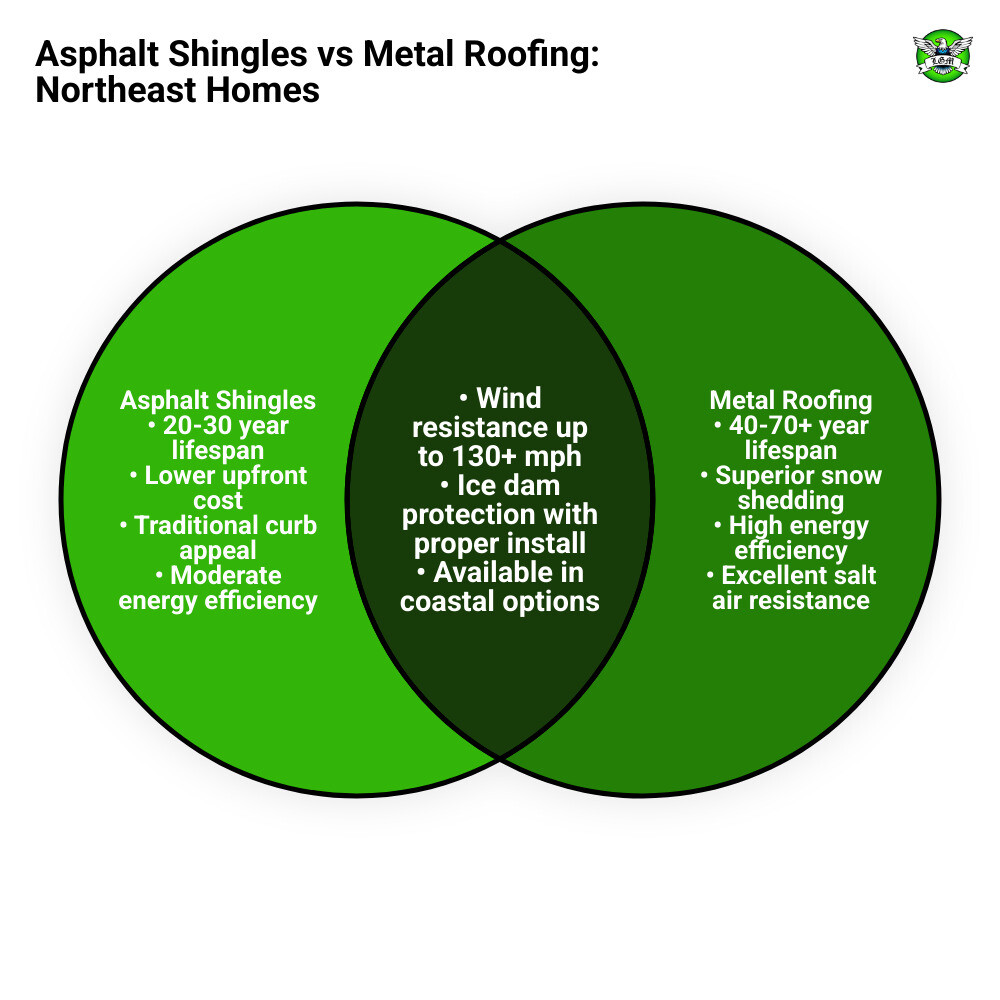
Here’s a quick breakdown to help you decide:
| Factor | Asphalt Shingles | Metal Roofing |
|---|---|---|
| Lifespan | 20-30 years | 40-70+ years |
| Winter performance | Holds snow longer; ice dam risk | Sheds snow naturally; lower ice dam risk |
| Wind resistance | Up to 130+ mph (premium) | Up to 140+ mph (standing seam) |
| Weight | Up to 4.3 lbs/sq ft | Up to 1.6 lbs/sq ft |
| Upfront cost | Lower | 2-3x more than asphalt |
| Coastal salt air | Adequate | Excellent (aluminum) |
| Energy efficiency | Moderate | High (reflects solar heat) |
| Best for | Budget-conscious owners; short-to-mid-term ownership; traditional aesthetics | Long-term owners; harsh weather areas; low-maintenance priority |
The Northeast throws everything at your roof — Nor’easters, freeze-thaw cycles, heavy snow loads, and coastal salt air. What works fine in a milder climate can fail fast here. Both materials have real strengths, but they perform very differently when temperatures swing from -10°F to 50°F in a single week, or when a late-season storm dumps two feet of wet snow overnight.
The right choice depends on your budget, how long you plan to stay in your home, and where in New Jersey you live. This guide walks through every factor that matters for Northeast homeowners so you can make a confident, informed decision.
I’m Darwin Mizhirumbay, second-generation owner of LGM Roofing and a GAF Master Elite Contractor — growing up in a roofing family gave me a front-row seat to exactly how Northeast weather punishes the wrong roofing material, which is why I’m passionate about helping New Jersey homeowners navigate the asphalt shingles vs metal roofing for northeast homes decision the right way. Let’s get into what the Northeast climate actually demands from your roof.
Asphalt Shingles vs Metal Roofing for Northeast Homes: Winter Performance
When April 2026 rolls around and we look back at another New Jersey winter, the difference between these two materials becomes crystal clear. In the Northeast, “winter performance” isn’t just about staying dry; it’s about how the roof manages the physical weight and thermal stress of the season.
The Battle Against Snow and Ice Dams
Snow loads are a major concern in areas like Wayne and Paterson. Asphalt shingles have a textured, granular surface. While this looks great, it acts like sandpaper for snow, holding it in place. This increases the structural load on your home. More importantly, when snow lingers, it contributes to one of the top 7 roofing problems in New Jersey homes: ice dams.
Ice dams occur when heat from your attic melts the bottom layer of snow, which then refreezes at the cold eaves. Metal roofing, especially standing seam systems, has a smooth surface that encourages snow to slide off naturally before it can melt and refreeze. This “shedding” action significantly reduces the risk of water backing up under your shingles.
Freeze-Thaw Cycles and Thermal Expansion
New Jersey is famous for “yo-yo” weather—freezing at night and hitting 45 degrees by noon. This causes materials to expand and contract. Asphalt shingles are flexible, but over time, these cycles can cause granules to loosen and shingles to crack.
Metal roofs are designed with thermal expansion in mind. High-quality standing seam systems use clips that allow the metal panels to “breathe” or move slightly as temperatures change. However, poor installation can lead to fasteners backing out, which is why understanding how often should you replace your roof is vital for planning your home’s long-term health.
The Role of Attic Ventilation
Regardless of the material, proper attic ventilation is the secret sauce for Northeast roofs. Without it, heat builds up in the winter (causing ice dams) and moisture gets trapped in the summer. When we install a roof in Piscataway or Bloomfield, we ensure the ventilation system works in harmony with the chosen material to prevent premature failure.
Durability and Lifespan in the New Jersey Climate
In the Northeast, a roof is a 20-to-50-year investment. Choosing between asphalt shingles vs metal roofing for northeast homes often comes down to how many times you want to deal with a crew on your lawn.
| Feature | Asphalt Shingles (Architectural) | Metal Roofing (Steel/Aluminum) |
|---|---|---|
| Typical Lifespan | 20–30 Years | 40–70+ Years |
| Wind Rating | 110–130 mph | 140+ mph |
| Hail Resistance | Class 3 or 4 (Impact Resistant) | Class 4 (Highest Rating) |
| Maintenance | Moderate (Check for moss/missing tabs) | Low (Check sealants/fasteners) |
Standing Up to Summer Storms and Nor’easters
We don’t just get snow; we get hurricane-force gusts and heavy spring rains. Modern architectural shingles, like GAF Timberline HDZ, are engineered with specialized adhesive strips to stay put in high winds. Some are even rated for gusts up to 130 mph.
However, metal roofing is the heavyweight champion of wind resistance. Because the panels are large and interlocked, there are fewer “edges” for the wind to catch. This is a critical factor when asking is your roof ready for summer storms. While asphalt is highly durable, metal provides that extra “peace of mind” during a severe Jersey storm.
Impact and Hail Protection
While large hail isn’t a daily occurrence in North Jersey, it only takes one storm to ruin a roof. Most metal roofs carry a Class 4 UL impact rating, meaning they can withstand 2-inch hailstones without leaking. Asphalt shingles can also be purchased in “Impact Resistant” versions, but standard shingles may suffer granule loss or bruising that shortens their lifespan. If you’re currently seeing signs of wear, you might be debating roof repair vs replacement in Nj.
Long-Term Value of Asphalt Shingles vs Metal Roofing for Northeast Homes
If you plan on living in your home for the next 40 years, metal is almost always the better value. You’ll likely replace an asphalt roof twice in the time it takes for one metal roof to reach its mid-life point.
Curb Appeal and Resale Value Asphalt shingles offer a classic look that fits perfectly in historic New Jersey neighborhoods. They come in hundreds of colors and can even mimic the look of wood shakes or slate. Metal roofing has evolved, too—you can get stone-coated metal that looks like traditional shingles or sleek standing seam panels for a modern farmhouse vibe.
From a resale perspective, a metal roof can increase home value by up to 6%. Potential buyers in the Northeast love hearing that they won’t have to worry about the roof for another half-century. Plus, many insurance companies offer discounts for metal roofs because of their fire resistance and durability. This is a great reason why August is the perfect month to schedule a roof replacement—you can get the work done before the autumn rains and winter snows begin.
Installation and Environmental Considerations
The “how” of installation is just as important as the “what.” Metal and asphalt require different skill sets and structural considerations.
Structural Weight and Roof Decks
A common myth is that metal roofs are too heavy for older New Jersey homes. In reality, metal is significantly lighter than asphalt. Asphalt shingles can weigh up to 4.3 lbs per square foot, while metal comes in at around 1.6 lbs. This makes metal an excellent choice for older homes where you want to minimize the load on the rafters.
However, we always inspect the roof deck integrity first. Before deciding to move forward, homeowners often ask: can you install a new roof over an old one? While New Jersey regulations and local codes in places like Wayne might allow for a second layer of shingles, we generally recommend a full tear-off. This allows us to inspect the decking for rot and ensure the new steel metal roof has a solid foundation.
Recyclability and Energy Efficiency
If you’re environmentally conscious, metal wins hands down. Most metal roofing contains at least 25% recycled content and is 100% recyclable at the end of its life. Asphalt shingles, being petroleum-based, often end up in landfills, though recycling programs are slowly growing.
Energy efficiency is another win for metal. “Cool metal roofing” reflects solar radiation, which can reduce cooling costs by 10-25% during those humid Jersey summers. While some specialized asphalt shingles have reflective granules, they generally absorb more heat than metal.
Choosing Asphalt Shingles vs Metal Roofing for Northeast Homes in Coastal Areas
For our neighbors closer to the coast, salt air is a silent killer for roofing materials. Standard galvanized steel can corrode over time when exposed to constant salt spray. In these cases, we recommend aluminum roofing or specialized coatings. Aluminum is naturally resistant to rust and corrosion, making it the premier choice for coastal durability.
Frequently Asked Questions about Northeast Roofing
Which material is better for preventing ice dams in New Jersey?
Metal is superior for preventing ice dams because its smooth surface allows snow to slide off before the freeze-thaw cycle can create a dam at the eaves. Asphalt shingles hold onto snow, which provides the “fuel” for ice dams if your attic isn’t perfectly insulated. If you’re struggling with leaks every winter, it’s time to learn how to know what your NJ home really needs.
Does metal roofing make more noise during heavy rain?
This is the most common concern we hear! The truth is, when installed with solid decking and modern insulation, a metal roof is no noisier than an asphalt one. The “tin roof” sound people remember usually comes from old barns or sheds that didn’t have a ceiling or insulation beneath the metal. In a standard home, the attic space and insulation act as a giant sound dampener.
How do warranties differ between shingles and metal in the Northeast?
Asphalt shingle warranties are often “prorated,” meaning they lose value as the roof gets older. They typically cover manufacturer defects for 20-50 years, but wind coverage might be limited to 15 years. Metal warranties usually cover the “finish” (the paint or coating) for 30-40 years and the panels themselves for even longer. Always look for a contractor who offers a solid workmanship warranty to back up the manufacturer’s promises.
Conclusion: Making the Best Choice for Your New Jersey Home
Deciding between asphalt shingles vs metal roofing for northeast homes ultimately comes down to your personal goals. If you want a reliable, cost-effective roof that looks great and fits the neighborhood vibe, high-quality architectural asphalt shingles are a fantastic choice. If you’re looking for a “forever” solution that tackles New Jersey winters head-on and offers maximum energy efficiency, metal roofing is the way to go.
At LGM Roofing, we’ve spent over 25 years serving homeowners in Wayne, Paterson, Bloomfield, and Piscataway. We understand the local building codes, the specific weather patterns of the Northeast, and the importance of a roof that stands the test of time. Whether you’re leaning toward the classic look of shingles or the rugged durability of metal, we’re here to provide expert consultation and exceptional service.
Ready to protect your home for the long haul? More info about our professional roofing services is just a click away. Let’s build a roof that wins against the Northeast weather.
Ready for a roof you can trust?
Get a free, no-pressure estimate. Family-owned since 2006, GAF Master Elite, and rated 4.9 by 130 homeowners on Google.