


How to Replace a Roof in Winter (Even When You Don’t Feel Like It)
Your Roof Can’t Always Wait for Spring — Here’s What NJ Homeowners Need to Know
Can you replace a roof in winter? Yes — and in many cases, you don’t have a choice. A leaking roof in January won’t fix itself, and waiting until April can turn a manageable problem into serious interior damage.
Here’s the short answer:
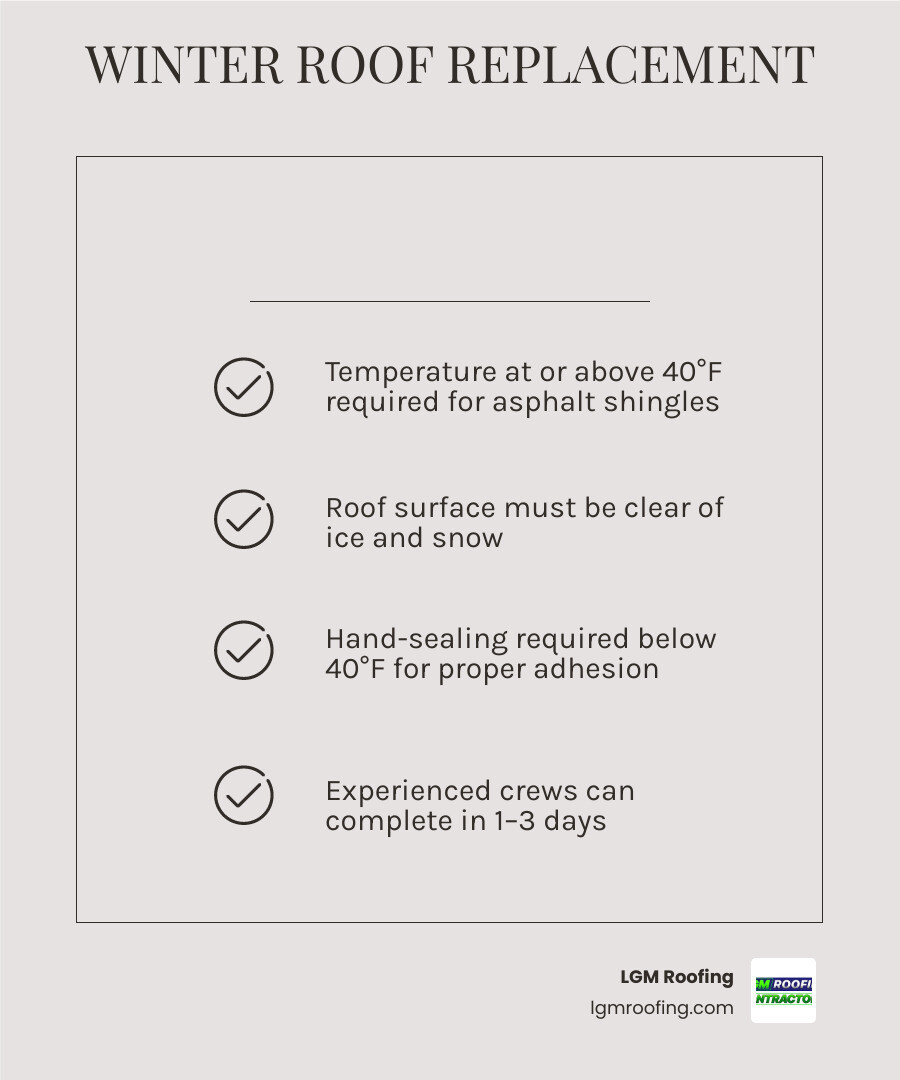
- Yes, winter roof replacement is possible in New Jersey when temperatures stay at or above 40°F and the roof surface is clear of ice and snow
- Asphalt shingles require hand-sealing below 40°F since cold temperatures prevent the factory adhesive strips from activating on their own
- Metal roofing and SBS-modified asphalt shingles are more forgiving in cold conditions and hold up better during winter installs
- Experienced contractors can complete most winter replacements in 1–3 days, though shorter daylight and weather pauses may extend the timeline
- Manufacturer warranties remain valid as long as cold-weather installation guidelines — like hand-sealing — are followed
That said, winter roofing isn’t as simple as a summer job. Cold temperatures affect how materials behave, how long the work takes, and how safely a crew can operate on your roof. The key is knowing what conditions make it feasible — and what red flags mean you should hold off.
Whether you’re dealing with an emergency leak, storm damage, or just trying to get ahead of the problem before the next nor’easter hits, this guide walks you through everything a New Jersey homeowner needs to know.
I’m Darwin Mizhirumbay, co-owner of LGM Roofing and a GAF Master Elite certified contractor with hands-on experience navigating the question of can you replace a roof in winter across New Jersey’s unpredictable cold-weather seasons. In the sections ahead, I’ll break down the real conditions, material considerations, and professional techniques that separate a successful winter installation from one that causes more problems than it solves.
Can You Replace a Roof in Winter? Feasibility and Conditions

When the temperature drops in places like Wayne, Paterson, Bloomfield, and Piscataway, homeowners often assume that all exterior home improvement projects grind to a halt. While it is true that winter is not the peak season for home renovations, the reality is that we can, and often do, perform complete roof replacements during the coldest months of the year.
However, answering the question of can you replace a roof in winter requires looking at specific weather conditions rather than just the calendar. The primary limiting factor is not the presence of winter itself, but the daily temperature and moisture levels. For a successful winter roof replacement, we must closely monitor local weather forecasts to find a window of clear, dry days.
The ideal temperature threshold for installing standard asphalt shingles is 40°F and rising. Below this temperature, standard roofing materials change physically, becoming stiff and brittle. If a contractor attempts to install a roof in sub-zero temperatures or during active snowfall, the materials can fail, and safety risks skyrocket. Therefore, we plan our winter projects around precise meteorological windows to ensure the structure remains dry and protected throughout the tear-off and installation phases. To understand how seasonal timing impacts your home’s protection plan, check out our guide on how to Don’t Get Soaked by Bad Timing for Your New Roof.
Why Homeowners Ask: Can You Replace a Roof in Winter?
Most homeowners do not wake up in January planning a voluntary roof replacement. Instead, the question of whether can you replace a roof in winter arises out of absolute necessity. Severe winter storms, heavy snow loads, and aggressive freeze-thaw cycles can expose hidden vulnerabilities in an aging roof system.
Active leaks are the most common driver. When water begins dripping through an attic or ceiling during a winter storm, waiting for the spring thaw is simply not an option. Water intrusion can quickly rot roof decking, ruin insulation, damage drywall, and foster toxic mold growth inside your home.
Furthermore, ice dams—which form when snow melts on the upper parts of a roof and refreezes at the colder eaves—can back water up under the shingles, causing massive structural damage. When faced with these urgent issues, homeowners must evaluate whether a quick patch will suffice or if the entire system has reached the end of its lifespan. To help you evaluate your situation, read our article on Can My Roof Be Repaired or Does It Need to Be Replaced? 7 Ways to Tell.
The Final Verdict: Can You Replace a Roof in Winter Safely?
The definitive answer is yes, you can replace a roof in winter safely, but only if the project is handled by an experienced, professional roofing crew using specialized cold-weather techniques. A safe winter installation relies on three strict pillars:
- A Completely Dry Roof Deck: We never lay down underlayment or shingles over frost, ice, or snow. Doing so traps moisture against the wooden roof deck, which will eventually lead to mold, mildew, and wood rot.
- Advanced Safety Equipment: Winter roofs are inherently more hazardous. Frost and invisible black ice can turn a pitched roof into a slide. Professional crews must use fall-arrest systems, safety harnesses, anchored ropes, and specialized winter-grip footwear.
- Patience and Precision: Installing materials in cold weather takes longer. Nails must be driven perfectly flush, and shingles must be handled gently to prevent cracking.
When these standards are maintained, a winter-installed roof will offer the same level of wind resistance, structural integrity, and longevity as a roof installed in the middle of June.
Cold Weather Challenges for Roofing Materials
Freezing temperatures alter the physical properties of many common building materials. To understand why winter roofing requires extra care, it helps to look at how different materials respond to cold weather.
| Roofing Material | Minimum Installation Temp | Cold Weather Behavior | Specialized Winter Technique |
|---|---|---|---|
| Standard Asphalt Shingles | 40°F | Become brittle, crack easily; sealant strips fail to self-activate. | Store in warm space; hand-seal each shingle tab with roofing cement. |
| SBS-Modified Asphalt | Below 40°F (varies) | Remain pliable and flexible down to lower temperatures. | Standard nailing, minimal hand-sealing needed if kept above freezing. |
| Metal Roofing (Stone-Coated) | No strict limit (tool-dependent) | Highly durable, does not crack; unaffected by freezing temperatures. | Drill pilot holes for panels; clear snow/ice from the deck before starting. |
| EPDM Rubber (Flat Roofs) | 45°F | Becomes stiff; liquid adhesives and lap sealants fail to cure. | Use hot boxes to warm adhesives; verify surface temp with infrared thermometer. |
As you plan your project, keep in mind that the material you choose plays a massive role in how easily it can be installed during the colder months. For a deeper dive into how different materials hold up over time, read our comprehensive piece on How Often Should You Replace Your Roof: A Breakdown by Material & Climate.
Temperature Thresholds for Asphalt Shingles
Asphalt shingles are the most popular residential roofing material in New Jersey, but they are also the most sensitive to cold weather. Most major manufacturers, including GAF, specify that the optimal temperature range for installing asphalt shingles is between 40°F and 85°F.
Below 40°F, asphalt shingles undergo a physical change, losing their flexibility and becoming highly brittle. If a roofer attempts to bend or handle a cold shingle, it can easily snap or crack. Furthermore, standard asphalt shingles feature a strip of factory-applied adhesive (called a sealant strip) that requires warm air temperatures and direct sunlight to activate and seal the shingles together.
Without this heat-driven chemical bond, the shingles remain loose and vulnerable to being torn off by winter winds. As a GAF Master Elite certified contractor, we strictly adhere to manufacturer guidelines, which dictate that if shingles are installed below 40°F, they must be manually hand-sealed to guarantee their wind resistance and protect the homeowner’s warranty.
Alternative Materials for Cold Climates
If you must replace your roof in the dead of winter, exploring alternative materials can make the process smoother and reduce the risk of installation defects.
SBS-modified asphalt shingles (such as Owens Corning Duration FLEX) are manufactured with a rubberized polymer. This modification allows the shingles to remain pliable and resist cracking even in sub-freezing temperatures. They bend easily without splitting, making them an excellent choice for winter installations.
Stone-coated metal roofing is another fantastic option for cold climates. Unlike asphalt, metal panels do not rely on heat-activated adhesives to form a waterproof barrier; instead, they are mechanically fastened to the roof deck. Metal roofing can be safely installed in freezing temperatures, provided the roof deck is clear of ice and snow. Additionally, metal roofing sheds heavy snow loads quickly, prevents ice damming by maintaining a consistent roof temperature, and is highly favored by insurance companies due to its durability.
How Professional Roofers Adapt Techniques in Winter
A successful winter roof replacement cannot be approached with a “business as usual” attitude. Experienced professional roofers must adapt their techniques, tools, and material management to overcome the physical challenges of cold weather.
One of the most critical adaptations involves tool calibration. Pneumatic nail guns rely on compressed air, which naturally produces moisture. In freezing temperatures, this moisture can freeze inside the airline or the gun itself, causing the tool to malfunction or misfire. If the air pressure is too high, the cold, brittle shingles can be blown right through by the nail; if it is too low, the nails will sit proud, preventing the shingles from laying flat. We constantly test-fire and calibrate our pneumatic tools throughout the day to ensure every single nail is driven perfectly flush without cracking the shingle.
Hand-Tabbing and Manual Sealant Application
Because the self-sealing adhesive strips on asphalt shingles will not bond naturally in cold weather, we implement a strict hand-sealing (or hand-tabbing) protocol when temperatures drop below 40°F.
During this process, our installers manually apply spot-allocations of high-quality, cold-weather roofing cement under each individual shingle tab. We place precise, quarter-sized dabs of cement under the corners of each tab, pressing them down firmly. This manual adhesive provides immediate, mechanical wind resistance, holding the shingles securely in place until the warmer spring sun can permanently activate the factory-applied thermal seal.
Skipping this step in the winter is a recipe for disaster, as winter winds can easily lift unsealed shingles, leading to leaks and voiding the manufacturer’s warranty.
Safe Material Handling and Storage
How materials are treated before they ever reach the roof deck is just as important as how they are installed. Shingles that are left sitting in the back of a cold truck overnight will freeze, harden, and crack the moment they are handled.
To prevent this, we practice strict material management. We store our shingle bundles in a heated environment, garage, or specialized “hot box” maintained at approximately 70°F for at least 24 hours before installation. We only bring out a few bundles at a time, keeping them warm and pliable until the exact moment they are nailed to the roof.
Furthermore, we take extra care during the tear-off process. Cold temperatures can make the plywood sheathing (roof deck) beneath your old shingles brittle. If workers are too aggressive with their tear-off shovels, or if they nail into frozen plywood without care, the wood can split and crack, compromising the structural holding power of the new roof’s fasteners.
Weighing the Pros and Cons of Winter Roof Replacement
Deciding whether to replace your roof in the winter or wait until the spring is all about balancing risks and rewards. While spring and fall are traditionally considered the “optimal” seasons for roofing in New Jersey, winter installations offer several unique, unexpected advantages. To explore how different seasons compare, take a look at our article on Why August Is the Perfect Month to Schedule a Roof Replacement in NJ.
Advantages of Off-Season Scheduling
The most significant benefit of scheduling a winter roof replacement is contractor availability and faster project turnaround. Because winter is traditionally a slower season for the construction industry, you will not have to wait weeks or months to get on a reliable contractor’s schedule.
If you have an active leak, a fast winter replacement provides immediate protection, preventing minor winter water damage from escalating into a catastrophic home renovation project come spring.
Additionally, because local roofers are not rushed by a massive backlog of summer projects, their highly experienced, core crews are the ones on-site, dedicating absolute precision and care to your home’s exterior.
Disadvantages and Risks of Winter Installs
The primary disadvantage of winter roofing is the unpredictable nature of the weather. A sudden snowstorm, high winds, or extreme cold snaps can put a project on hold, turning a standard two-day job into a week-long process.
Shorter daylight hours in the winter also reduce the available work time each day. Our crews must start later in the morning to allow morning frost or dew to melt off the roof, and we must wrap up by 4:30 PM as the sun begins to set.
Furthermore, the physical labor is simply harder on the crew, requiring more frequent breaks to warm up and stay safe. If you are unsure whether your roof needs a full replacement right now or if a temporary repair can get you through to spring, consult our guide on Roof Repair vs Replacement: How to Know What Your NJ Home Really Needs.
Preparing Your Home for a Winter Roof Replacement
A winter roof replacement is a major construction project that requires close cooperation between the homeowner and the roofing crew. Proper preparation can significantly speed up the installation process and protect your property from accidental damage. For a detailed look at the structural choices involved in a complete tear-off, read Can You Install a New Roof Over an Old One? Pros, Cons & NJ Regulations.
Steps for Homeowners Before the Crew Arrives
To ensure a smooth, safe, and efficient winter installation, we recommend that homeowners take the following preparatory steps:
- Clear the Driveway and Walkways: Please shovel and salt your driveway and walkways before our crew arrives. Our team will need safe, slip-free access to carry heavy materials, and we will need a clear space to position our dumpsters and material trucks.
- Protect Attic Valuables: The process of tearing off an old roof creates significant vibrations throughout the house. Dust, small bits of old underlayment, and sawdust will inevitably fall into your attic. We highly recommend covering any stored valuables in your attic with drop cloths or plastic sheeting.
- Remove Snow from the Ground: If there is heavy snow accumulation around the perimeter of your house, try to clear a path. This helps our crew safely navigate the perimeter and makes it much easier for us to find and clean up dropped nails and debris during our final sweep.
- Maintain Scheduling Flexibility: Understand that winter roofing timelines must remain fluid. If a sudden ice storm or severe cold snap is forecasted, be prepared to adjust the start date for the safety of our workers and the integrity of your home.
Frequently Asked Questions about Winter Roofing
Will a winter-installed roof be covered by warranty?
Yes, absolutely. A roof installed in the winter is fully covered by manufacturer warranties, including GAF’s industry-leading coverage, provided that the installation strictly follows the manufacturer’s cold-weather guidelines. As a GAF Master Elite certified contractor, we are trained to meet these exact specifications. This includes manually hand-sealing shingles with roofing cement when temperatures are below 40°F. If a contractor ignores these steps and the shingles fail to seal, the manufacturer may void the warranty. Working with a certified professional ensures your investment remains fully protected.
How long does a winter roof replacement take?
While a standard roof replacement in the summer might take one to two days, a winter roof replacement typically takes slightly longer—usually between two and three days for an average-sized home. This extended timeline is due to shorter daylight hours, delayed morning starts to allow frost to melt, and the extra time required for our crew to carefully hand-seal each shingle tab and safely navigate the roof.
What happens if it snows during the installation?
We monitor the weather forecast on an hourly basis. We will never tear off more of your old roof than we can safely replace and “dry-in” with a waterproof synthetic underlayment on the very same day. If an unexpected snow shower begins mid-job, our crew will immediately stop tearing off new sections, secure a heavy-duty waterproof barrier over any exposed areas, and pause work until the weather clears and the deck can be dried off.
Conclusion
At LGM Roofing, we are a premier general contractor in New Jersey with over 25 years of construction experience. Serving homeowners in Wayne, Paterson, Bloomfield, Piscataway, and the surrounding areas, we bring unmatched service, elite craftsmanship, and a commitment to excellence to every single project—no matter the season.
Our GAF Master Elite certification allows us to offer the highest-quality roofing systems backed by solid, industry-leading warranties that give you total peace of mind. We understand that a failing roof in the middle of winter is incredibly stressful, but you do not have to face the cold weather alone.
Whether you need an emergency winter replacement or want to plan ahead for a seamless spring installation, our expert team is ready to help. Schedule your professional winter roof replacement today and let us protect what matters most.
