


Siding Material Comparison by Longevity and Appearance: A Guide
Why Siding Longevity and Appearance Matter for New Jersey Homes
A siding material comparison by longevity and appearance helps New Jersey homeowners choose an exterior that fits their home, their vision, and the region’s changing weather. Siding must do more than look good on day one. It needs to handle moisture, wind, sun, and freeze-thaw cycles while protecting the walls beneath it. Brick veneer and stone can last the longest, while fiber cement, steel, vinyl, wood, and engineered wood each offer different strengths in style, upkeep, and durability. LGM Roofing brings a quality-first approach backed by GAF Master Elite certification and dependable warranty protection.
Explore our siding selection guide | Schedule professional siding installation
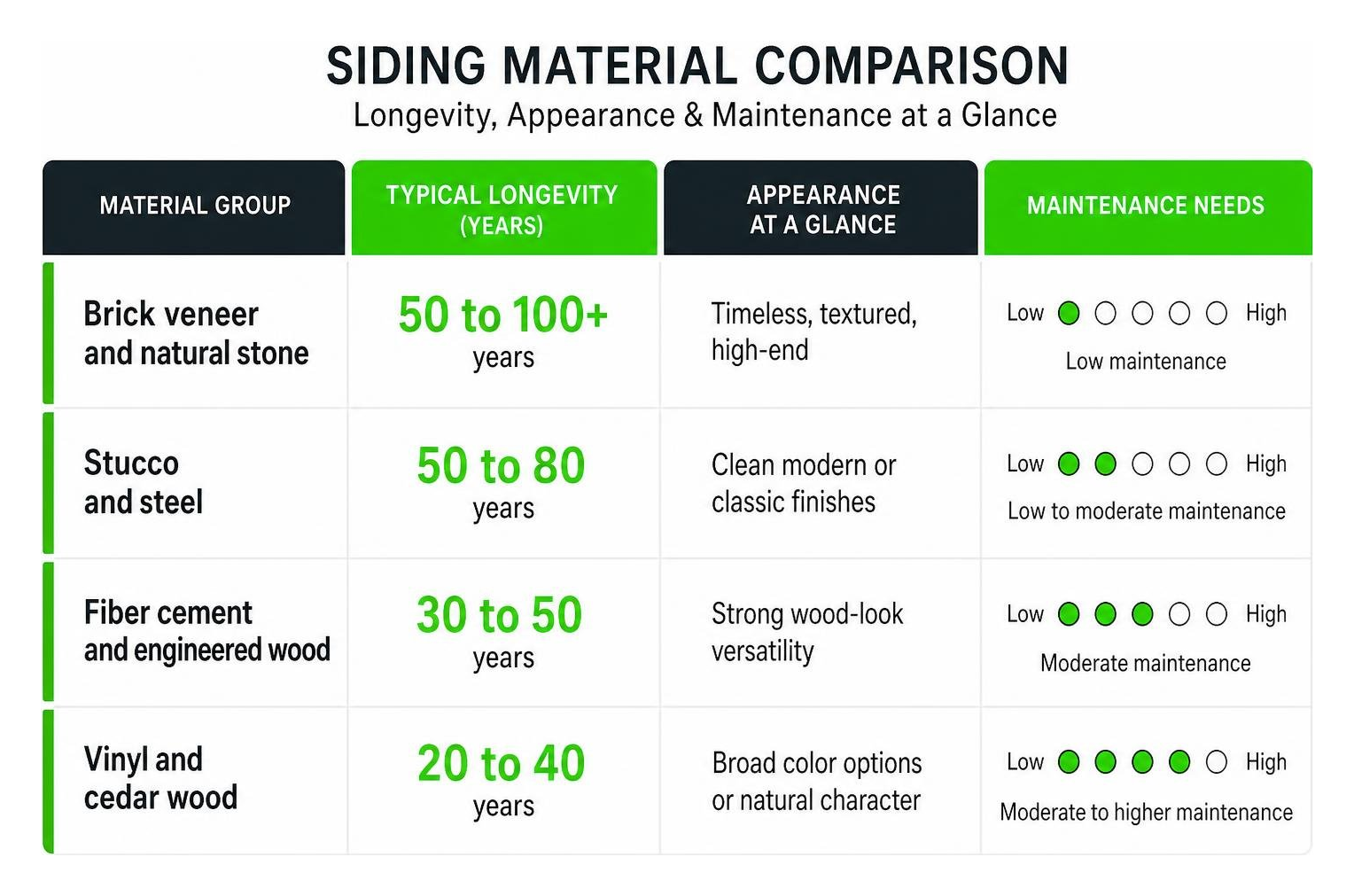
| Material group | Typical longevity | Appearance at a glance |
|---|---|---|
| Brick veneer and natural stone | 50 to 100+ years | Timeless, textured, high-end |
| Stucco and steel | 50 to 80 years | Clean modern or classic finishes |
| Fiber cement and engineered wood | 30 to 50 years | Strong wood-look versatility |
| Vinyl and cedar wood | 20 to 40 years | Broad color options or natural character |
The right choice is rarely just the material with the longest lifespan. It is the one that matches your home’s style, your maintenance comfort level, and the weather it will face over time.
I am Darwin Mizhirumbay, a second-generation New Jersey exterior contractor focused on clear communication, durable workmanship, and helping homeowners make confident decisions through a siding material comparison by longevity and appearance. Contact LGM Roofing for professional siding guidance.
Learn more about siding material comparison by longevity and appearance:
Comprehensive Siding Material Comparison by Longevity and Appearance
Selecting exterior cladding requires balancing long-term performance with curb appeal. Each siding category brings unique physical properties, design profiles, and care requirements. Whether you own a classic Tudor in Short Hills or a historic colonial in Wayne, understanding these differences ensures your home remains beautiful and protected.
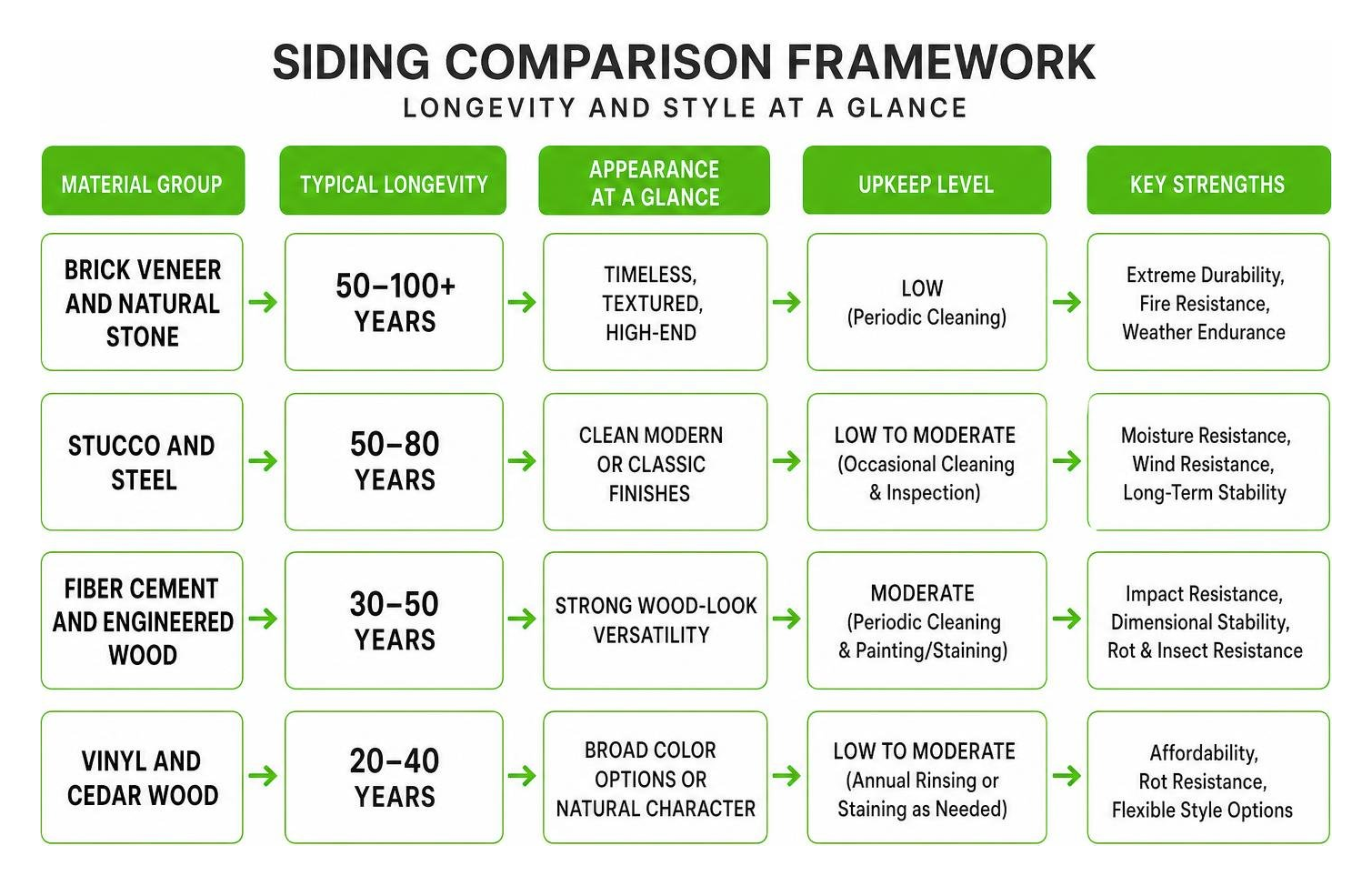
To help you compare options side by side, we have detailed how popular materials handle weather, maintenance, and style preferences in our comprehensive Siding Selection 101: A Homeowner’s Comparison Guide.
| Material | Average Lifespan | Primary Aesthetic Profiles | Upkeep Level | Resistance Strengths |
|---|---|---|---|---|
| Vinyl | 20–40 Years | Dutch lap, traditional clapboard, board-and-batten | Low (Annual rinsing) | Rot, insects, surface moisture |
| Fiber Cement | 30–50 Years | Authentic cedar grain, smooth architectural panels | Low to Moderate | Fire, pests, warping, high winds |
| Cedar Wood | 20–40 Years (Up to 60) | Shingles, shakes, bevel clapboard | High (Routine sealing/staining) | High impact, authentic historic charm |
| Steel | 40–70 Years | Board-and-batten, vertical panels, timber textures | Low | Non-combustible, freeze-thaw stable |
| Engineered Wood | 30–50 Years | Deep wood embossment, lap panels | Moderate (Periodic painting) | Fungal decay, hail impact |
| Stucco | 50–80 Years | Smooth, hand-troweled, swept textures | Moderate | Fire protection, thermal mass |
| Brick Veneer | ~100 Years | Traditional masonry, classic red/earth tones | Very Low | Decades of wear, severe storm protection |
| Natural Stone | 50–100+ Years | Fieldstone, ledgestone, cut ashlar | Very Low | Maximum weathering & mechanical strength |
Detailed Siding Material Comparison by Longevity and Appearance: Vinyl and Fiber Cement
Vinyl and fiber cement represent two of the most popular mainstream cladding options. Standard vinyl is crafted from synthetic polyvinyl chloride (PVC) extrusions, typically ranging between 0.035 and 0.055 inches thick. Vinyl typically lasts 20 to 40 years, making it a reliable option for homeowners in working-class communities like Paterson and Piscataway looking for low upkeep and solid performance. Because vinyl panels float on fasteners to allow up to half an inch of thermal expansion across a 12-foot length, proper installation is necessary to prevent buckling. To dive deeper into vinyl performance, review our guide on how long vinyl siding lasts.
Fiber cement, made from a dense blend of Portland cement, sand, and cellulose fibers, lasts 30 to 50 years or more. Premium brands like James Hardie feature non-combustible Class A fire ratings, making them ideal for high-end properties in Short Hills or Alpine where fire resistance and architectural fidelity are top priorities. Fiber cement tightly replicates real wood grain without the risk of rot or insect damage. For a full head-to-head analysis, check out The Complete Guide to Vinyl Siding vs Fiber Cement Siding Comparison.
Extended Siding Material Comparison by Longevity and Appearance: Wood and Steel
Natural cedar siding remains a gold standard for historic authentic charm, lasting 20 to 40 years on average and extending up to 60 years with meticulous care. Its natural oils resist insects and moisture, but cedar remains vulnerable to wood rot, cracking, and weathering if left unsealed. Cedar requires repainting or restaining every 5 to 10 years to preserve its protective coating.
Steel siding provides extraordinary modern strength, lasting 40 to 70 years. Steel panels (typically 28 to 26 gauge) feature factory-applied finishes like Siliconized Modified Polyester (SMP) that resist fading, chalking, and scratches. Unlike wood, steel does not absorb moisture, suffer from freeze-thaw joint separation, or attract wood-destroying insects.
Lifespan Leaderboard: Longest-Lasting Siding Options

When absolute durability is the top consideration, heavy masonry, natural stone, and specialized metals lead the industry.
Masonry and Stone Cladding Longevity
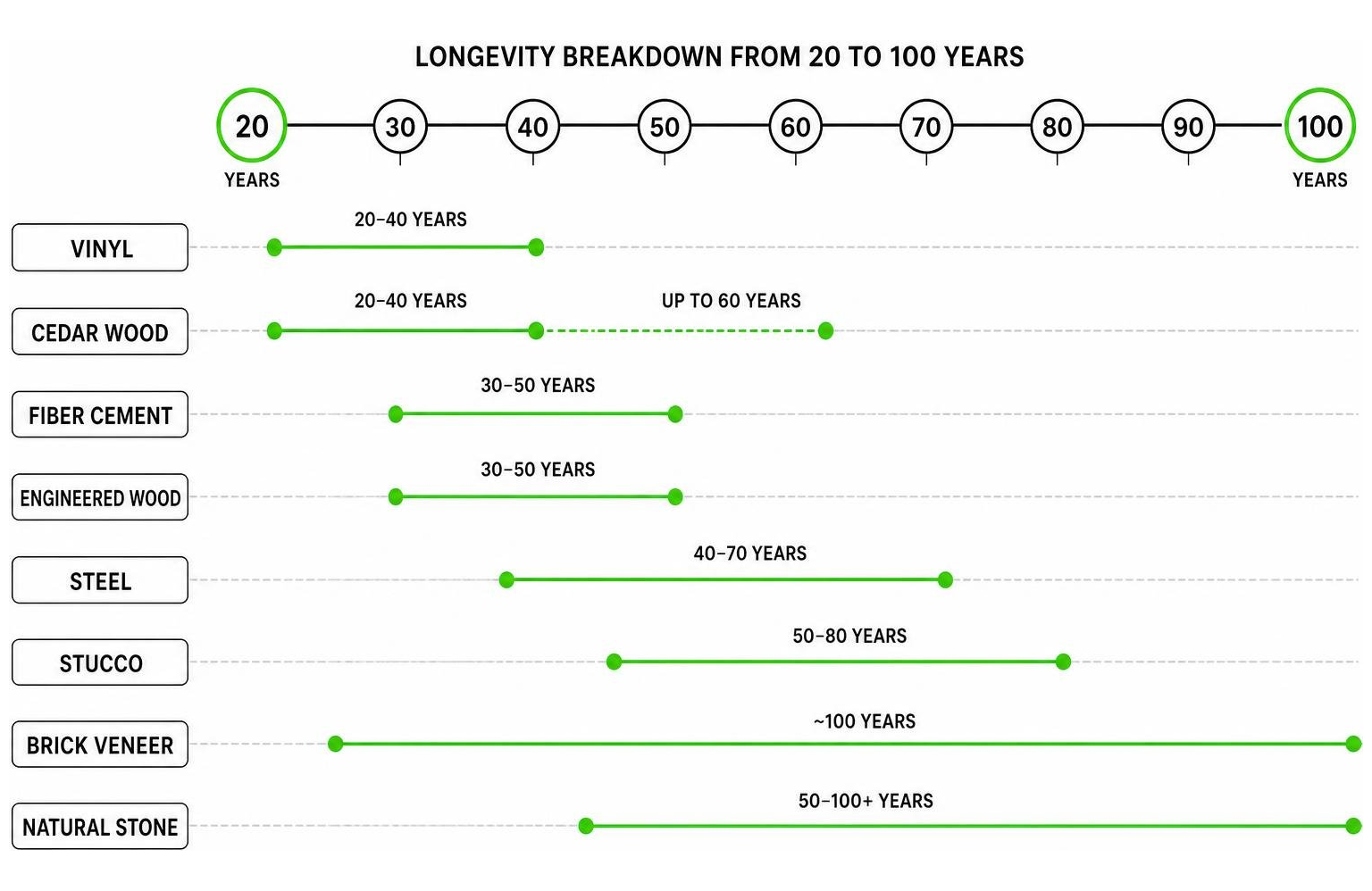
Natural stone and brick veneer offer unmatched architectural longevity. Brick veneer can last 100 years, relying on its high thermal mass to protect against harsh weather while regulating interior temperatures. Natural stone siding easily lasts over 50 to 100 years with virtually no material degradation. Both systems use drainage cavities and weep holes to shed moisture effectively.
Stucco siding lasts 50 to 80 years when properly applied over a stable drainage plane. Composed of Portland cement, lime, sand, and water, stucco creates a seamless envelope that performs exceptionally well against mechanical wear and ambient fire risks.
Metal and Composite Systems Longevity
Steel siding lasts between 50 and 70+ years, offering superior impact resistance against heavy hail and windborne debris. Aluminum siding lasts 40 to 50 years, making it a great lightweight option for coastal or high-humidity environments because it does not rust.
Engineered wood siding, such as LP SmartSide, lasts 30 to 50 years and is backed by 50-year limited warranties. Manufactured using wood fibers, specialized resins, and zinc borate treatments, engineered wood resists termites and fungal decay while offering high impact strength against flying winter debris.
Ranking Siding Materials by Aesthetic Appeal and Style Versatility
A material’s visual impact defines your home’s curb appeal. The right profile highlights your property’s best features, whether you prefer traditional warmth or clean modern lines.
Natural Wood and Authentic Textures
Natural cedar clapboards, shingles, and shakes offer a depth of grain and organic beauty that synthetic materials attempt to match. Cedar can be stained in transparent tones to showcase rich timber grain or painted in custom colors to accent historic elevations. This authentic charm makes cedar a favorite for historic restorations across Bloomfield and Wayne.
Engineered Profiles and Color Retention
Modern engineered profiles, including board-and-batten, Dutch lap, and vertical panels, provide incredible style flexibility. Fiber cement and factory-finished engineered wood hold paint significantly longer than raw wood—typically requiring touch-ups only every 10 to 15 years. Advanced factory coatings incorporate UV stabilizers that prevent fading and chalking under direct sunlight.
If your existing exterior is showing severe fading, warping, or cracking, explore the key signs you need new siding to determine if it is time for an upgrade.
Trade-Offs Between Longevity, Appearance, and Maintenance
Choosing exterior cladding involves balancing upfront performance with ongoing upkeep demands. High-longevity materials often demand specialized installation, while lower-maintenance choices may require periodic panel inspections.
Impact of Upkeep on Material Durability
Neglecting routine maintenance can significantly shorten a material’s lifespan. Wood siding requires regular sealing to prevent moisture intrusion, wood rot, and paint peeling. On the other hand, non-porous options like steel and vinyl require only occasional soft washing with a garden hose and mild detergent to remove surface dirt and algae.
If you are dealing with failing finishes on painted surfaces, read our practical advice on the most effective solution for peeling paint on siding.
Balancing Visual Charm with Long-Term Performance
While natural wood delivers classic beauty, its high maintenance overhead causes many homeowners to turn to fiber cement, steel, or engineered wood. These modern materials replicate authentic wood profiles while resisting moisture absorption, chalking, and panel fatigue, keeping your home’s exterior weather-tight for decades.
Selecting Siding Materials for Regional Weather Resilience
New Jersey weather presents distinct challenges across the seasons. From hot, humid summers to freezing winter storms, exterior materials must withstand continuous climate stresses:
- Severe Freeze-Thaw Cycles: Trapped moisture expands when frozen, causing unsealed fiber cement or hairline cracks in stucco to spall or delaminate. Learn how to prevent freeze-thaw damage to roofing and siding.
- Coastal Moisture and Salt Air: Salt air accelerates corrosion on standard metals, making aluminum, factory-coated steel, or vinyl superior choices for high-humidity areas.
- Nor’easters and High Winds: Heavy winter storms demand siding assemblies with strong mounting hems and wind resistance ratings verified up to 150 mph.
- Thermal Efficiency and Insulation: Aging siding lets thermal leaks compromise indoor comfort. Upgrading to insulated vinyl or backed fiber cement strengthens your home’s building envelope.
For local weather protection insights, consult our complete guides on best siding materials for Northeast weather, checking if your siding will survive a Northeast winter, and understanding the link in our AZ guide to how old siding affects energy efficiency.
Frequently Asked Questions About Siding Longevity and Appearance
What siding material offers the longest lifespan?
Brick veneer and natural stone offer the longest lifespans, lasting 50 to 100+ years. Among manufactured panel claddings, steel siding (40–70+ years) and stucco (50–80 years) lead in long-term durability.
How does maintenance frequency affect long-term appearance?
Routine cleaning prevents dirt accumulation, mold, and algae growth that stain siding surfaces. For wood and engineered products, keeping up with sealing schedules protects against UV degradation, paint peeling, and water intrusion.
Which siding material provides the best overall performance balance?
Fiber cement and engineered wood offer an outstanding balance of realistic wood texture, 30-to-50-year longevity, high impact resistance, and low to moderate maintenance demands.
Conclusion
Conducting a thorough siding material comparison by longevity and appearance allows you to choose an exterior cladding system that elevates curb appeal while delivering decades of weather protection. Whether you choose the timeless permanence of stone, the modern strength of steel, the wood-look realism of fiber cement, or the low-maintenance efficiency of vinyl, professional installation is key to long-term performance.
Beyond exterior cladding, protecting your home envelope often requires addressing roof leaks and weather damage. At LGM Roofing, our 25+ years of contractor experience in New Jersey and GAF Master Elite certification reflect our commitment to total exterior excellence. From urgent roof repair and targeted roof leak repair to complete siding, window, and door installation, we provide dependable craftsmanship backed by superior warranty protection. Contact us today to schedule your consultation and explore our professional siding installation services.

Comments are closed