


Cheat Sheet to Planning Your Roof Replacement Timeline
Master Key Phases When Planning Your Roof Replacement Timeline
When home and property owners begin planning your roof replacement timeline, it helps to view the project as two distinct chapters: pre-installation administrative planning and active on-site work. While the actual construction crew might only be on your property for a few days, the overall window spans anywhere from 2 to 8 weeks. Understanding these milestones prevents unnecessary stress and allows you to align exterior upgrades—such as new siding, window replacements, or door installations—with your primary roofing schedule.
As a trusted local general contractor, we find that homeowners who understand project duration from day one experience the smoothest transitions. Whether you need urgent roof repair following a severe weather event or a complete architectural overhaul, setting clear expectations is the secret to a seamless experience. For more on what to anticipate during major home updates, explore The Clock Is Ticking: What to Expect During Your Remodel.
Stage-by-Stage Breakdown from Decision to Completion
To make planning your roof replacement timeline straightforward, we break the entire project down into six clear stages. Each phase plays a vital role in protecting your home’s structural integrity and ensuring the final product meets manufacturer specifications.
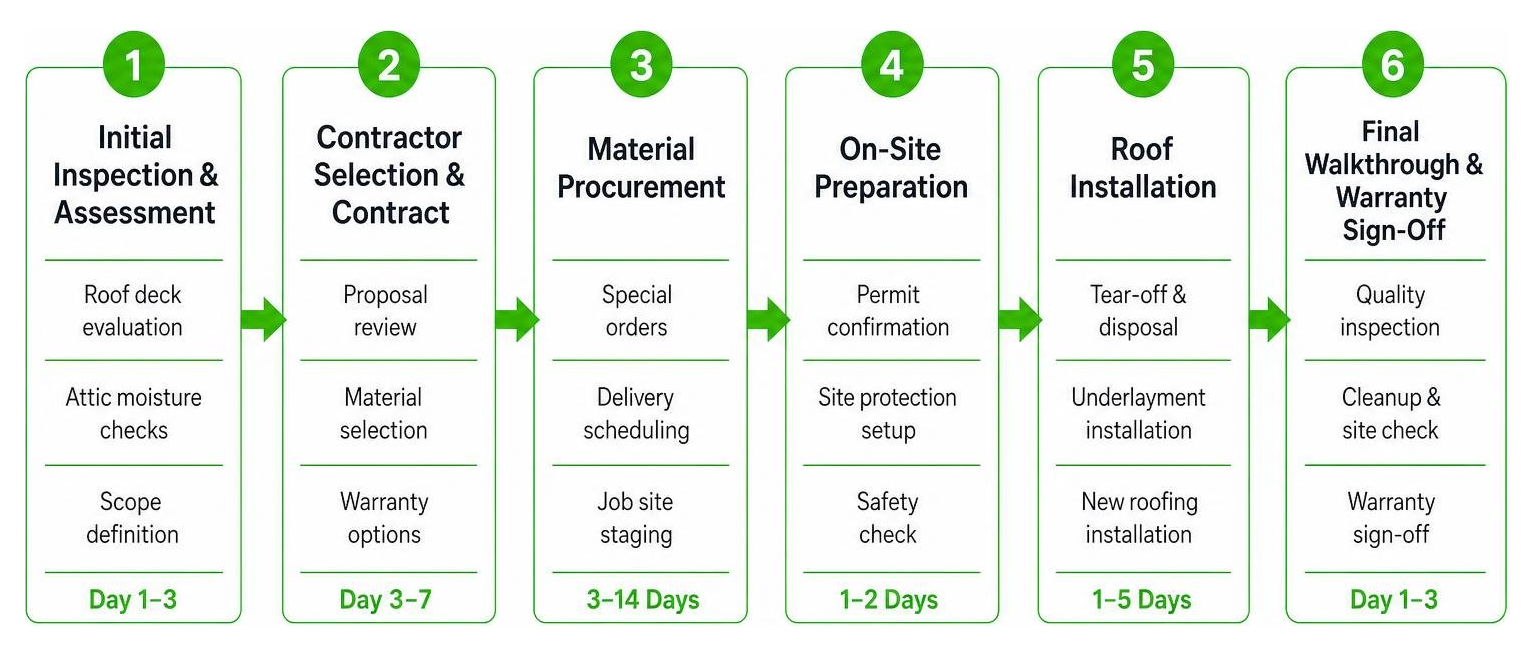
| Stage Number | Phase Name | Primary Actions | Typical Duration |
|---|---|---|---|
| Stage 1 | Initial Inspection & Assessment | Roof deck evaluation, attic moisture checks, scope definition | Day 1–3 |
| Stage 2 | Contractor Selection & Contract | Proposal review, material selection, warranty options | Day 3–7 |
| Stage 3 | Material Procurement | Special orders, delivery scheduling, job site staging | 3–14 Days |
| Stage 4 | Permitting & Approvals | Local municipality building permit filings & HOA reviews | 1–3 Weeks |
| Stage 5 | Active On-Site Installation | Tear-off, deck inspection, underlayment, shingle installation | 1–3 Days |
| Stage 6 | Cleanup & Final Approval | Magnetic sweeps, final walkthrough, warranty registration | 1–2 Days |
During Stage 1 and Stage 2, our team performs a thorough property inspection. We examine roof pitch, valley flashing, gutter condition, and attic ventilation. This is also the best moment to evaluate whether adjacent home systems—like siding, windows, or exterior doors—require coordination.
When you sign a contract, material procurement begins immediately. Standard architectural shingles arrive in a few business days, whereas specialized materials or custom architectural elements require longer lead times. Once materials are secured, our crew moves efficiently through tear-off, deck repairs, ice and water shield installation, underlayment application, and final shingle placement.
Permitting and Administrative Lead Times
Navigating municipal regulations is often the longest variable when planning your roof replacement timeline. In New Jersey townships—ranging from mid-income communities like Bloomfield, Paterson, Piscataway, and Wayne to luxury neighborhoods like Short Hills and Alpine—building permit lead times vary based on local building department workloads.
Municipal approvals generally take anywhere from 1 to 3 weeks. Certain jurisdictions require two-stage inspections—one to check the exposed plywood roof deck for rot or structural sag after tear-off, and a second to inspect the finished installation. In historical districts or developments managed by Homeowners Associations (HOAs), architectural review boards may take an additional 2 to 4 weeks to review shingle color palettes and profile selections. To learn more about local building code requirements, check out The Definitive Guide to Roof Replacement Permits in NJ.
As a certified GAF Master Elite Contractor, we manage permit filings directly on your behalf, ensuring all administrative paperwork is submitted cleanly to prevent township backlogs from stalling your project start date.
Material Types and Environmental Factors Affecting Duration

The physical structure of your roof and the materials you choose strongly influence active construction time. A small, single-story ranch home with a simple gable layout can be completed in a single long working day by an experienced 4- to 6-person crew. Conversely, custom estates featuring multiple dormers, complex valley intersections, and steep roof pitches requiring specialized safety rigging will naturally take longer.
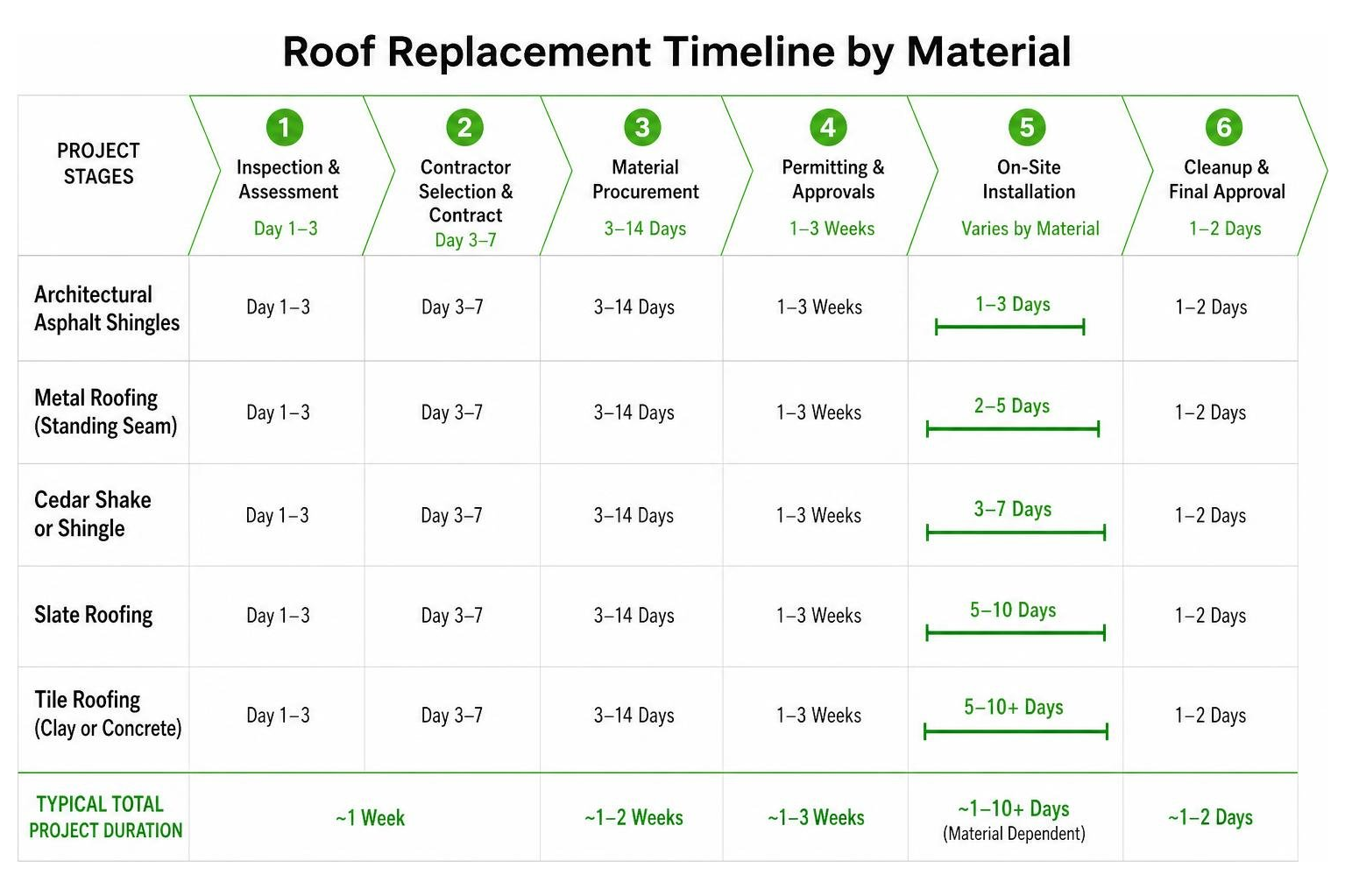
Material Choices Impacting Your Planning Your Roof Replacement Timeline
Your choice of roofing material directly impacts how long installation crews will be working on your roof:
- Architectural Asphalt Shingles: Installed on standard residential homes in 1 to 2 days. Large or complex homes take 2 to 3 days. Asphalt shingles offer flexible styling, proven durability, and fast setup.
- Metal Roofing (Standing Seam): Takes 2 to 4 days for standard layouts and up to a week for custom architectural shapes. Metal panels require precise hand-crimping and hidden fastener alignment.
- Concrete and Clay Tile: Takes 5 to 7 days or more. Tile systems require heavy-duty roof framing assessments, tile batten installation, and precise manual interlocking.
- Natural Slate: Takes 1 to 2 weeks or more. Slate installation is a master trade requiring skilled slate cutters to carefully hand-shape each tile and fasten it using copper nails.
For custom estates in high-income areas like Short Hills or Alpine, premium synthetic slates, heavy-profile shake designs, and standing seam copper accents offer unmatched elegance, though they demand extra time for meticulous craftwork. For single-family residences in Wayne, Bloomfield, or Piscataway, high-performance GAF architectural shingle systems offer the perfect balance of quick turnaround, exceptional weather defense, and reliable local craftsmanship.
Optimal Seasons and Weather Delays
Weather is the single greatest unpredictable element when planning your roof replacement timeline. Late spring (April–May) and early fall (September–October) represent the sweet spot for New Jersey re-roofing projects. During these shoulder seasons, ambient temperatures range comfortably between 45°F and 85°F—ideal conditions for thermal self-sealing adhesive strips on asphalt shingles to activate without making the material soft under heavy boot foot traffic.
Rain, high winds, and winter freezing add necessary buffers to project duration:
- Rain & Moisture: Tear-off should never occur in active rain, as exposed plywood decking will absorb moisture, leading to mold or deck warping. A single rainy day typically adds 1 to 2 days to the schedule.
- Cold Weather: Asphalt shingles installed below 40°F become brittle and require manual hand-tabbing with asphalt sealant until warm sunshine seals the adhesive strips.
- Post-Storm Demand: Following severe northeastern coastal storms or hail events, high community demand for emergency roof repair can create regional crew and material backlogs stretching 4 to 6 weeks.
To choose the optimal window for your property update, read Don’t Get Soaked by Bad Timing for Your New Roof.
Actionable Steps to Avoid Delays and Speed Up Installation
While weather and municipal permits are outside your direct control, homeowners can take specific proactive measures to keep their project running smoothly on schedule. Proper property preparation speeds up daily tear-off, protects surrounding exterior features like siding, windows, and doors, and prevents accidental damage.
Essential Preparation Steps When Planning Your Roof Replacement Timeline
Following a step-by-step pre-installation checklist ensures safety and efficiency on workdays:
- Clear the Driveway and Staging Zones: Move all personal vehicles, trailers, and basketball hoops out of the driveway the night before work begins. Crews need easy access for dump trailers, material delivery booms, and disposal equipment.
- Protect Outdoor Furniture and Landscaping: Move patio furniture, grills, potted plants, and outdoor decorations at least 15 feet away from the perimeter of your home. Cover delicate shrubs or flowerbeds with heavy canvas tarps.
- Secure Interior Belongings and Wall Decor: The continuous hammering on your roof creates vibration throughout the house. Remove delicate picture frames, mirrors, and hanging art from upper-story walls.
- Cover Attic Stored Items: Dust, small wood splinters, and minor debris will fall between roof decking boards into the attic space during tear-off. Spread drop cloths or plastic sheeting over stored boxes and heirlooms.
- Keep Children and Pets Indoors: Construction zones contain falling nails, heavy equipment, and elevated noise levels comparable to outdoor machinery. Keep pets inside or arrange off-site daycare during active tear-off hours.
- Notify Your Neighbors: Inform neighboring properties about the start date. Roofing operations generate noise during business hours and require large delivery trucks in suburban driveways.
Proven Strategies to Streamline Project Scheduling
To minimize waiting times when planning your roof replacement timeline, consider these proven project scheduling strategies:
- Order Materials at Contract Signing: Submit material selections immediately upon signing your contract so orders can be queued at regional supply centers while permit applications process in parallel.
- Schedule During Shoulder or Off-Peak Months: While peak season (May–October) creates full contractor schedules, scheduling in early spring or late fall often ensures faster crew deployment.
- Select Local, Fully Certified Contractors: Partnering with a fully licensed local general contractor who holds top-tier manufacturer credentials ensures direct access to in-stock factory materials and streamlined municipal permit processing.
- Coordinate Exterior Projects Simultaneously: If your home requires new siding, window upgrades, or exterior door replacements, bundling these services with a single contractor eliminates multi-trade downtime and simplifies project oversight.
Homeowners in Essex County can explore detailed neighborhood timeline guidance in our Roof Replacement Bloomfield Complete Guide.
Frequently Asked Questions About Roof Replacement Timelines
How long does a typical residential roof replacement take?
The overall timeline from your initial contact through final inspection spans 3 to 8 weeks. However, the physical installation on your property takes only 1 to 3 days for standard asphalt shingle roofs on standard residential homes. Complex designs, metal panels, or clay tile systems extend physical installation time to 3–7 days or up to 2 weeks.
What are the most common causes of roof replacement delays?
The four most common delay factors are:
- Adverse Weather: Rain, ice, or high winds suspend tear-off and installation to protect the exposed home structure.
- Hidden Roof Deck Rot: Discovering rotted plywood or sagging roof rafters after tearing away old shingles requires unexpected structural wood repairs, adding 0.5 to 2 days to the project.
- Permit Backlogs: Municipal building department delays during peak spring and summer construction rushes.
- Material Lead Times: Specialized metal profiles, custom tile orders, or post-storm regional supply chain disruptions.
What is the best time of year to replace a roof?
Late spring (April through May) and early fall (September through October) provide the best climate conditions for roof replacement in New Jersey. Ambient air temperatures stay between 45°F and 85°F, allowing asphalt shingle thermal sealant strips to bond properly without overheating the crew or softening the roofing material.
Conclusion
Planning your roof replacement timeline does not need to feel overwhelming. By breaking the project down into administrative planning, material procurement, active construction, and post-installation walkthroughs, you can navigate your roof upgrade with complete confidence.
Once physical installation is finished, our team conducts a thorough magnetic sweep of your property to collect stray nails, completes a joint walkthrough with you, and registers your official GAF Master Elite manufacturer warranty within 30 to 60 days. To keep your investment protected for decades to come, we recommend scheduling bi-annual roof inspections each spring and fall, keeping gutters clear, and promptly addressing minor roof repair or maintenance needs.
When you are ready to start planning your roof replacement, trust LGM Roofing—New Jersey’s premier general contractor with over 25 years of construction excellence. Contact us today to schedule your professional roof replacement!

Comments are closed