


Snow, Ice, and Your Roof: Metal vs Shingles in Cold Climates
What Performs Better in Winter: Metal Roof vs Shingle Roof in Snow and Ice?
When it comes to metal roof vs shingle roof in snow and ice, metal roofs have a clear performance edge in cold climates. Here’s a quick comparison:
| Factor | Metal Roof | Asphalt Shingle Roof |
|---|---|---|
| Snow shedding | Slides off naturally (smooth surface) | Holds snow (textured surface) |
| Ice dam risk | Lower – sheds meltwater quickly | Higher – uneven melt causes refreezing |
| Freeze-thaw durability | Expands/contracts without cracking | Can stiffen, crack, and absorb moisture |
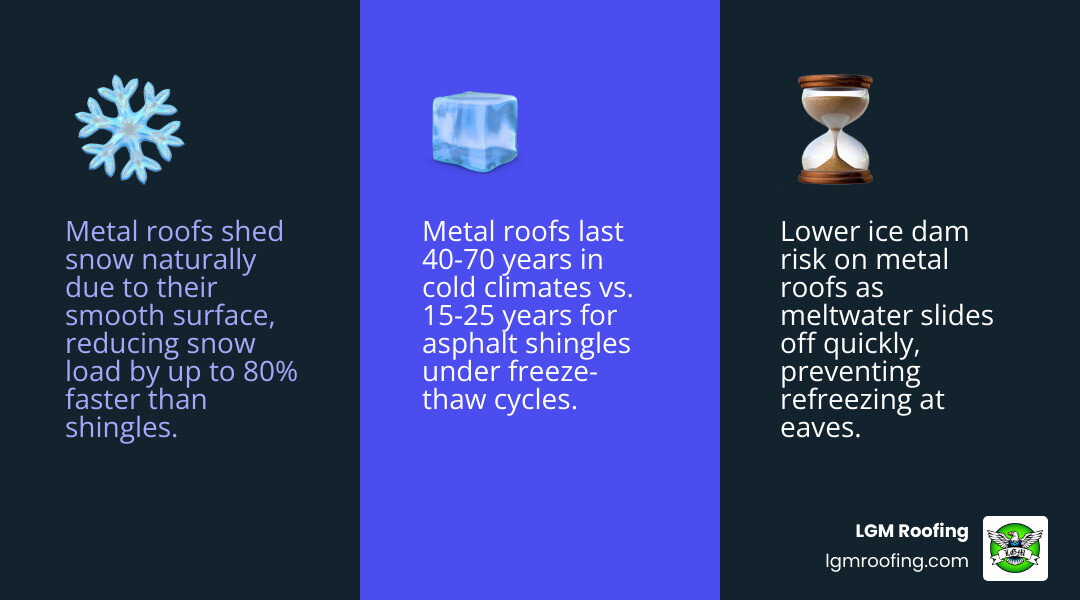
| Lifespan in cold climates | 40-70 years | 15-25 years |
| Winter maintenance | Minimal | More frequent inspections needed |
| Attic temperature | Significantly cooler in summer; better regulated year-round | Higher heat absorption, less regulated |
If you’re a New Jersey homeowner weighing your options after a tough winter, that table tells most of the story. Metal roofs shed snow faster, resist ice dams better, and last far longer in freeze-thaw conditions. Shingles cost less upfront and are easier to repair, but they demand more attention every season.
Now for the full picture – because the right choice still depends on your home’s structure, your budget, and your long-term plans.
I’m Darwin Mizhirumbay, founder of LGM Roofing and a second-generation roofing professional with hands-on experience helping New Jersey homeowners navigate exactly this decision – metal roof vs shingle roof in snow and ice – through our region’s demanding winters. In the sections below, I’ll walk you through everything you need to make a confident, informed choice.
How Winter Weather Challenges New Jersey Roofing Systems
Living in New Jersey—whether you’re in Wayne, Paterson, Bloomfield, or Piscataway—means your home is on the front lines of a seasonal battle. By April 2026, we’ve seen our fair share of “nor’easters” that dump heavy, wet snow followed by a deep freeze. This cycle is brutal on roofing materials.
The primary challenge isn’t just the cold; it’s the weight. House designs in our snowy areas are typically built to handle a snow load of 35 to 50 pounds per square foot. To put that in perspective, that’s about four feet of light, fluffy snow, but only about one foot of heavy, wet slush. When that weight sits on your roof for weeks, it tests every joint and rafter.
Beyond the weight, moisture intrusion is the silent enemy. As snow melts and refreezes, it finds the tiniest gaps. If your roof isn’t up to the task, you’ll start seeing the Signs Of Roof Damage inside your attic or along your ceiling. In many cases, a series of harsh winters can accelerate the need for a full Roof Replacement.
Why snow shedding is different for a metal roof vs shingle roof in snow and ice
The biggest physical difference between these two materials is surface friction. Imagine trying to slide down a playground slide made of sandpaper versus one made of polished steel. That is exactly what snow experiences.
Asphalt shingles have a granular, sandpaper-like texture. This is great for walking on the roof during a summer repair, but in winter, those granules act like tiny anchors for snow and ice. The snow stays put, building up into heavy layers.
On the flip side, products like steel metal roof feature smooth, coated panels. Gravity is the metal roof’s best friend. As soon as the sun hits the metal or the house warms up slightly, a thin film of water forms between the roof and the snow. Because there’s no texture to hold it back, the snow simply slides off in large sheets. This “self-shedding” mechanism instantly relieves the structural stress on your home.
Impact of heavy snow on roof pitch and drainage
The “pitch” or slope of your roof determines how well it handles the white stuff. For effective snow shedding, a roof slope of 4/12 to 6/12 is ideal. If your roof is too flat (less than 2/12), snow won’t slide off a metal roof easily, and it will pond on a shingle roof.
In New Jersey, we often see older homes with complex rooflines. These valleys and dormers are where meltwater drainage becomes critical. If snow can’t move toward the gutters, it stays on the roof, increasing the risk of leaks. We always remind our clients to check if their Is Your Roof Ready For Summer Storms How To Prevent Wind Water Damage In Nj/, because the same drainage principles that protect you from summer downpours are what keep you safe during a winter thaw.
Preventing Ice Dams: Metal roof vs shingle roof in snow and ice
Ice dams are the “final boss” of winter roofing problems. They happen when heat escapes your attic, melts the snow on the upper part of the roof, and then that water runs down to the cold eaves and refreezes. This creates a literal dam of ice that traps more meltwater behind it, forcing it under your shingles and into your walls.
| Risk Factor | Metal Roof Performance | Shingle Roof Performance |
|---|---|---|
| Thermal Conductivity | High (conducts heat to melt snow evenly) | Low (retains localized heat pockets) |
| Surface Texture | Smooth (water runs off before refreezing) | Rough (traps water, encouraging ice growth) |
| Seams | Raised/Interlocking (water can’t easily back up) | Overlapping (water can be forced “uphill” under shingles) |
Ice dams are one of the Top 7 Roofing Problems In New Jersey Homes And How To Spot Them/. Metal roofs have a natural advantage here because they conduct heat more uniformly across the surface, which helps prevent those localized “hot spots” that start the melting process. Plus, the smooth surface doesn’t give the ice anything to grip onto.
Managing freeze-thaw cycles in the Northeast
In the Northeast, we don’t just get cold—we get “bipolar” weather. One day it’s 45 degrees and raining; the next, it’s 15 degrees and snowing. This freeze-thaw cycle is a nightmare for porous materials.
Asphalt shingles can absorb small amounts of moisture. When that moisture freezes, it expands, causing the shingles to stiffen and eventually crack. Over time, this makes the shingles brittle. Metal, being non-porous, doesn’t absorb water. While it does expand and contract with the temperature, it’s designed to do so without losing its structural integrity. If you’re dealing with recurring leaks every spring, you might need a Roof Repair/ to address the damage caused by these cycles.
The role of insulation and attic airflow
Whether you choose metal or shingles, your roof is only as good as the attic beneath it. Proper ventilation is the secret sauce. In a well-ventilated attic, the temperature of the roof deck stays close to the outside temperature, which prevents the snow from melting prematurely.
For metal roofs, we often recommend an insulated underlayment system. This creates a thermal barrier that keeps your home’s warmth inside while reflecting radiant heat away from the snow layer. This consistent temperature control is the best defense against condensation buildup and the dreaded ice dam.
Durability and Long-term Reliability in Cold Climates
When we talk about the metal roof vs shingle roof in snow and ice debate, we have to look at the “long game.” A standard asphalt shingle roof in a harsh climate like ours typically lasts 15 to 25 years. In contrast, a well-maintained metal roof can easily last 50 to 70 years.
Think about it this way: by the time your metal roof needs replacing, your neighbor may have replaced their shingle roof three times. You can see more about these timelines in our guide on How Often Should You Replace Your Roof A Breakdown By Material Climate/.
Long-term reliability of a metal roof vs shingle roof in snow and ice
Metal roofs, particularly standing-seam varieties, use concealed fasteners. This means the screws are tucked away under the metal panels, protected from the snow, ice, and wind. This design significantly reduces the chance of leaks. Shingles, while durable, rely on thousands of individual nails and adhesive strips that can weaken over decades of winter storms.
For those who want the look of traditional materials with the strength of modern engineering, options like a architectural shingles or high-end metal shingles offer incredible impact resistance against hail and falling ice chunks.
Winter maintenance and safety considerations
Safety is a huge factor when comparing these two. Because snow slides off metal roofs so easily, it can be dangerous if it falls all at once onto a walkway or a parked car. This is why we always install snow guards. These are small brackets that break up the snow and force it to fall in small, harmless amounts rather than one giant “roof avalanche.”
Shingle roofs require a different kind of maintenance. Because they hold onto snow, you might occasionally need to use a roof rake to pull snow off the eaves to prevent ice dams. No matter which roof you have, keeping your gutters clear is non-negotiable. If you’re unsure of your roof’s current health, it’s worth learning about Roof Repair Vs Replacement In Nj How To Decide/ before the next big storm hits.
Frequently Asked Questions about Winter Roofing
Are metal roofs louder than shingles during winter storms?
This is the number one question we get in Paterson and Wayne! The short answer is: No, not if they are installed correctly. Back in the day, a metal roof was often just a sheet of tin over a barn. Today, your home has layers of solid wood decking, high-quality underlayment, and thick attic insulation. These layers act as a sound barrier. In many cases, a metal roof is actually quieter than a shingle roof because the mass of the metal helps dampen the sound of wind and sleet.
Can you install a new roof during a New Jersey winter?
Yes, you can! However, there are different rules for each. Asphalt shingles have an adhesive strip that needs heat to “seal.” If it’s too cold (typically below 40-45°F), the shingles won’t stick properly until spring, making them vulnerable to wind blow-offs. Metal roofs don’t rely on adhesives—they are mechanically fastened. This means we can install a metal roof in the dead of January without any issues. If you’re considering a mid-winter upgrade, you should check out Can You Install A New Roof Over An Old One Pros Cons Nj Regulations/ to see what’s possible for your specific property.
How much snow weight can a standard roof handle?
As we mentioned earlier, most New Jersey homes are designed for 35-50 lbs per square foot. Fresh, “fluffy” snow is light (about 7 lbs per cubic foot), but packed snow or ice can be three times heavier. If you see your interior doors sticking or notice new cracks in the drywall during a heavy snow season, that’s a sign the weight is stressing your structure, and you should call a professional for an emergency inspection.
Metal vs. Shingle Roofs: Winter Performance Comparison
Choosing between a metal roof vs shingle roof in snow and ice ultimately comes down to your priorities. If you want a “set it and forget it” solution that will protect your home for the next 50 years and shrug off the worst New Jersey winters, metal is the clear winner. If you need a reliable, beautiful roof that fits a tighter upfront budget, modern architectural shingles are a fantastic, time-tested option.
At LGM Roofing, we’ve spent over 25 years helping our neighbors in Wayne, Paterson, Bloomfield, and Piscataway stay warm and dry. We know the local codes, we know the weather, and we know how to build roofs that last.
Whether you’re ready for a sleek new metal system or a classic shingle look, we’re here to help you navigate the process with excellence and a solid warranty. Explore our comprehensive roofing services in New Jersey and let’s make sure your home is ready for whatever winter throws at us next!
