


Step-by-Step Guide to When to Replace a Damaged Roof in Austin
How Long Should You Wait to Replace a Damaged Roof After Weather Events?
When severe weather strikes, whether it’s a fierce summer thunderstorm or severe wind gusts, waiting too long to address structural vulnerabilities can lead to compounding home issues. Homeowners often ask: how long should you wait to replace a damaged roof once the storm passes? The short answer is that you should begin the evaluation process immediately and aim to schedule necessary replacement work within weeks rather than months.
Delaying action leaves your entire home open to moisture infiltration. Severe weather events can compromise the structural integrity of your roofing materials without leaving an obvious opening that you can spot from your driveway. Understanding How Storms Affect Your Roof and Siding Without You Knowing helps explain why prompt action after a storm is crucial for preserving your home’s exterior envelope.
Understanding Delays: How Long Should You Wait to Replace a Damaged Roof with Invisible Damage?
Not all roof damage results in water actively dripping into your living room on day one. High winds can cause subtle wind uplift, breaking the thermal seals between asphalt shingles. Once these seals are broken, wind-driven rain can easily seep underneath during subsequent storms.
Similarly, hail strikes cause severe micro-fractures in shingle substrate. To understand the physical mechanics of this process, check out An Essential Guide to How Hail Damages Roofing Shingles. Hail knocks off the protective mineral granules, exposing the underlying asphalt core to direct ultraviolet sunlight. Over time, UV rays degrade the unprotected asphalt, leading to accelerated shingle cracking, leak points, and deck rot. If you ignore invisible storm damage, you risk turning a straightforward replacement into a major restoration project involving attic rafters and interior drywall.
Mold and Structural Risks When Delaying Replacement
When moisture penetrates a compromised roof deck, it quickly affects the insulation and wooden supports beneath. Dark, damp attic environments combined with elevated moisture provide the ideal breeding ground for toxic mold. In fact, mold spores can begin colonizing wet attic insulation and wooden ceiling rafters in as little as 24 to 48 hours following a leak event.
As water continues to collect unnoticed:
- Fiberglass insulation becomes compressed and loses its thermal resistance (R-value), reducing household energy efficiency.
- Plywood or OSB roof decking becomes soft and spongy, leading to structural sag.
- Rafters, ceiling joists, and drywall absorb water, resulting in extensive internal wall repair and potential ceiling collapse.
Waiting to address known structural damage significantly increases overall restoration scope compared to executing a timely roof replacement.
Signs Your Damaged Roof Needs Immediate Replacement
Recognizing when your roof has passed the threshold of spot repairs is essential for protecting your property. Reviewing Is Your Roof Over the Hill? How to Spot the End gives you a foundational understanding of critical warning indicators.
Exterior Damage Signals: Shingles, Granules, and Flashing
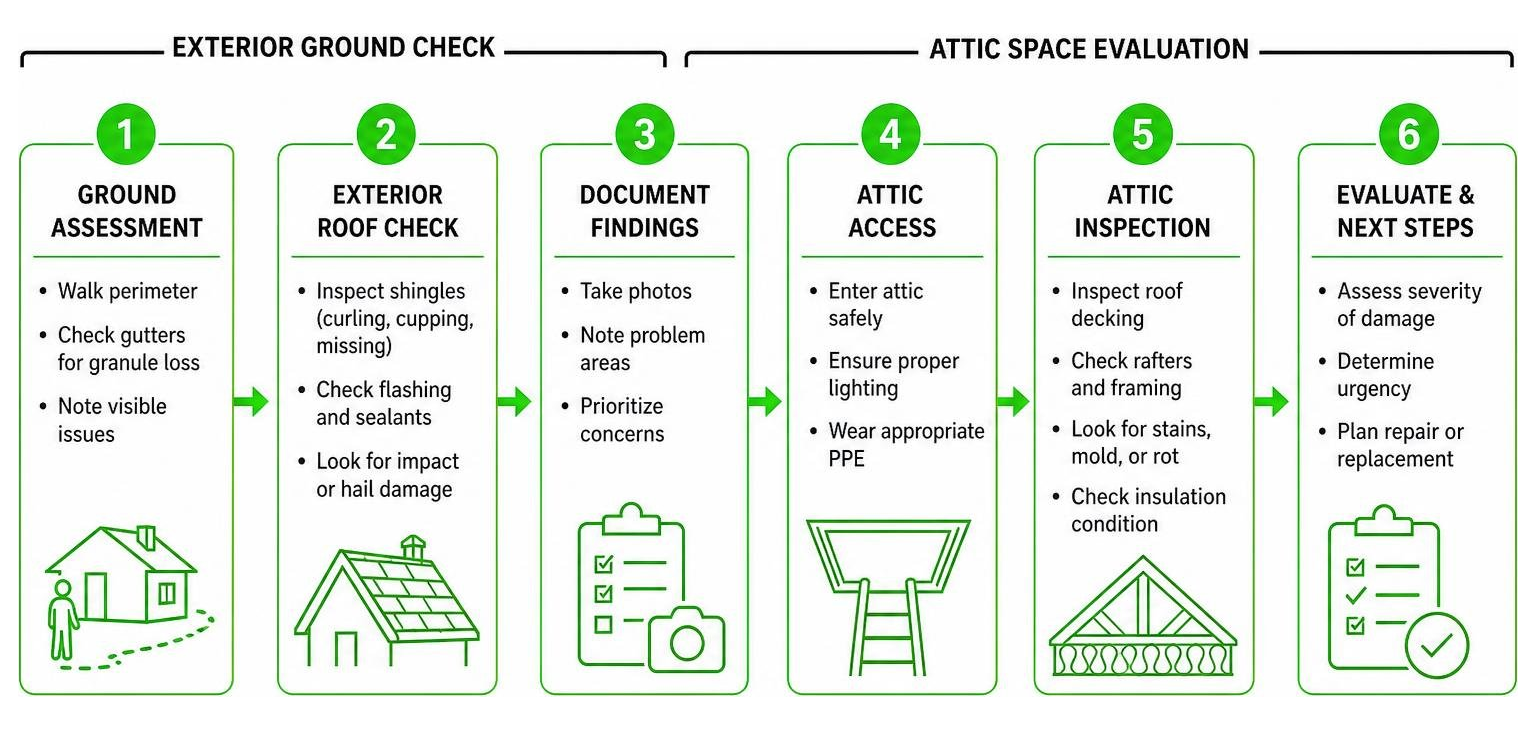
A ground-level walk around your property can reveal critical clues regarding the condition of your roof:
- Granule Loss in Gutters: Granules are crushed stone particles designed to protect asphalt shingles from UV light. Finding heavy accumulations of dark sand in your gutters signals that your shingles are nearing the end of their operational lifespan.
- Curling, Cupping, or Missing Shingles: When shingles begin curling upwards at the edges or cupping in the center, they have lost their flexibility and holding strength. Learn more about these symptoms in The Ultimate Guide to Missing or Curling Shingles.
- Flashing Deterioration: Flashing seals the critical seams around chimneys, dormers, and vent pipes. Rust, cracked caulking, or uplifted metal flashing around these high-risk areas exposes your home to heavy water penetration.
Interior Indicators and Attic Inspections
Indoor inspections often yield clear evidence of hidden roof failure. On a bright, sunny day, enter your attic space safely (following guidelines in How to Inspect Your Roof Safely in 5 Easy Steps) and look upward at the underside of the roof deck.

Look closely for:
- Pinpricks of Daylight: Visible daylight shining through the roof boards indicates holes in the decking and missing underlayment or shingles overhead.
- Water Stains and Moisture Marks: Dark streaks, damp insulation, or water rings along roof rafters mean active leaks are occurring during rain showers.
- Musty Odors: Persistent damp smells in your attic mean water has collected long enough to encourage organic growth within the insulation layer.
Repair vs. Replacement: Making the Right Long-Term Decision
Deciding whether to patch a section or complete a full tear-off comes down to objective frameworks. Our To Patch or Not to Patch: Your Ultimate Roofing Decision Guide provides an excellent breakdown of this choice.
A helpful industry rule of thumb is the 30% Rule: if repair evaluations approach or exceed 30% of the total scope of a brand-new roof, or if more than 30% of the overall roof surface is damaged, a full replacement is almost always the smarter, more practical choice long-term.
| Decision Factor | Spot Repair | Full Roof Replacement |
|---|---|---|
| Damage Extent | Isolated to < 10% of total surface | Exceeds 25% – 30% of roof area |
| Roof System Age | Less than half expected lifespan | Past 75% of expected service life |
| Shingle Availability | Exact color and style matches exist | Discontinued line or severe color fading |
| Underlying Decking | Solid, dry, intact plywood/OSB | Spongy, rotting, or water-logged decking |
| Long-Term Value | Low short-term initial involvement | Highest value-per-year of added service life |
Material Lifespans and Structural Thresholds
Understanding your current roof material’s expected service life helps determine whether proactive replacement is warranted:
- Three-Tab Asphalt Shingles: Generally offer an operational service life of 15 to 20 years.
- Architectural Asphalt Shingles: Thicker and multi-layered, providing an average lifespan of 25 to 30 years. Compare options detailed in The Ultimate Guide to Architectural Shingles vs Three Tab Shingles and explore key operational variables in Shingle Longevity 101: What Really Affects Your Roof’s Life.
- Standing Seam Metal Roofing: Extremely durable in cold and wet climates, carrying expected lifespans ranging from 40 to 70 years. Read more in The Great Roofing Debate: Metal vs Asphalt Shingles.
Real-world weather factors can reduce these estimates by several years. Once an asphalt shingle roof crosses 75% of its rated lifespan, material degradation accelerates rapidly.
Evaluating Shingle Availability: How Long Should You Wait to Replace a Damaged Roof Slope?
Homeowners often wonder if they can simply replace one slope of a roof rather than the entire structure. While partial slope replacements are technically possible, shingle manufacturer lines frequently update or discontinue color formulations every 3 to 5 years.
Attempting to repair an aged roof slope with new shingles often creates a stark visual mismatch due to weather fading on the remaining slopes. Furthermore, patching an aging slope leaves the rest of your home protected by old materials that may fail shortly after. Discover when partial work makes sense versus when it falls short in When Your Roof Needs a Total Tear Off.
Navigating Insurance Policies, Permits, and Contractor Selection
Managing a roof replacement after severe damage requires dealing with insurance, navigating local municipal requirements, and choosing a trustworthy installer. Start by reviewing The Ultimate Guide to Filing a Roof Damage Insurance Claim.
Insurance Coverage Factors: RCV vs. ACV Policies
When filing a claim for storm damage, understanding your specific policy structure is critical to avoid unexpected surprises:
- Replacement Value (RCV): Covers replacing your damaged roof with new materials of similar quality, minus your policy deductible.
- Actual Cash Value (ACV): Pays the current depreciated value of your roof based on its age and condition.
Many homeowners are unaware that insurance providers often automatically transition roof coverage from RCV to ACV once a roof reaches a certain age – typically 15 to 20 years old. Reviewing Common Roof Insurance Claim Mistakes to Avoid can help protect your rights during adjuster evaluations.
Choosing a Qualified Roofing Contractor
Selecting an experienced contractor is critical for long-term peace of mind. Ensure your contractor handles official permitting requirements as outlined in The Definitive Guide to Roof Replacement Permits in NJ.
At LGM Roofing, we are proud to hold GAF Master Elite certification – a distinction earned by only 2% of all roofing contractors nationwide. This certification supports superior craftsmanship, rigorous ongoing training, and access to exclusive system warranties such as the GAF Golden Pledge. Learn why certification matters by reading How GAF Certification Ensures Your Roof Installation Actually Lasts and gain guidance on selecting installers in What Makes a Good Roofing Company and How to Find One.
Whether you own a classic home in a mid-income New Jersey suburb or require premium custom materials and precise architectural tailoring in higher-end neighborhoods, choosing a certified local contractor helps ensure your home gets dependable protection tailored to its community, climate exposure, and local code requirements. For homeowners in areas such as Wayne, Paterson, Bloomfield, and Piscataway, LGM Roofing brings reliable service, local expertise, and construction experience that supports a smoother replacement process from inspection through installation.
Frequently Asked Questions About Replacing Damaged Roofing
How often should a home roof undergo professional inspection?
We recommend scheduling a professional inspection at least once every two years, as well as immediately following any major weather event. Regular maintenance helps identify cracked sealant, loosened flashing, or missing shingles before water ever reaches your attic spaces. You can learn what professional inspectors look for in The Complete Guide to Professional Roof Inspection.
Does local building code impact whether a full replacement is required?
Yes. Local municipal building codes strictly govern roofing installation standards. Read Understanding the NJ Building Code for Your Next Roof Replacement for localized details. In many jurisdictions, if storm damage or structural failure impacts over 25% of a total roof surface within a 12-month period, building codes legally require a complete tear-off and replacement of the affected roof structure rather than localized patching.
Can you install a second layer of shingles over existing damaged roofing?
While installing new shingles directly over existing ones (reroofing) may be legally permitted up to a maximum of two total layers under building code standards, it is rarely recommended when damage is present. Learn why overlaying can be risky in Is Shingling Over Your Old Roof a Smart Move? and check layer limits in How Many Shingle Layers Are Actually Allowed by Code?. Layering over damaged roofing traps underlying moisture, hides rotten decking from view, adds excessive structural weight, and often voids manufacturer warranties.
Conclusion
So, how long should you wait to replace a damaged roof? The answer is simple: address damage as quickly as possible. Waiting for active leaks to appear inside your living space almost guarantees higher restoration demands from structural wood rot, ruined insulation, and hazardous attic mold growth. Preventative action paired with proper attic ventilation (detailed in Roof Ventilation 101: Why It Matters for Your Home) ensures long-term defense against harsh climate extremes.
With over 25 years of construction experience, LGM Roofing delivers dependable roof repair, replacement, siding, window, and door services tailored to your property. Contact us today to schedule a comprehensive roof assessment with our certified team.

Comments are closed