


The Great Roofing Debate: Metal vs Asphalt Shingles
The Roofing Decision That Could Save (or Cost) You Thousands
The asphalt shingles vs metal roofing comparison is one of the most important choices you’ll make as a homeowner — and the right answer depends on your budget, how long you plan to stay in your home, and the weather conditions your roof will face.
Here’s a quick breakdown to help you decide:
| Factor | Asphalt Shingles | Metal Roofing |
|---|---|---|
| Lifespan | 15-30 years | 40-70 years |
| Upfront Cost | Lower | Higher (roughly 2x) |
| Maintenance | More frequent | Minimal |
| Energy Efficiency | Moderate | High (reflects heat) |
| Weather Resistance | Up to 110 mph winds | Up to 140+ mph winds |
| Environmental Impact | 11M tons/year to landfills | 100% recyclable |
| Best For | Budget-conscious, short-term owners | Long-term owners, harsh climates |
| ROI | 60-70% | ~60% |
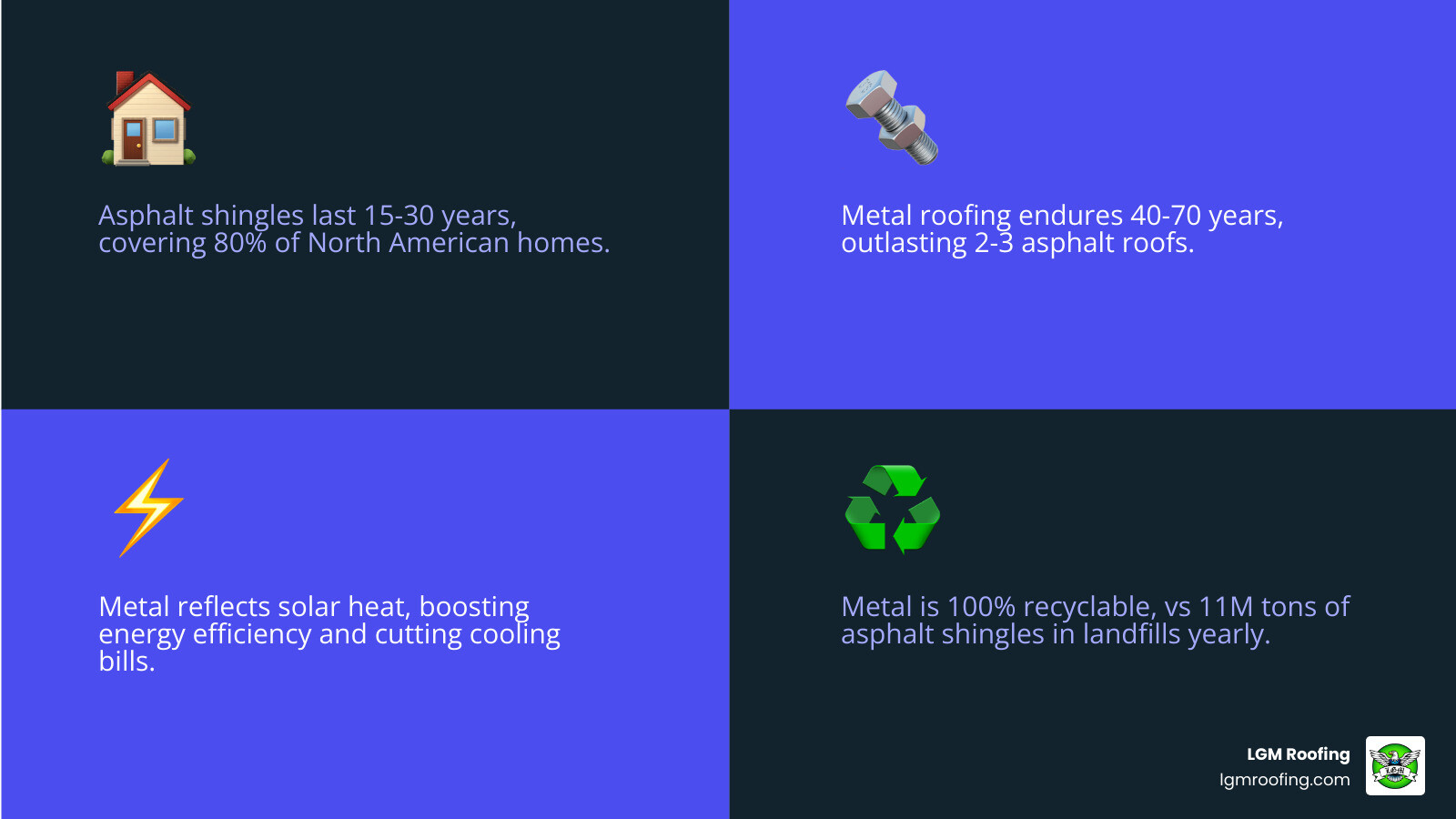
Both materials have real strengths. Asphalt shingles cover roughly 80% of North American homes for a reason — they’re affordable, widely available, and easy to install. Metal roofing, on the other hand, can outlast two or three asphalt roofs over the same period, making it a compelling long-term investment despite the higher upfront price.
Neither option is universally “better.” The right choice comes down to your specific situation: your timeline, your climate, and your priorities as a homeowner.
I’m Darwin Mizhirumbay, founder of LGM Roofing and a second-generation roofing professional based in New Jersey, and the asphalt shingles vs metal roofing comparison is one of the most common conversations I have with homeowners every single week. Growing up around the industry and now running a GAF Master Elite Certified operation, I’ve seen how the wrong material choice can lead to costly regrets — and how the right one protects a home for decades.
Asphalt Shingles vs Metal Roofing Comparison: Durability and Lifespan
When we talk about the service life of a roof in New Jersey, we have to look at how materials stand up to our unique four-season cycle. As we move through April 2026, the data remains clear: the gap in longevity between these two materials is significant.
Asphalt shingles typically offer a lifespan of 15 to 30 years. While standard 3-tab shingles sit on the lower end of that scale, high-quality architectural or dimensional shingles can push toward the three-decade mark if they are installed with precision. However, environmental factors like the humid New Jersey summers and freezing winters eventually cause the petroleum-based shingles to dry out, lose granules, and crack. Knowing how often should you replace your roof is largely a matter of tracking these material changes over time.
Metal roofing is a different beast entirely. Built from steel, aluminum, or copper, these systems are designed to last 40 to 70 years. In many cases, a metal roof is the last roof a homeowner will ever need to buy. They are virtually immune to the rot and organic growth that can plague shingles.
To keep your home protected, you should always keep an eye out for signs of roof damage, such as “balding” shingles where granules have washed away. In contrast, metal roofs primarily face cosmetic concerns like minor denting. Many modern metal systems carry a Class 4 impact resistance rating—the highest available—meaning they can withstand significant hail without compromising the home’s watertight seal.
Energy Efficiency and Environmental Impact
Sustainability is a growing priority for our neighbors in Wayne, Paterson, and Bloomfield. If you are environmentally conscious, the asphalt shingles vs metal roofing comparison has a clear leader.
Every year, approximately 11 million tons of asphalt shingles end up in North American landfills. Because they are petroleum-based, they don’t break down easily. Metal roofing, however, is often made from 25% to 95% recycled content and is 100% recyclable at the end of its long life.
From an energy perspective, metal roofs are “cool roofs.” They reflect solar radiation back into the atmosphere rather than absorbing it into your attic. This can lead to a 10% to 25% reduction in cooling costs during those sweltering July weeks in NJ. While some modified roofing options and “cool shingles” exist to help asphalt perform better, metal’s natural thermal emissivity generally makes it the superior choice for lowering utility bills.
Aesthetic Options and Curb Appeal
Your roof makes up nearly half of your home’s visible exterior. We often tell our clients that roofing is our heritage, quality is our tradition, and that includes making sure your home looks stunning.
- Asphalt Shingles: These offer incredible variety. Modern architectural shingles can mimic the look of natural slate or wood shakes, providing a “dimensional” look that fits perfectly in traditional New Jersey neighborhoods. They provide a sense of uniformity that many Homeowners Associations (HOAs) require.
- Metal Roofing: Once associated only with barns or commercial buildings, modern residential metal roofing comes in sleek standing seam profiles or even stone-coated steel that looks exactly like traditional shingles. It offers a clean, contemporary aesthetic that can make a home stand out on a tree-lined street.
Performance in New Jersey Weather Conditions
Our local climate in places like Piscataway and Bloomfield puts roofing materials to the ultimate test. Between heavy snow loads in the north and coastal wind gusts, your roof needs to be a fortress.
Wind resistance is a major factor. Standard asphalt shingles are usually rated for winds between 110 and 130 mph. Metal roofing systems, with their interlocking panels and heavy-duty fasteners, often boast ratings of 140 mph or higher. This makes them exceptionally resilient during the severe storms that occasionally roll through the Garden State.
We have identified the top 7 roofing problems in New Jersey homes, and many of them revolve around moisture. In the winter, metal roofs excel because they shed snow quickly, reducing the risk of heavy snow loads and ice dams. Asphalt shingles, while effective, can trap heat in the attic if not properly ventilated, leading to the freeze-thaw cycles that cause shingles to curl.
If you’re unsure how your current roof is holding up after a rough winter, it’s worth investigating roof repair vs replacement to see if a simple fix will suffice or if the material has reached the end of its road.
Installation and Maintenance Requirements
The installation process for these two materials is vastly different. A standard roof replacement using asphalt shingles can often be completed in just one to three days. It is a straightforward process that most experienced crews can handle efficiently.
Metal roofing requires a much higher level of specialized skill. The panels must be precisely cut and fastened to allow for thermal expansion (metal expands and contracts as it heats and cools). Because of this complexity, labor represents a significant portion of the investment.
Maintenance also varies:
- Asphalt: Requires periodic inspections to check for missing granules, algae growth (common in humid NJ), and loose shingles. Check out our roofing tag for more tips on keeping shingles in top shape.
- Metal: Extremely low maintenance. An annual walk-around to ensure fasteners are tight and gutters are clear of debris is usually all that’s needed. Metal is also naturally resistant to the moss and algae that can stain asphalt.
Can You Install a Metal Roof Over Existing Asphalt Shingles?
This is a question we get all the time. The short answer is: yes, it is often possible, but there are caveats. Because metal is so lightweight, it usually doesn’t exceed the structural weight limits of a home even when placed over an existing layer.
However, you must consider can you install a new roof over an old one based on local New Jersey building codes, which often limit roofs to two layers. Additionally, if the original shingles are curling or the decking underneath is rotting, “re-roofing” is a bad idea. We always recommend a full tear-off if there’s any sign of moisture trapping, as installing metal roof steel over damp shingles can lead to hidden deck rot.
Frequently Asked Questions about Roofing Materials
| Comparison Point | Asphalt Shingles | Metal Roofing |
|---|---|---|
| Average ROI | 60–70% | ~60% |
| Fire Rating | Class A (Fiberglass base) | Class A (Non-combustible) |
| Resale Value | Solid (High buyer familiarity) | Excellent (Long-term value) |
| Insurance | Standard rates | Potential discounts for impact resistance |
For those looking for a roof installation cost Bloomfield guide, while shingles are more affordable today, the “cost per year” of a metal roof is often lower because it lasts twice as long.
Which is better for a long-term asphalt shingles vs metal roofing comparison?
If you plan to stay in your home for 20 years or more, metal is almost always the better financial move. You avoid the cost of a second roof replacement down the road. However, if you plan to sell in the next five years or are working with strict budget constraints, high-quality asphalt shingles provide the best immediate value. For those wanting the ultimate in luxury and durability, cement metal roof products or stone-coated steel offer a premium alternative.
Are metal roofs louder than asphalt shingles during rain?
This is one of the biggest myths in the industry! Many people imagine the sound of rain on a tin shed. In a residential setting, metal roofing is installed over solid wood decking and thick underlayment, with an insulated attic space below. The result? A metal roof is no louder than an asphalt roof. In fact, the decibel difference is negligible.
Which material offers better fire resistance?
Both materials typically carry a Class A fire rating, the highest available. However, metal has a slight edge because the material itself is non-combustible. In the event of a nearby fire or flying embers, a metal roof will not ignite, providing an extra layer of safety for your family.
Conclusion
Final Verdict: Asphalt Shingles vs Metal Roofing Comparison for 2026
Choosing between these two materials isn’t about finding a “winner”—it’s about finding the right fit for your New Jersey home. Asphalt shingles remain the king of affordability and classic style, while metal roofing is the undisputed champion of longevity and energy efficiency.
At LGM Roofing, we bring over 25 years of experience to every project in Wayne, Paterson, and beyond. Whether you choose the tried-and-true reliability of a GAF shingle system or the lifelong protection of a standing seam metal roof, our commitment to excellence remains the same. We don’t just install roofs; we build protection for your most valuable asset.
Ready to see which option fits your home and goals? Start your New Jersey roofing project today with a professional consultation from our expert team.
