
Don’t Let Your House Shed Its Skin: Signs You Need New Siding
Spot signs your siding needs replacement: cracks, fading, bubbles, rot & more. Protect your Bloomfield home—get expert tips now!

Don’t Let Your House Shed Its Skin: Signs You Need New Siding
Your Home’s First Line of Defense: Signs Your Siding Needs Replacement
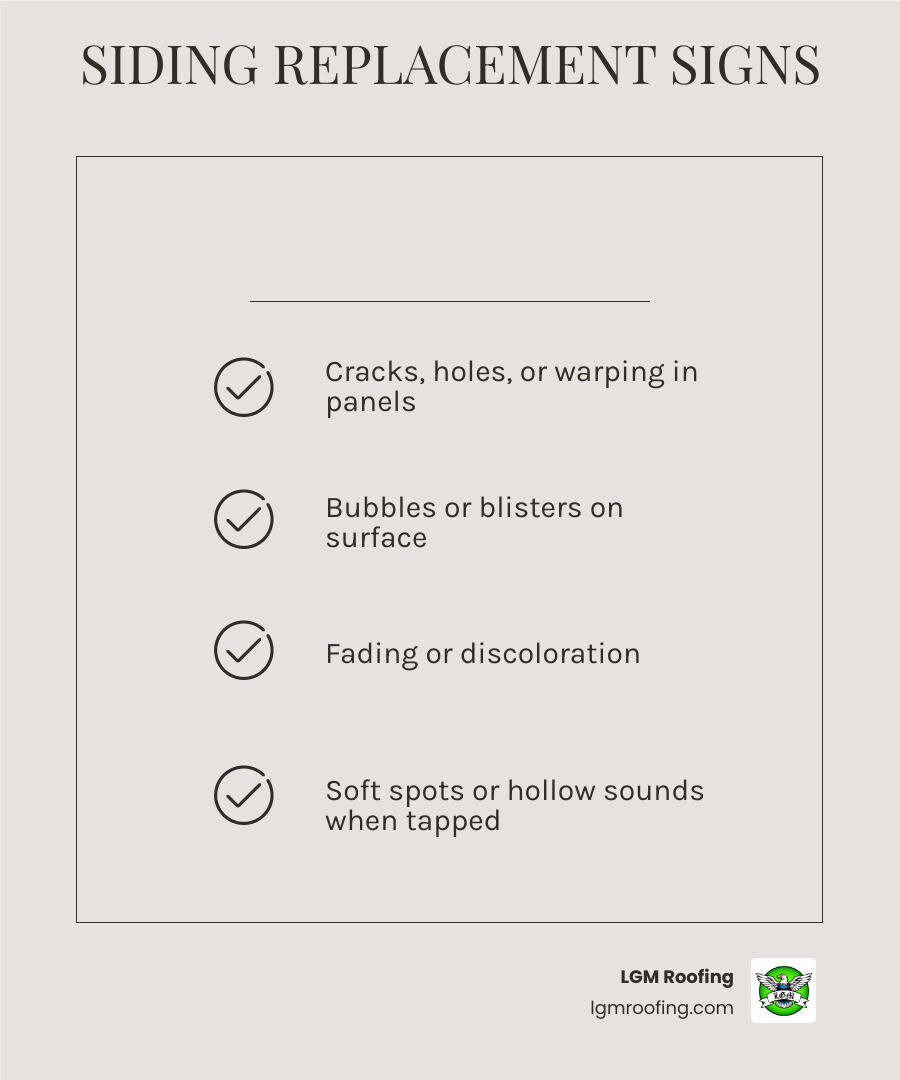
The signs your siding needs replacement are often hiding in plain sight — and catching them early can save you from far more costly repairs down the road. Here’s a quick overview of the most common warning signs:
- Cracks, holes, or warping in panels
- Bubbles or blisters forming on the surface
- Fading or discoloration that won’t wash off
- Mold, mildew, or fungus growth on or behind panels
- Peeling paint or wallpaper on interior walls
- Rising energy bills without another clear cause
- Soft spots or hollow sounds when you tap on the siding
- Pest damage such as holes, gnaw marks, or insect tunneling
- Loose or missing panels that shift or rattle
- Siding that’s 20+ years old, even if it looks okay from the street
Your home’s siding does a lot more than make your house look good. It’s a shield — blocking moisture, regulating temperature, and keeping pests out. When it starts to fail, the damage doesn’t stay outside. Water creeps in behind the panels, mold quietly grows between layers, and your heating and cooling bills start climbing before you even notice a crack. By the time damage becomes obvious, the problem has often been building for months — sometimes years.
I’m Darwin Mizhirumbay, founder of LGM Roofing and a second-generation contractor who has seen how easy it is to miss the early signs your siding needs replacement until the damage has already spread behind the walls. In this guide, I’ll walk you through exactly what to look for so you can act before a small issue becomes a big one.
I’m noticing cracks and fading on my exterior. What are the clear signs your siding needs replacement in Bloomfield?
Living in New Jersey, our homes face a gauntlet of weather conditions. From the humid summers in Paterson to the freezing winter cycles in Bloomfield, your siding is constantly expanding and contracting. When you start noticing physical changes on the surface, it’s usually the house’s way of saying the “skin” can no longer do its job.
Cracks and Holes
Small cracks might seem like a cosmetic nuisance, but they are open invitations for moisture. In our experience at LGM Roofing, even a hairline fracture can allow enough water to seep through to rot the wooden sheathing underneath. Holes are even more urgent; they are often caused by hail, flying debris during a storm, or even an errant lawnmower stone. Once the barrier is broken, the Siding Installation is compromised.
Warping and Buckling
If you look down the side of your house and the boards look “wavy” or distorted, you’re looking at one of the primary signs your siding needs replacement. Warping often happens because the material has been exposed to extreme heat or because moisture has already caused the layers underneath to swell. Buckling is frequently a result of poor initial installation where the panels weren’t allowed room to expand and contract with NJ’s temperature swings.
Fading and Discoloration
While a little fading is natural over decades, severe discoloration is a red flag. Most modern siding is engineered with UV inhibitors. When the color washes out completely, it’s a sign that the protective chemical coating has broken down. At this point, the material becomes brittle and much more susceptible to cracking. If you find yourself needing Siding Repair in Bloomfield NJ just to keep the exterior looking uniform, it might be time to consider a full upgrade.
Pest Damage
Woodpeckers and termites are the enemies of traditional wood siding. If you see small, uniform holes or hear a hollow sound when you tap the boards, you might have an infestation. Termites can tunnel through wood siding and move directly into your home’s frame. Switching to more resilient materials like fiber cement or high-quality vinyl can eliminate this “buffet” for local pests.
Are bubbles and blisters common signs your siding needs replacement?
If you see what looks like “blisters” or bubbles under the surface of your siding, do not ignore them. This is almost always a sign of trapped moisture. When water gets behind the siding and then heats up in the sun, it turns to water vapor. Because the siding is meant to be a barrier, that vapor gets trapped, pushing the surface material outward.
This indicates a significant failure in the water-resistant barrier. If the moisture is trapped there, it is also sitting against your home’s wooden structure. In our Siding Replacement Bloomfield NJ Guide, we emphasize that bubbling is an “act now” signal. If left alone, that moisture will inevitably lead to rot and mold.
How can I tell if interior wall damage is one of the signs your siding needs replacement?
Sometimes the most telling signs your siding needs replacement aren’t found outside at all. They show up in your living room or bedroom.
- Peeling Paint or Wallpaper: If the paint on an exterior-facing wall is flaking off or the wallpaper is starting to bubble, it’s often because moisture is traveling through the wall from the outside.
- Mold and Mildew: Seeing black or gray spots on the corners of your ceiling or walls? If there isn’t a plumbing leak nearby, the culprit is likely failing siding.
- Musty Odors: A persistent damp smell in a room that you can’t explain is a classic sign of “hidden” mold growing in the wall cavity.
When these interior symptoms appear, it’s time to consult Siding Contractors Montclair NJ to perform a thorough exterior inspection.
Detecting Hidden Moisture and Structural Rot Behind the Panels
Visible damage is only half the story. The real danger lies in what you can’t see. Structural rot can compromise the very bones of your home while the siding looks perfectly fine from the driveway.
The Tap Test
One of the easiest diagnostic steps for homeowners is the “tap test.” Take the handle of a screwdriver and gently tap various sections of your siding.
- Solid Sound: The siding is likely still well-attached to the sheathing.
- Hollow Sound: This could mean the siding has pulled away or the wood underneath has rotted away, leaving a gap.
- Soft Spots: If the material feels “spongy” or gives way when you press on it, you have a serious rot problem that requires immediate attention from Siding Contractors Jersey City NJ.
Rising Energy Bills
Are your heating and cooling costs spiking even though you haven’t changed your thermostat habits? Siding provides a significant layer of insulation. As it ages or pulls away from the wall, it creates “thermal bridges” where heat escapes in the winter and enters in the summer. If you feel drafts near your electrical outlets or baseboards, your siding’s R-value (insulation power) has likely plummeted.
Surface Wear vs. Structural Failure
| Sign | Surface Wear (Repair Possible) | Structural Failure (Replacement Needed) |
|---|---|---|
| Cracks | Single crack from a specific impact | Widespread “spiderweb” cracking or brittleness |
| Fading | Slight dulling of color | Chalky residue or uneven, splotchy patches |
| Loose Panels | One panel loose after a high-wind event | Multiple panels rattling; fasteners rusting out |
| Mold | Surface mildew that washes off easily | Mold growing from underneath the laps |
Understanding Siding Lifespan and Material Durability in 2026
As we move through 2026, the technology behind siding has never been better. However, every material has an expiration date. Knowing where your home stands in its lifecycle is key to planning.
Typical Lifespans by Material
- Vinyl Siding: Typically lasts 20 to 40 years. It’s low maintenance but can become brittle in the harsh NJ freeze-thaw cycles as it nears the 25-year mark.
- Fiber Cement: A powerhouse material that averages 50 years. It’s resistant to fire, rot, and pests.
- Metal (Aluminum/Steel): Can last 40 to 70 years. While it doesn’t rot, it can dent and fade over time.
- Wood Siding: Lasts 20 to 40 years but requires the most work. If it isn’t scraped and painted every 8-10 years, the lifespan drops significantly.
The Impact of Climate in New Jersey
In areas like Piscataway and Wayne, our siding deals with heavy rain, snow, and intense summer sun. This “weathering” accelerates the aging process. If your siding was installed in the early 2000s, it is likely reaching the end of its functional life. Our Siding Contractors Bloomfield NJ Guide notes that many homes in our area are currently seeing widespread vinyl failure due to the age of the original developments.
Homeowner Diagnostic Steps
Before calling us, you can do a quick “360-degree” walk-around:
- The Visual Scan: Look for uneven reflections in the sunlight.
- The Touch Test: Feel for loose panels or “give” in the boards.
- The Interior Check: Look for staining on walls near windows.
- The Proximity Check: Have your neighbors replaced their siding recently? Most homes in a neighborhood are built at the same time and will fail around the same time.
Frequently Asked Questions About Home Exterior Maintenance
When should I call a professional for an inspection?
You should call for an evaluation if you notice any of the “big three”: visible rot, interior leaks, or a sudden spike in utility bills. Additionally, after any major New Jersey storm with high winds or hail, a quick professional check can catch small cracks before they turn into major leaks. Our Siding Contractors Jersey City Ultimate Guide recommends a professional look-over every 5 years once your siding passes its 15th birthday.
Can I repair just one section of damaged siding?
Technically, yes, but it’s often difficult. The biggest hurdle is color matching. Siding fades over time; a brand-new “Forest Green” panel will look like a bright thumb against your 15-year-old faded panels. Furthermore, if the siding is old, it becomes brittle. Trying to “un-snap” one panel to replace it often causes the surrounding panels to crack. If you’re in this situation, check out our Siding Repair in Bloomfield NJ resources to see if a spot fix is viable for your specific material.
How does new siding improve energy efficiency?
Modern siding replacement isn’t just about the boards; it’s about the system. When we perform a Siding Installation, we often include a house wrap and rigid foam insulation. This creates a “thermal envelope” around your home. It stops air leaks and prevents “thermal bridging” through the wall studs, which can significantly lower your monthly cooling and heating costs. For more details, see our Best Siding Contractors Montclair NJ Guide.
Conclusion
Your home is likely your biggest investment, and the siding is its primary guardian. Ignoring the signs your siding needs replacement is like ignoring a leak in your roof—it only gets more expensive the longer you wait. A timely replacement can offer a return on investment (ROI) of up to 80%, not to mention the immediate boost in curb appeal and the peace of mind that comes with a dry, rot-free home.
At LGM Roofing, we bring over 25 years of experience to every New Jersey home we touch. We understand the local climate because we live here, and we know exactly what it takes to protect a house from the elements. Whether you’re in Wayne, Paterson, or Bloomfield, we’re here to help you navigate the process from inspection to the final piece of trim.
Don’t wait for the mold to reach your interior walls. If you’ve spotted any of these warning signs, reach out to us for a professional evaluation and let’s get your home the protection it deserves. Ready to start? Explore our Siding Installation services today.
Ready for a roof you can trust?
Get a free, no-pressure estimate. Family-owned since 2006, GAF Master Elite, and rated 4.9 by 130 homeowners on Google.