
The Shingle Truth: Reroofing vs Full Tear Off Comparison
Discover reroofing vs full tear off comparison: pros, cons, NJ codes, lifespan & costs. Choose wisely for your roof!

The Shingle Truth: Reroofing vs Full Tear Off Comparison
Is Reroofing or a Full Tear-Off Right for Your New Jersey Home?
The reroofing vs full tear off comparison comes down to a few key factors: your roof’s current condition, your budget, and how long you plan to stay in your home. Here’s a quick side-by-side look:
| Factor | Reroofing (Overlay) | Full Tear-Off |
|---|---|---|
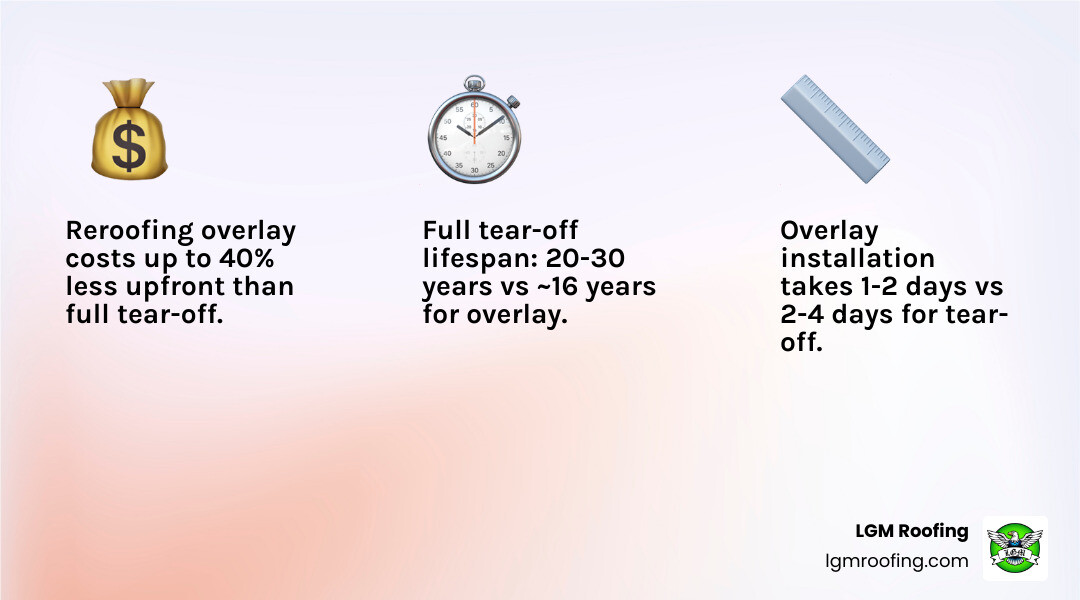
| Upfront Cost | Lower (up to 40% less) | Higher |
| Installation Time | 1-2 days | 2-4 days |
| Lifespan | ~16 years | 20-30 years |
| Deck Inspection | No | Yes |
| Manufacturer Warranty | Often voided or reduced | Full coverage |
| Resale Value Impact | Modest | Strong ($17,807 avg. added value) |
| Layers Required | First overlay only | Any condition |
| Best For | Tight budget, good roof condition | Long-term investment, damaged roof |
Bottom line: If your roof is structurally sound with only one existing shingle layer and minor wear, a reroof can buy you time. But if you want the most durable, fully warrantied result — especially in New Jersey’s demanding climate — a full tear-off is the smarter long-term investment.
Choosing between these two methods feels straightforward on the surface. One costs less upfront. One lasts longer. Easy, right? Not exactly. The real difference only becomes clear once you understand what’s actually happening under those shingles — and what you might be covering up without realizing it.
Think of it this way: it’s a bit like deciding between painting over a rusty car and buying a new one. The paint job is cheaper today, but the rust doesn’t go away.
For New Jersey homeowners, the stakes are real. Your roof handles harsh winters, heavy rain, and everything in between. Making the wrong call now could mean paying twice in a decade. This guide walks you through everything you need to know — from structural concerns and building codes to warranties and resale value — so you can make a confident, informed decision.
I’m Darwin Mizhirumbay, founder of LGM Roofing and a second-generation roofing professional who grew up watching my father navigate exactly these kinds of reroofing vs full tear off comparison decisions for New Jersey homeowners since 2006. That hands-on foundation, combined with our team’s GAF Master Elite Contractor status, gives me a clear-eyed perspective on when each method truly serves a homeowner’s best interest.
Defining the Methods: What is a Roof Overlay vs. a Full Tear-Off?
Before we dive into the deep end of the reroofing vs full tear off comparison, let’s get our definitions straight. In the roofing world, these two terms describe completely different philosophies of Roof Replacement.
A roof overlay, also known as “re-roofing” or “recovery,” is the process of installing a new layer of shingles directly over your existing ones. Think of it as putting a new jacket over an old sweater. You aren’t removing the old material; you’re simply adding a fresh waterproof barrier on top. It’s a faster, less labor-intensive process, but it relies entirely on the strength of what’s already there.
A full tear-off, on the other hand, is exactly what it sounds like. We strip every single component off your house—shingles, underlayment, and flashing—until we are looking at the bare wooden roof deck. From there, we inspect the foundation, fix any rot, and build a brand-new roofing system from the bottom up.
Understanding the Reroofing vs Full Tear Off Comparison
When we talk about an overlay, we are talking about a “second layer.” This is an important distinction because, as we’ll discuss later, you generally can’t have a third. An overlay skips the messy demolition phase, which is why it’s often seen as an economical alternative in our Roof Replacement Bloomfield Complete Guide.
However, a full tear-off provides a “fresh foundation.” By removing the old materials, we can see if your plywood is soft, if your attic ventilation is actually working, or if there’s hidden mold that’s been growing for years. It’s the difference between a cosmetic touch-up and a structural overhaul.
The Pros and Cons of a Reroofing vs Full Tear Off Comparison
Every roofing project is a balance of time, money, and quality. Depending on your situation in Wayne or Paterson, one method might clearly outweigh the other.
| Feature | Overlay (Reroof) | Full Tear-Off |
|---|---|---|
| Waste | Minimal | High (requires dumpsters) |
| Mess | Very little | Significant during demo |
| Labor | Lower intensity | High intensity |
| Inspection | Surface level only | Deep structural check |
| Weight | Adds 2-3 lbs/sq. ft. | Maintains original weight |
Benefits and Drawbacks of a Reroofing vs Full Tear Off Comparison
The primary “pro” of an overlay is the initial savings. Because there is no demolition and less debris to haul away to the landfill, you can save between 20% and 50% compared to a complete replacement. It’s also incredibly fast; an experienced crew can often finish an overlay in a single day.
But there are significant “cons” to consider. Overlays are notorious for “heat trapping.” Because the new shingles are sitting on top of old ones, heat from the sun gets stuck between the layers. This can cause the new shingles to bake from the bottom up, leading to premature shingle curling and a lifespan that is often only half as long as a tear-off.
Furthermore, an overlay can mask hidden damage. If your current roof has a leak, simply covering it up doesn’t fix the rotted wood underneath. You might have a beautiful new surface, but the structure supporting it is still failing. For more on this, check out Can You Install A New Roof Over An Old One Pros Cons Nj Regulations.
Structural Integrity and the “Two-Layer Rule” in New Jersey
In New Jersey, building codes are very specific about how much weight your home can carry. Most local municipalities—including Bloomfield and Piscataway—follow the International Residential Code (IRC), which generally limits residential roofs to a maximum of two layers.
Why is this? Weight. A single layer of asphalt shingles for an average 2,000-square-foot home can weigh between 4,000 and 6,000 pounds. When you add a second layer, you are effectively parking two mid-sized SUVs on top of your house. If your rafters weren’t designed for that load, you might notice a sagging roofline, cracks in your interior drywall, or doors that suddenly don’t close properly.
If your roof already has two layers, the reroofing vs full tear off comparison is over—a full tear-off is mandatory. Adding a third layer is not only illegal in most NJ jurisdictions, but it’s also dangerous. You can learn more about these specific scenarios in our guide: Roof Repair Vs Replacement How To Know What Your Nj Home Really Needs.
Assessing the Roof Deck during a Reroofing vs Full Tear Off Comparison
The roof deck (the plywood or “sheathing” attached to your rafters) is the backbone of your roof. During an overlay, we never see the deck. We are essentially “nailing into the dark.”
If the deck has wood rot or mold growth from previous leaks, the nails won’t hold securely. During a high-wind storm in New Jersey, those shingles could peel off like a banana skin because they weren’t anchored into solid wood. A full tear-off allows us to perform a 100% deck inspection, replacing any soft or damaged plywood to ensure your home is actually protected. See our 7 ways to tell if your roof needs replacement for more details on deck health.
Long-Term Performance: Lifespan, Warranties, and Resale Value
When looking at the reroofing vs full tear off comparison, you have to look past the first year. A roof is a 20-to-30-year investment.
- Lifespan: A high-quality tear-off with modern architectural shingles can easily last 25 to 30 years. An overlay typically fails around year 15 or 16 because of the heat-trapping issues mentioned earlier.
- Warranties: This is a big one. Many shingle manufacturers will either void or significantly reduce their warranty if the shingles are installed over an existing layer. They know the shingles will wear out faster, and they don’t want to be on the hook for it.
- Resale Value: If you plan to sell your home in the next decade, an overlay might actually be a liability. Home inspectors will flag a double-layered roof, and savvy buyers know that when that roof fails, they’ll have to pay extra to have two layers torn off. Conversely, a new roof can add over $17,000 to your home’s resale value, offering a 60-70% return on investment.
For a deeper dive into the financial side of things, read Roof Repair Vs Replacement In Nj How To Decide.
Environmental Impact and Installation Timelines
As of April 2026, environmental consciousness is more important than ever.
Environmental Impact: A full tear-off creates a lot of landfill waste—literally tons of old shingles and felt paper. An overlay is technically “greener” in the short term because it keeps that waste out of the dump. However, because an overlay lasts only half as long, you’ll end up tearing off two layers eventually, creating even more waste in the long run.
Installation Timelines:
- Overlay: Usually 1 day. Minimal disruption. No heavy dumpsters sitting in your driveway for a week.
- Full Tear-Off: 2 to 4 days on average. It’s loud, it’s messy, and it requires a clear weather window. Since we are exposing your home’s interior to the elements (briefly), we have to be certain there’s no rain in the forecast for Wayne or Paterson.
If you’re curious about how these timelines affect your specific area, check out our Roof Installation Cost Bloomfield Guide.
Frequently Asked Questions about Roofing Methods
How long does each roofing method typically take?
An overlay can often be completed in 1–2 days. A full tear-off typically takes 2–4 days, depending on the size of the home and whether we find damaged plywood that needs replacing.
Will an overlay void my shingle manufacturer warranty?
In many cases, yes, or it will severely limit the coverage. Manufacturers like GAF often require a clean, flat deck and specific underlayments to honor their full lifetime warranties. Installing over old, lumpy shingles usually disqualifies you from these premium protections.
Which method is better for my home’s resale value?
A full tear-off is significantly better for resale. It provides peace of mind to buyers and shows up as a “new roof” on a home inspection. An overlay is often viewed as a “delayed expense” by potential buyers, who may ask for a price reduction to cover the eventual replacement.
Conclusion
The reroofing vs full tear off comparison isn’t just about shingles; it’s about the long-term health of your home. While an overlay offers an tempting upfront discount and a faster timeline, it often comes at the cost of structural transparency, manufacturer warranties, and total lifespan.
At LGM Roofing, we’ve spent over 25 years helping New Jersey homeowners in Wayne, Paterson, Bloomfield, and beyond make the right choice for their properties. We believe in doing the job once and doing it right. Whether you need a quick repair or a complete architectural shingle system, our commitment to excellence and our solid warranty ensure your home stays protected for decades to come.
Don’t leave your home’s safety to chance. If you’re unsure which method is right for your roof, Request a Quote today for a professional consultation. We’ll give you an honest assessment so you can invest in your home with confidence.
Ready for a roof you can trust?
Get a free, no-pressure estimate. Family-owned since 2006, GAF Master Elite, and rated 4.9 by 130 homeowners on Google.