
The Window Warning Signs You Should Not Ignore
Spot signs your windows need replacing: drafts, condensation, high bills & more. NJ guide with DIY tests & LGM Roofing tips.

The Window Warning Signs You Should Not Ignore
How to Tell If Your Windows Need Replacing (Key Signs at a Glance)
The signs your windows need replacing are often easier to spot than most homeowners realize. Here is a quick overview before we dive deeper:
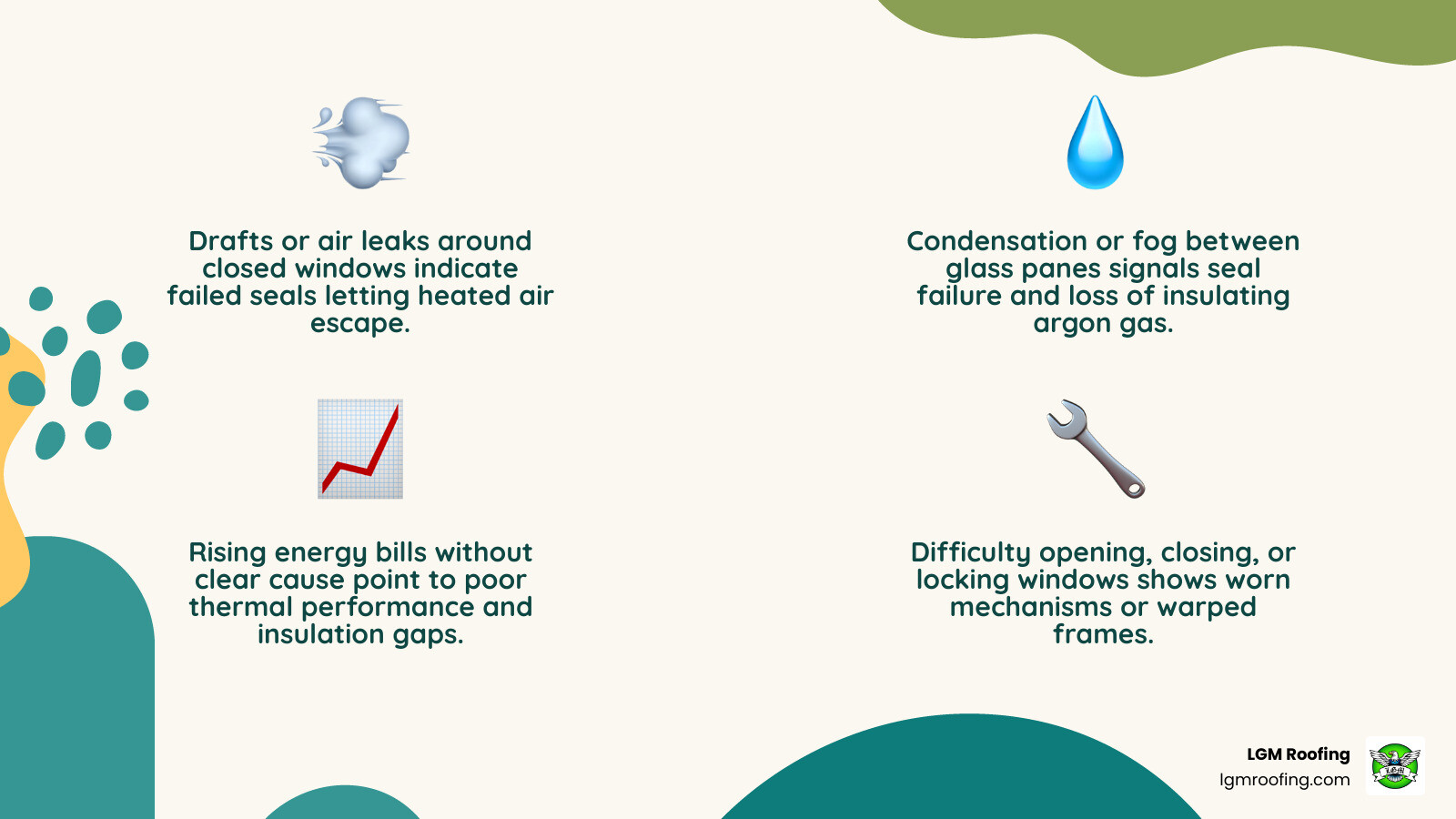
- Drafts or air leaks around closed windows
- Condensation or fog between the glass panes
- Rising energy bills without a clear cause
- Difficulty opening, closing, or locking windows
- Visible frame damage such as rot, warping, or cracks
- Excessive outside noise coming through closed windows
- Outdated appearance that hurts your home’s curb appeal
If any of these sound familiar, your windows may be overdue for replacement — and in New Jersey’s climate, where summers are humid and winters are brutal, failing windows can quietly cost you real money every month. According to a recent homeowner survey, 42.9% of people replaced their windows primarily for energy efficiency savings, while 27.9% did so because of damaged or broken frames. Most standard windows last between 15 and 20 years before seals weaken, frames degrade, and performance drops noticeably.
I’m Darwin Mizhirumbay, founder of LGM Roofing, and through years of hands-on home improvement experience across New Jersey, I’ve seen how overlooked window issues lead to bigger — and more expensive — problems down the road. In this guide, I’ll walk you through every key sign your windows need replacing so you can make a confident, informed decision.
7 Critical Signs Your Windows Need Replacing in Your New Jersey Home
Living in areas like Paterson or Bloomfield means your home faces a wide range of weather conditions. From heavy snow in the winter to high humidity in the summer, your windows are the first line of defense. When they start to fail, the symptoms can be subtle at first, but they quickly escalate into major comfort and safety issues.
One of the most immediate signs your windows need replacing is the presence of persistent drafts. If you are sitting on your sofa in the middle of a Jersey winter and feel a distinct chill even though the windows are locked tight, your seals have likely failed. These air leaks mean your expensive heated air is escaping while the cold air is invited right in. For a deeper look at how local homes handle these upgrades, check out our Window Remodeling New Jersey Guide.
Another red flag is excessive outside noise. If you live near a busy street in Jersey City and can clearly hear every conversation on the sidewalk or every car that passes by, your windows are no longer providing the acoustic insulation they once did. Modern double- or triple-pane windows are designed with varying glass thicknesses to dampen these frequencies. When you can’t get a quiet night’s sleep, it’s a strong indicator that the structural integrity or the insulating gas between the panes has dissipated. To learn more about local options, see our page on Window Remodeling Jersey City Nj.
Physical operation is also key. Windows should glide open and shut with minimal effort. If opening your window feels like a high-intensity workout, or if they refuse to stay up without a prop, it’s a safety hazard. This is often caused by warped frames or rusted hardware—issues that are common in older wood or aluminum units. Finally, keep an eye out for decaying frames. If the wood feels soft or “spongy” when you press a finger into the sill, you are looking at rot that can spread to the internal structure of your walls.
Why condensation between panes is one of the top signs your windows need replacing
Many homeowners see “foggy” windows and assume they just need a good cleaning. However, if that fog or moisture is trapped between the two layers of glass, no amount of Windex will help. This is a classic sign of seal failure.
Modern windows are typically “insulated glass units” (IGUs). They feature two or three panes of glass with a spacer in between, often filled with an insulating gas like argon. This gas is much denser than air and acts as a thermal barrier. When the seal around the edge of the glass breaks, the argon escapes and is replaced by moist New Jersey air.
Once that moisture gets in, it condenses into the “fog” you see. Not only does this ruin your view, but it also means the window has lost its insulating properties. It is now performing almost as poorly as a single-pane window from the 1950s. If you’re seeing this in Hudson County, you might want to consult The Best Jersey City Window Remodeling Contractors for Your Home to discuss energy-efficient replacements.
How rising energy bills act as silent signs your windows need replacing
Sometimes the most obvious signs your windows need replacing don’t appear on the window itself, but on your monthly utility statement. If your energy bills are creeping up year-over-year in April 2026, and you haven’t changed your lifestyle habits, your windows are likely the culprit.
Old, inefficient windows force your HVAC system to work overtime. In the winter, heat leaks out, and in the summer, the sun’s UV rays bake your interior. Single-pane windows, for instance, reflect only about 25% of UV radiation. This not only heats up your home but also causes your furniture, rugs, and artwork to fade over time. Upgrading to windows with Low-E (low-emissivity) coatings can reduce energy loss by 30% to 50%.
For homeowners in Essex County, our Window Remodeling Bloomfield Nj Complete Guide explains how proper insulation and modern frames can take the load off your furnace and air conditioner, leading to an average savings of 13% on annual energy bills.
Simple DIY Tests to Check for Air Leaks and Drafts
If you aren’t sure if your windows are the source of your discomfort, you don’t need fancy equipment to find out. There are several “old school” tricks that work remarkably well for identifying gaps and failed seals.
- The Paper Test: Open your window, place a thin piece of paper (like a dollar bill or a notepad sheet) across the sill, and close the window tight. If you can pull the paper out easily without it tearing, your window isn’t sealing properly.
- The Light Test: At night, have someone stand outside with a bright flashlight and point it at the window seams. If you can see light dancing through the frame from the inside, air is definitely getting through those same gaps.
- The Smoke/Incense Test: On a windy day, light an incense stick or a candle and hold it near the edges of the window frame. If the smoke begins to swirl or the flame flickers wildly, you’ve found a draft.
- The Tactile Check: Simply run your hand along the edges of the casing and where the sashes meet. In the winter, the glass itself will be cold, but you shouldn’t feel a moving “breeze.”
If these tests confirm your suspicions, it’s time to look into professional solutions. You can Keep it Local: Find Window Remodeling Near Me in Jersey City to get an expert assessment of your home’s specific needs.
Understanding Window Lifespan and Material Durability
Not all windows are created equal. The material your frames are made of dictates how long they will last and how they will stand up to the Garden State’s environment. As of April 2026, we generally see the following lifespans for common materials:
| Material | Typical Lifespan | Pros/Cons |
|---|---|---|
| Vinyl | 20–40 Years | Cost-effective, low maintenance, excellent insulation. |
| Wood | 15–30 Years | Beautiful and classic, but prone to rot and requires painting. |
| Fiberglass | 30–50 Years | Extremely durable, handles temperature swings best. |
| Aluminum | 15–30 Years | Strong and slim profiles, but poor thermal insulators. |
| Composite | 40+ Years | Mimics wood beauty with the durability of synthetics. |
Environmental factors play a huge role. If you are in a coastal area with salt air, or an urban area with high pollution, your windows might age faster. UV degradation is also a factor; windows on the south-facing side of your home often fail sooner than those in the shade. If you are noticing wear in Montclair, our guide on Window Remodeling Montclair Nj can help you choose a material that fits both the historic aesthetic and modern durability standards. Proper installation is just as important as the material itself, which is why we emphasize finding the Best Window Installation Bloomfield NJ.
When to Choose Repair Over Full Replacement
We often get asked if a full replacement is always necessary. The answer is: not always. There are specific scenarios where a targeted repair is the smarter, more cost-effective move.
If the frame and sash are in excellent condition but a single pane of glass is cracked (perhaps from a stray baseball), “reglazing” or glass replacement is a viable option. Similarly, if the window is simply hard to open because of a broken lock, a snapped sash cord, or a gunked-up track, these hardware components can usually be replaced individually.
Repairing is also a priority for those living in historic districts where original wood windows must be preserved to maintain the home’s character. In these cases, adding high-quality weatherstripping or a discreet storm window can improve efficiency without losing the original charm. We specialize in Expert Residential Window Remodeling in Montclair NJ for Every Home, helping homeowners navigate the balance between preservation and performance.
However, if the “spongy” rot we mentioned earlier has set into the frame, or if the window is physically warped, repairs are usually just a temporary bandage on a terminal problem.
Frequently Asked Questions about Window Replacement
Should I replace all my windows at once or one at a time?
While it might seem easier on the wallet to replace windows as they break, there are major benefits to doing the whole house at once. Most contractors offer better pricing for larger projects because the labor and setup costs are consolidated. Furthermore, replacing them all ensures a consistent look for your home’s curb appeal and provides a uniform “thermal envelope,” meaning your whole house is insulated equally. If you are looking for more strategies, our Home Window Remodeling Jersey City NJ Tips can guide your planning.
How much energy can I save by upgrading to energy-efficient windows?
On average, homeowners save about 13% on their annual energy bills by switching to Energy Star-certified windows. The real magic lies in the U-factor (which measures heat loss) and the Low-E coatings. These coatings act like a thermos; they reflect heat back to its source. In the winter, they keep the heat inside; in the summer, they keep the outdoor heat out. You can find more details in our Best Window Company Bloomfield NJ Guide.
Can new windows help reduce outside noise in busy NJ neighborhoods?
Absolutely. If you’re tired of hearing the morning commute from your bedroom, upgrading to double- or triple-pane windows is a game-changer. The air or gas space between the panes acts as a buffer that breaks up sound waves. Some windows even use laminated glass (the same kind used in car windshields) for maximum sound dampening. This is a top priority for many clients we work with, as discussed in our article about The Best Window Remodelers in Montclair.
Conclusion
Recognizing the signs your windows need replacing is the first step toward a more comfortable, efficient, and valuable home. Whether you’re dealing with skyrocketing energy bills in Piscataway or foggy glass in Wayne, these issues won’t fix themselves—and they often lead to secondary problems like mold and structural rot if left ignored.
At LGM Roofing, we bring over 25 years of experience to every New Jersey home we service. We understand the local architecture and the unique demands our climate puts on your property. We pride ourselves on craftsmanship that lasts and service that treats your home like our own. If you’ve spotted any of the warning signs mentioned today, don’t wait for the next big storm to take action. Explore our full range of Window Remodeling services and let’s make your home the sanctuary it’s meant to be.
Ready for a roof you can trust?
Get a free, no-pressure estimate. Family-owned since 2006, GAF Master Elite, and rated 4.9 by 130 homeowners on Google.