
What Makes a Good Roofing Company and How to Find One
Learn how to choose a reliable roofing contractor in NJ: licenses, insurance, scams, warranties & checklists for durable roofs.

What Makes a Good Roofing Company and How to Find One
Your Roof Is One of Your Biggest Investments — Choose Its Contractor Wisely
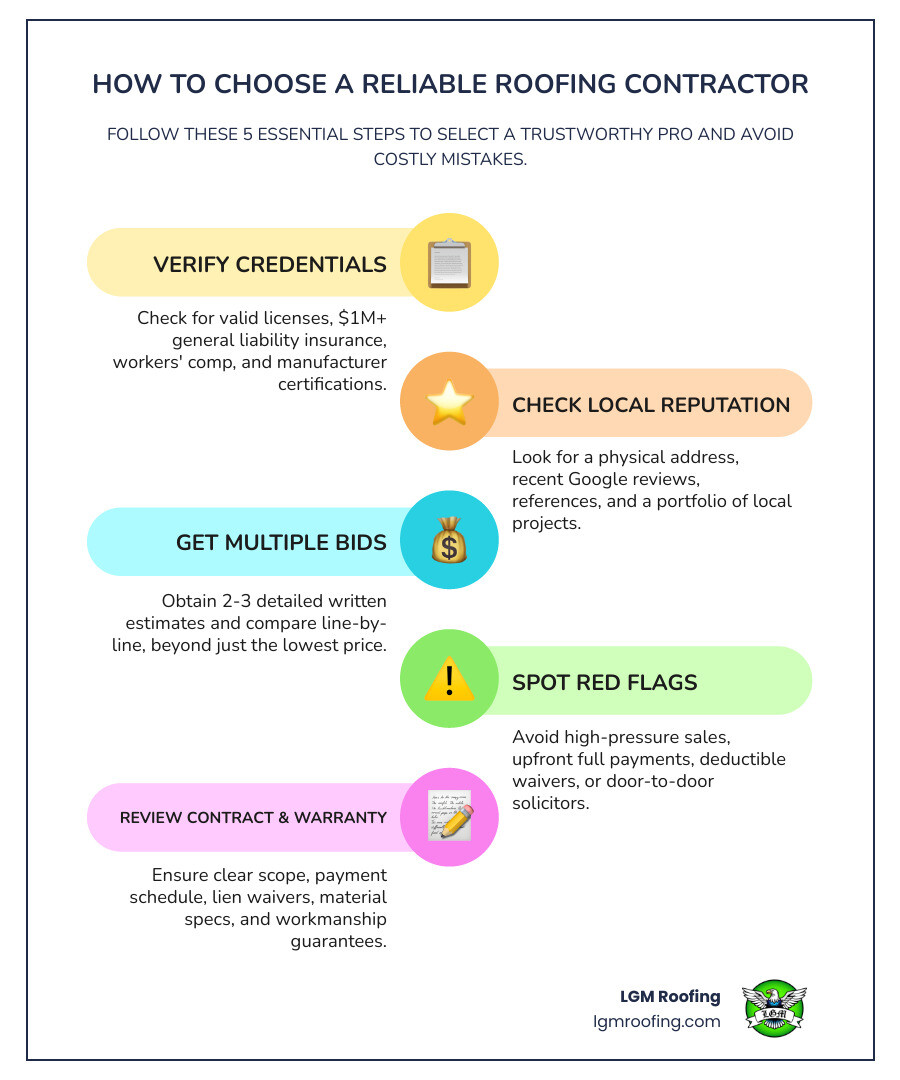
Knowing how to choose a reliable roofing contractor can save you from costly mistakes, shoddy workmanship, and outright scams. Here is a quick summary to help you make the right call fast:
- Verify credentials – Confirm the contractor is licensed, carries general liability insurance (at least $1,000,000), and holds workers’ compensation coverage.
- Check local reputation – Look for a physical business address, Google reviews, and references from projects completed within the last 12 months.
- Get multiple bids – Collect at least two to three written estimates and compare them line by line, not just by price.
- Watch for red flags – Avoid contractors who pressure you to sign on the spot, waive insurance deductibles, or demand full payment upfront.
- Review the contract carefully – Make sure it includes scope of work, a payment schedule, material specifications, warranty terms, and a lien waiver.
- Confirm warranty coverage – Understand the difference between the manufacturer’s material warranty and the contractor’s workmanship warranty.
- Hire local – A contractor with roots in your community is far more accountable if something goes wrong after the job is done.
Your roof does more than keep the rain out. It protects your home’s structure, keeps your family safe, and plays a major role in your property’s long-term value. According to the U.S. Bureau of Labor Statistics, roofer employment is expected to grow by 5% through 2030 — meaning more contractors entering the market, and more reason to know how to tell the good ones from the bad.
The stakes are high. A low-quality roof job does not just look bad — it can lead to leaks, mold, structural damage, and repair bills that far exceed what you would have paid for quality work the first time around. And in a state like New Jersey, where nor’easters, heavy snow loads, and summer storms put roofs through serious stress, the margin for error is even smaller.
Whether you are dealing with storm damage or planning a full replacement, the contractor you hire matters just as much as the materials going on your roof. This guide walks you through every step of the process, so you can move forward with confidence.
I’m Darwin Mizhirumbay, co-owner of LGM Roofing and a second-generation roofer backed by nearly two decades of family experience in the New Jersey roofing industry — experience that has given me a view of how to choose a reliable roofing contractor and, just as importantly, what to avoid. I’ll walk you through exactly what to look for, what questions to ask, and how to protect yourself before a single shingle goes up.
I’m looking for a durable roof. Why is choosing the right contractor so important?
When we talk about a roof, we aren’t just talking about shingles. A roof is a complex system involving decking, underlayment, flashing, ventilation, and drainage. If one part is installed incorrectly, the whole system can fail. This is why quality workmanship is the single most important factor in the lifespan of your roof. Even the most expensive, high-end shingles will leak if the flashing around your chimney isn’t sealed right.
Choosing the right pro also ensures your safety and the structural integrity of your home. In our area, we see a lot of specific issues, from ice dams in the winter to high-wind damage in the summer. Understanding the Top 7 Roofing Problems in New Jersey Homes and How to Spot Them is part of a contractor’s job. They should be able to look at your attic ventilation and tell you if your roof is “breathing” correctly, which prevents wood rot and mold.
Furthermore, professional accountability means that if a leak develops six months later, your contractor will actually pick up the phone. A “tailgate contractor” who offers a bargain price might disappear the moment the check clears, leaving you with no recourse when the next storm hits.
What licenses and insurance are required for roofing companies in New Jersey?
In New Jersey, roofing contractors must be registered as Home Improvement Contractors with the NJ Division of Consumer Affairs. This isn’t just a suggestion; it’s a legal requirement to operate. However, a basic business license is often just a tax requirement. To truly protect yourself, you need to look deeper into their professional credentials.
The Insurance Must-Haves
Never hire a contractor who cannot provide current certificates for the following:
- General Liability Insurance: This protects your property. If a contractor drops a bundle of shingles through your skylight, this insurance covers the damage. We recommend looking for a minimum of $1,000,000 in coverage.
- Workers’ Compensation: This is vital. Roofing is dangerous work. If a crew member is injured on your property and the contractor doesn’t have “workers’ comp,” you could be held legally and financially liable for their medical bills.
Verifying Credentials
Don’t just take their word for it. Call the insurance carrier to verify the policy is active. Also, check if they hold manufacturer certifications. Brands like GAF or Owens Corning have “Master Elite” or “Platinum” programs that require contractors to maintain high insurance levels and undergo specialized training. These certifications often allow the contractor to offer enhanced warranties that uncertified roofers simply cannot provide.
Before deciding on a project, you should also be aware of Can You Install a New Roof Over an Old One? Pros, Cons & NJ Regulations, as NJ building codes have strict rules about how many layers of roofing are allowed.
| Feature | Standard Business License | Professional Roofing Credential |
|---|---|---|
| Purpose | Tax and basic registration | Proof of skill and insurance |
| Insurance Required | Varies | $1M+ Liability & Workers’ Comp |
| Testing | Usually none | Often requires passing trade exams |
| Warranty | Standard material only | Access to extended labor warranties |
How to choose a reliable roofing contractor through local reputation
A contractor’s reputation in the local community speaks volumes. We always suggest looking for a company with a physical business address in New Jersey—not just a P.O. Box. A local office means they are part of the community and have a vested interest in maintaining a good name.
Longevity matters, too. Research suggests that companies in business for fewer than three years have a higher rate of instability. Look for a team that has weathered a few New Jersey winters. You can see the results of this experience by checking a contractor’s Projects gallery or driving by local addresses they’ve worked on in the last 12 months.
When you read reviews, look for details. A review that says “great job” is nice, but a review that explains how the crew handled a surprise rainstorm or how they cleaned up every single nail is much more valuable. Learning Mastering Your Roof: What Homeowners Gain from Elite Pros will help you understand why these reputable companies often provide a better long-term value than the least expensive bidder.
Essential questions for how to choose a reliable roofing contractor
When you sit down for an interview, treat it like a job application. You are the boss. Ask these specific questions:
- Do you use subcontractors? If they do, ask if those workers are covered under the contractor’s insurance.
- Who will be on-site supervising? You want a dedicated project manager you can talk to if you have concerns.
- What are your safety protocols? Ask how they protect their workers and your property (like your landscaping and driveway).
- What is the daily cleanup routine? Roofing creates a lot of debris. A professional crew uses magnetic sweeps to find stray nails every single evening.
- How do you handle communication? If they are slow to return your calls during the bidding process, it’s a major red flag for how they will behave once the job starts. You can find more common answers in our FAQs.
Final checklist for how to choose a reliable roofing contractor
Before you sign anything, ensure the following are in order:
- Written Proposals: This should be a line-item breakdown including materials, labor, permits, and disposal fees.
- Timeline Commitments: While weather can cause delays, you should have a clear start and estimated end date.
- Material Specifications: Ensure the brand and type of shingle are listed.
- Permit Handling: A reliable contractor will handle the local building permits for you. If they ask you to get the permit, it often means they aren’t properly licensed.
- Local Knowledge: Whether you need Roof Repair Jersey City NJ or a full replacement in Bloomfield, your contractor must understand the specific building codes of that municipality.
How can I spot a roofing scam or a “storm chaser” in my neighborhood?
After a big storm hits Edison or Paterson, you might see “storm chasers” move into the neighborhood. These are often out-of-state contractors who follow hailstorms, sign up dozens of homeowners, do quick (and often poor) work, and disappear before the first leak occurs.
Red Flags to Watch For:
- High-Pressure Sales: If they say the “deal is only good for today,” walk away. A reputable contractor will give you time to research.
- Waived Deductibles: In many places, it is illegal for a contractor to “waive” your insurance deductible. This is considered insurance fraud, and it often means they are cutting corners on materials to make up the cost.
- Unmarked Vehicles: If they don’t have a local phone number or a branded truck, they might not be local.
- Door-to-Door Solicitations: While some local companies do door-knock, be extra cautious if they claim they “just happened to be in the area” and saw damage on your roof that you can’t see from the ground.
If you find yourself in an emergency, it’s better to call a trusted local pro for Emergency Roof Repair in Edison, NJ for Stormy Nights rather than signing with the first person who knocks. In New Jersey, you generally have three business days to cancel a contract if it was signed at your home.
What should I look for in a roofing contract and workmanship warranty?
A contract is your primary legal protection. It should be incredibly detailed. A vague contract like “Replace roof – $10,000” is a recipe for disaster.
The Scope of Work
The contract should explicitly state that they will tear off the old roof down to the wood decking. Avoid “lay-overs” (shingling over old shingles) as they trap heat and moisture. It should also include details on replacing rotten wood, installing new flashing, and the specific brand of underlayment and shingles being used.
Payment Schedules
Never pay the full amount upfront. A common schedule is 1/3 at the start (to cover materials), 1/3 during the project, and the final 1/3 only after the work is completed and you have inspected the site.
The Importance of Lien Waivers
This is a document you should request before making the final payment. It proves that the contractor has paid their material suppliers and subcontractors. Without a lien waiver, a supplier could technically put a lien on your house if the contractor pockets your money and fails to pay for the shingles.
Warranty Coverage
There are two types of warranties, and you need both:
- Manufacturer Warranty: This covers defects in the shingles themselves. These can last 20 to 50 years.
- Workmanship Warranty: This is provided by the contractor and covers their labor. A good workmanship warranty should last at least 5 to 10 years.
To avoid getting “nailed” by the fine print, read The Master Elite Warranty Guide. Understanding these protections is essential whether you are getting a small patch or a full Roof Replacement.
Frequently Asked Questions about Selecting a Roofer
How do I verify a contractor’s insurance?
Ask the contractor for a “Certificate of Insurance” (COI). This document will list the insurance company and the policy numbers. Call the insurance agency listed on the certificate to confirm the policy is currently in effect and that it specifically covers “roofing,” as some general contractors have exclusions for roofing work.
Why is a local contractor better than a national chain?
Local contractors understand the New Jersey climate and specific local building codes. More importantly, they have a local reputation to protect. If you have a problem two years from now, a local company like LGM Roofing will still be in the neighborhood, whereas a national “storm chaser” or a giant franchise might be harder to pin down for warranty work.
What is the difference between a material warranty and a labor warranty?
A material warranty (from the manufacturer) covers you if the shingles themselves fail (e.g., they start de-granulating prematurely). A labor or “workmanship” warranty (from the contractor) covers you if the shingles were installed incorrectly (e.g., they blow off because they weren’t nailed in the right spot). You want both to ensure full protection.
Conclusion
Choosing a roofing contractor is a big decision, but it doesn’t have to be a stressful one. By focusing on licenses, local reputation, and clear, written contracts, you can ensure your home is protected for decades to come.
At LGM Roofing, we bring over 25 years of experience to every project across New Jersey. Whether you are in Wayne, Paterson, Bloomfield, or Piscataway, our commitment to excellence and our solid workmanship warranty mean you can rest easy knowing your roof is in expert hands. We believe in transparency, quality materials, and treating every home as if it were our own.
Ready to protect your investment? Explore our full range of Services and see why New Jersey homeowners have trusted us for over two decades.
Ready for a roof you can trust?
Get a free, no-pressure estimate. Family-owned since 2006, GAF Master Elite, and rated 4.9 by 130 homeowners on Google.