
A Quick Start Guide to Prioritizing Home Remodeling Projects
Learn how to prioritize home remodeling projects by tackling structural fixes first and sequencing work for maximum value and efficiency.

A Quick Start Guide to Prioritizing Home Remodeling Projects
Why Knowing How to Prioritize Home Remodeling Projects Saves You Time, Money, and Stress
Most homeowners tackle renovations the wrong way — not because they lack enthusiasm, but because no one handed them a clear starting point. The result? Money spent on cosmetic upgrades that get destroyed when a roof leak shows up six months later, or a brand-new kitchen sitting behind windows that still bleed heat every winter.
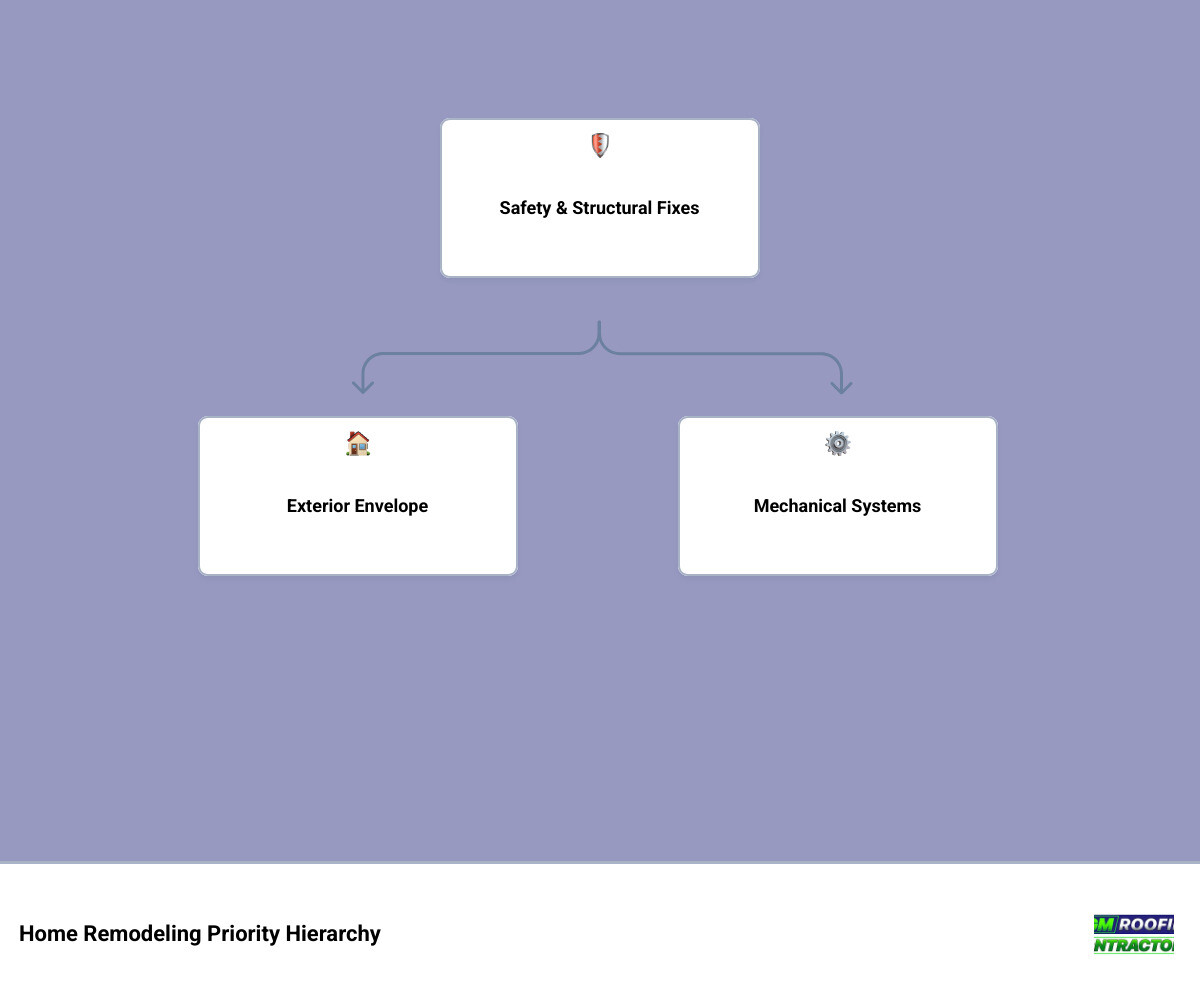
Here is a quick-reference priority order to get you oriented before diving deeper:
- Safety and structural issues first — roof leaks, foundation problems, outdated electrical, plumbing failures
- Exterior envelope second — windows, siding, and roofing that protect everything inside
- Mechanical systems third — HVAC, plumbing rough-ins, insulation, electrical wiring
- High-ROI functional spaces fourth — kitchen and bathroom updates
- Cosmetic and comfort upgrades last — paint, flooring, fixtures, landscaping
This order is not arbitrary. Each tier protects the investment you make in the next one. Skipping ahead — say, finishing a basement before fixing a leaky roof — is one of the most common and costly mistakes New Jersey homeowners make. According to remodeling experts, sequencing errors alone can add 10 to 25 percent to your total project costs.
A few other things worth knowing upfront:
- Homeowners should budget 1 to 4 percent of their home’s value annually for maintenance and repairs — more during active renovation years
- Construction material costs typically rise 4 to 7 percent per year, so delaying projects without a plan costs more over time
- Water intrusion is the single biggest threat to any remodeling investment — it cascades damage from the roof through insulation, drywall, joists, and flooring if left unaddressed
- Kitchen and bathroom remodels consistently deliver the highest return on investment among common renovation projects
- Vinyl window replacement recoups approximately 76 percent of its cost at resale, according to the 2025 Cost vs. Value Report
I’m Darwin Mizhirumbay, co-owner of LGM Roofing and someone who has spent years working hands-on with New Jersey homeowners navigating exactly these decisions — from understanding which exterior repairs protect a home’s long-term value to sequencing projects so nothing has to be redone. In this guide, I’ll walk you through a practical, field-tested framework for how to prioritize home remodeling projects so every dollar you invest builds on the last one.
How to prioritize home remodeling projects vocabulary:
Needs vs. Wants: How to Prioritize Home Remodeling Projects by Urgency
When you sit down at your kitchen table in Wayne, Paterson, Bloomfield, or Piscataway with a long list of dream home improvements, the excitement can quickly give way to decision fatigue. The key to breaking this paralysis is learning how to separate your immediate structural “needs” from your aesthetic “wants.”
To do this effectively, we recommend using a simple categorization system called the Bucket Method. By sorting your potential home projects into three distinct buckets, you can immediately see where your money must go first:
- Bucket 1: Must-Have (Urgent Needs): Projects that protect your family’s safety, preserve the structural integrity of your home, or prevent active, cascading damage.
- Bucket 2: Like-to-Have (Functional Improvements): Upgrades that solve major daily pain points, improve energy efficiency, or adapt your home to a changing stage of life (such as adding a home office or a kid-friendly storage zone).
- Bucket 3: Can Live Without (Cosmetic Desires): High-end finishes, purely aesthetic choices, or luxury additions that do not impact the safety or fundamental operation of your household.
A common pitfall is letting a cosmetic desire masquerade as a structural need. For example, you might feel that a dated kitchen is an urgent priority because the layout frustrates you daily. However, if your home has an aging roof or drafty, single-pane windows, those structural and environmental issues must take precedence.
Ignoring a failing roof to fund a kitchen remodel is a classic way to lose money. Water intrusion is public enemy number one for a home; a single neglected leak can rot your roof decking, destroy attic insulation, ruin drywall, and eventually warp those beautiful new kitchen cabinets you just installed. Before you spend a dollar on aesthetics, make sure you Stop Wasting Money on Renovations That Don’t Add Value by securing your home’s core structure first.
Identifying Critical Structural and Safety Issues First
Before we talk about paint colors or cabinet styles, we must talk about the bones of your house. If the foundation is shifting, the roof is leaking, or the electrical panel is a fire hazard, no amount of cosmetic remodeling will save your home’s value.
When assessing your home, look for these critical warning signs of structural or safety failures:
- Active Water Leaks: Water stains on ceilings, bubbling paint on walls, mold in the attic or basement, or damp framing.
- Roof Deterioration: Curled, cracked, or missing shingles, damaged flashing around chimneys, or sagging rooflines.
- Electrical and Plumbing Hazards: Flickering lights, warm outlets, outdated knob-and-tube wiring, low water pressure, or slow drains that suggest corroding main lines.
- Foundation and Masonry Cracks: Large stair-step cracks in your foundation blocks, doors that no longer close properly, or sloping floors.
In New Jersey, our homes face harsh freeze-thaw cycles in the winter and high humidity in the summer. This makes a weatherproof exterior envelope absolutely vital. As a GAF Master Elite contractor, we emphasize that your roof is your home’s primary shield. Investing in a high-quality, professionally installed roof protects everything beneath it and provides a massive boost to your long-term property security. To understand how this critical upgrade sets the financial foundation for all future work, read our detailed guide on Everything You Need to Know About How a New Roof Increases Home Value.
Distinguishing Cosmetic Desires from Functional Needs
Once your home is structurally sound, safe, and dry, you can begin evaluating the remaining items on your list. This is where you must distinguish between purely cosmetic upgrades and functional modifications.
A functional need addresses how your home operates on a daily basis. For example, if you live in a historic home in Bloomfield or Paterson and your family has grown, converting an underutilized attic space into a functional bedroom or adding built-in storage solutions to manage daily clutter is a functional need. Similarly, replacing drafty, single-pane windows that let 25 to 30 percent of your heating and cooling energy escape is a functional upgrade that directly lowers your monthly utility bills.
A cosmetic desire, on the other hand, is about visual appeal. Replacing perfectly functional granite countertops with quartz, changing out solid wood cabinets that simply need a fresh coat of paint, or installing high-end designer light fixtures are cosmetic upgrades.
While curb appeal and beautiful interiors are important, they should always be planned around your functional priorities. If your budget is tight, you can still make a massive impact by focusing on economical, high-value cosmetic updates. For practical tips on how to refresh your home’s aesthetic without draining your savings, explore our guide on How to Boost Your Home Value Without Breaking the Bank.
The Master Sequencing Plan: Avoiding Costly Rework
One of the most frustrating and expensive mistakes a homeowner can make is completing a beautiful renovation project, only to have to tear it apart months later to address a hidden issue. This is why understanding how to prioritize home remodeling projects requires a master sequencing plan.
Every home remodel should follow a logical, step-by-step construction timeline that respects project dependencies. You cannot install finished hardwood floors before your drywall is sanded and painted, and you certainly shouldn’t finish your bathroom walls before updating the ancient galvanized plumbing hiding behind them.
Why the Exterior Envelope Must Precede Interior Finishes
The golden rule of home remodeling is simple: work from the outside in. Your home’s exterior envelope — which includes your roof, siding, windows, and doors — must be completely sealed, secure, and weathertight before you begin any major interior work.
Imagine spending weeks remodeling your primary bathroom, installing custom tile, a high-end vanity, and fresh drywall, only for a major autumn rainstorm to leak through an old window frame or a failing section of siding. The resulting water penetration can rot your new drywall, spark mold growth behind your custom tile, and ruin your expensive fixtures.
By prioritizing your exterior envelope first, you ensure that every dollar you spend inside your home is protected from the elements. This means scheduling your roof replacement, installing new vinyl windows, and updating your siding before you touch a single interior wall. If you are ready to secure your home’s exterior, take a look at these Dress Your House for Success with These High-Value Exterior Upgrades to see how these projects work together to protect your home.
To help you visualize how a typical, full-scale remodeling project should be sequenced, here is the master construction timeline we recommend:
- Phase 1: Demolition & Structural Repairs: Tearing out old materials, addressing foundation issues, and replacing damaged structural framing.
- Phase 2: Exterior Envelope: Installing the new roof, replacing windows, and updating siding to make the home fully weathertight.
- Phase 3: Mechanical Rough-Ins: Running new plumbing lines, updating electrical wiring, and installing HVAC ductwork while the walls are completely open.
- Phase 4: Insulation & Drywall: Adding energy-efficient insulation, hanging drywall, and applying joint compound and primer.
- Phase 5: Interior Finishes: Installing flooring, hanging interior doors, mounting cabinets, and applying final coats of paint.
- Phase 6: Fixtures & Details: Installing light fixtures, plumbing trim, appliances, and final decorative hardware.
For a deeper look into what to expect during each of these phases and how to manage the timeline of your project, check out our resource on The Clock Is Ticking: What to Expect During Your Remodel.
The “While the Walls Are Open” Rule for Mechanical Systems
If your remodeling plans involve tearing down drywall or gutting a room to the studs, you have just unlocked a golden opportunity. This is known as the “While the Walls Are Open” rule, and ignoring it is a major financial mistake.
Running a new electrical circuit, updating old plumbing pipes, or adding smart home wiring through finished drywall is incredibly labor-intensive and expensive. It requires cutting access holes, fishing wires through tight spaces, patching drywall, and repainting. However, doing that exact same work when the studs are bare is fast, simple, and highly cost-effective.
Before you close up any walls during a kitchen, bathroom, or basement remodel, always ask yourself:
- Are there old plumbing lines that should be replaced now to prevent a future leak behind my new cabinets?
- Do I need to run dedicated electrical circuits for modern appliances, a home office, or future lighting needs?
- Should we add high-quality insulation to improve soundproofing and thermal control between rooms?
- Is this the right time to rough-in plumbing or electrical for a future phase of our remodel, such as a basement wet bar or an attic bathroom?
Taking the time to plan these hidden infrastructure upgrades prevents costly rework down the road. For a comprehensive checklist of what to evaluate before you close up your walls, read our guide on Don’t Flush Your Budget: What to Plan Before a Remodel.
Maximizing Return on Investment and Energy Efficiency
For many New Jersey homeowners, a remodel is not just about personal comfort — it is also a major financial investment. If you plan to sell your home in the next five to ten years, prioritizing projects that offer a strong return on investment (ROI) and lower your monthly operating costs is a highly strategic approach.
To help you compare the financial and practical benefits of key home upgrades, we have compiled this quick-reference table based on industry data, including the 2025 Cost vs. Value Report:
| Project Type | Average Cost Range | Expected ROI (Resale Value) | Primary Practical Benefit |
|---|---|---|---|
| Roof Replacement | Mid-to-High | High (Creates instant buyer trust) | Eliminates water leaks, protects entire structure |
| Vinyl Window Replacement | Mid | ~76% | Cuts energy loss by 25-30%, stops drafts |
| Siding Replacement | Mid-to-High | High | Boosts curb appeal, improves exterior insulation |
| Kitchen Remodel | High | High | Optimizes daily layout, updates old appliances |
| Bathroom Remodel | Mid-to-High | High | Improves daily comfort, updates plumbing |
| Basement Finishing | Mid-to-High | Moderate | Adds functional, multi-use living square footage |
High-ROI Upgrades: Kitchens, Bathrooms, and Exteriors
If your primary goal is to build long-term equity and attract potential buyers, your remodeling focus should be on high-impact spaces. Kitchens and bathrooms are historically the most influential rooms in a home when it comes to resale value. Buyers are often willing to pay a premium for updated, modern workspaces and spa-like bathrooms because they know these are the most complex and expensive projects to tackle themselves.
However, do not underestimate the power of your home’s exterior. Curb appeal is what forms a buyer’s very first impression. A home with beautiful, modern siding, clean windows, and a pristine roof instantly signals to buyers that the property has been meticulously maintained. If your exterior looks worn or neglected, buyers will immediately worry about hidden water damage or deferred maintenance, which can quickly derail a sale.
How to Prioritize Home Remodeling Projects for Long-Term Energy Savings
In New Jersey, our seasonal weather extremes mean that heating and cooling bills can quickly add up. Prioritizing energy-efficient upgrades is a smart way to put money back in your pocket every single month while simultaneously increasing your home’s appeal to modern, environmentally conscious buyers.
The best place to start is with your windows and insulation. Aging, single-pane, or failing double-pane windows can easily leak 25 to 30 percent of your home’s conditioned air. Replacing them with modern, energy-efficient vinyl windows acts like a thermal blanket for your home, keeping your furnace from working overtime in January and your air conditioner from constantly running in July.
When you combine new windows with proper attic insulation and a professionally sealed roof, you create a highly efficient thermal envelope that lowers your utility bills and extends the lifespan of your HVAC system. To learn more about how to secure your home against drafts and high bills, read The Ultimate Guide to Better Security and Lower Bills.
Strategic Multi-Year Planning and Budgeting
Very few homeowners have the cash on hand to complete a whole-house remodel all at once. Fortunately, you do not have to. Spreading your renovations over a three-to-five-year period is a highly practical, financially responsible way to achieve your dream home without taking on high-interest debt.
The key to successful multi-year planning is managing material inflation and mobilization costs. Because construction material costs typically rise by 4 to 7 percent annually, delaying a project for too long can make it more expensive down the road. Additionally, hiring contractors to come out for multiple small, disconnected projects can increase your overall labor costs.
To maximize your budget, you want to group related projects together during each phase of your multi-year plan.
How to Prioritize Home Remodeling Projects on a Limited Budget
If you are working with limited funds, we recommend combining the Bucket Method we discussed earlier with a clear analysis of your daily pain points and room usage.
Start by tracking how your family actually uses your home. Which rooms do you spend the most time in? Which areas cause the most daily frustration? If your family gathers in the kitchen every evening but your current layout makes meal prep difficult, that is a high-severity pain point in a high-use room.
If you cannot afford a complete, down-to-the-studs remodel of that high-use space, look for high-impact, economical alternatives:
- Refinish or paint your existing cabinet boxes instead of purchasing brand-new custom cabinetry.
- Update old plumbing fixtures, cabinet hardware, and light fixtures for an instant, modern refresh.
- Focus your budget on a single, high-quality centerpiece, such as a durable countertop or a new energy-efficient appliance, while keeping the existing layout intact.
By focusing your limited budget on addressing your highest-friction daily pain points first, you will get the maximum personal enjoyment and functional value out of every dollar you spend.
Creating a Realistic 3-to-5-Year Phased Roadmap
When planning a multi-year remodel, we recommend structuring your phases to follow the logical construction sequence we established earlier. Here is an example of a highly efficient, 3-to-5-year phased roadmap that minimizes mobilization costs and prevents rework:
- Year 1: The Protection Phase (Exterior Envelope): Address any active roof leaks, replace old windows, and update damaged siding. This secures your home from water damage and starts saving you money on energy bills immediately.
- Year 2: The Infrastructure Phase (Systems): Update your HVAC system, replace old plumbing lines, or upgrade your electrical panel. If you plan to remodel your kitchen or bathroom in Year 3, rough-in the necessary plumbing and electrical lines during this phase while access is easy.
- Year 3: The Functional Phase (Kitchen & Bath): Complete your major kitchen or bathroom remodel. Because your exterior is sealed and your infrastructure is already updated, this phase will run smoothly and your new finishes will be fully protected.
- Year 4: The Expansion Phase (Basement or Attic): Finish your basement or convert your attic space to add valuable living square footage for your growing family.
- Year 5: The Comfort & Cosmetic Phase (Finishes & Landscaping): Apply final interior paint, install new flooring throughout the home, and complete your exterior landscaping and curb appeal projects.
By spreading your projects across a structured, multi-year plan, you can fund your renovations using your annual savings, maintain a comfortable, livable home throughout the process, and make highly informed design decisions along the way.
Frequently Asked Questions About Home Renovation Priorities
Should I replace my windows before installing new siding?
Yes, we highly recommend replacing your windows before you install new siding.
To properly protect your home from water intrusion, your windows must be integrated with a continuous weather barrier and finished with specialized window flashing. If you install new siding first and replace your windows later, your contractor will have to cut into or remove sections of your brand-new siding to properly install the window flashing and seal the frame. This not only risks damaging your new siding but can also lead to labor-intensive, costly rework. Replacing your windows first ensures a seamless, watertight seal between your windows, flashing, and new siding.
How do I know if a home project requires a professional instead of a DIY approach?
While taking on a project yourself can be rewarding, knowing when to call in the experts is critical for protecting your safety, your home’s structural integrity, and your wallet.
As a general rule, you should hire a licensed, insured professional contractor for:
- Structural Changes: Any project that involves moving load-bearing walls, altering your roof framing, or modifying your foundation.
- Major Mechanical Systems: Upgrading your electrical panel, running new gas lines, or replacing your central HVAC system.
- Highly Regulated Work: Any project that requires local building permits, structural engineering plans, or specialized inspections in your New Jersey municipality.
- High-Risk Exterior Work: Roof replacements and exterior siding installations require specialized safety equipment, professional training, and manufacturer certifications (like our GAF Master Elite status) to secure comprehensive, long-term warranties.
Taking on complex structural or mechanical work yourself can lead to code violations, failed home inspections when you try to sell, or denied insurance claims if a DIY plumbing or electrical mistake causes water or fire damage. To help you decide whether to tackle a project yourself or hire an expert, read our guide on Knowing When to Call the Experts for Your Renovation.
What is the biggest mistake homeowners make when sequencing renovations?
The single biggest mistake homeowners make is prioritizing cosmetic upgrades over structural integrity and water protection.
It is incredibly tempting to spend your budget on the things you can see — like gorgeous marble countertops, custom cabinets, or high-end hardwood flooring. However, if you install these beautiful finishes under an old, failing roof or next to drafty, leaking windows, you are setting yourself up for financial disaster. A single major storm can cause water to seep behind your brand-new drywall, warping your custom cabinets and ruining your expensive new floors. Always secure your home’s exterior envelope and vital infrastructure before you spend a single dollar on interior cosmetics.
Conclusion
Prioritizing your home remodeling projects doesn’t have to be an overwhelming puzzle. By focusing on safety and structural integrity first, securing your exterior envelope, planning your mechanical systems logically, and then moving on to high-ROI functional spaces and cosmetic finishes, you protect your investment and build a home that is safe, comfortable, and highly valuable.
At LGM Roofing, we have spent over 25 years helping homeowners across New Jersey — including Wayne, Paterson, Bloomfield, and Piscataway — navigate these exact decisions. As a GAF Master Elite general contractor with a GAF Master Elite certification, we are committed to delivering exceptional service, exceptional craftsmanship, and solid, long-term warranties that give you total peace of mind.
Whether you are ready to secure your home’s exterior with a new roof, update your siding, or plan a comprehensive, multi-year remodeling project, our team of local experts is here to guide you every step of the way.
Are you ready to transform your home with confidence? Explore our professional exterior and general contracting services on our LGM Roofing Services page, and let’s start planning your next project together.
Ready for a roof you can trust?
Get a free, no-pressure estimate. Family-owned since 2006, GAF Master Elite, and rated 4.9 by 130 homeowners on Google.