
Don’t Let the Nor’easter Win: Best Roofing Practices for the Northeast
Don’t let Nor’easters win! Discover how northeast climate affects your roof & get expert tips for lasting protection.

Don’t Let the Nor’easter Win: Best Roofing Practices for the Northeast
Why Every Northeast Homeowner Needs to Understand How Weather Destroys Their Roof
How northeast climate affects your roof is one of the most important things you can understand as a homeowner in New Jersey or anywhere in the broader Northeast region. Here’s a quick summary:
| Weather Threat | How It Damages Your Roof |
|---|---|
| Freeze-thaw cycles | Expands water in cracks, widening them into leaks |
| Heavy snow and ice | Adds structural weight; triggers ice dam formation |
| Nor’easters | Wind gusts up to 70 mph lift shingles and displace flashing |
| Rain and humidity | Encourages mold, mildew, rot, and shingle curling |
| Summer UV exposure | Dries out and brittles asphalt shingles over time |
| Hail | Cracks shingles and strips protective granules |
| Coastal salt air | Corrodes metal components like flashing and fasteners |
If you live in New Jersey, you already know the feeling. One week it’s a mild October afternoon. The next, a Nor’easter is hammering your neighborhood with sideways rain and 60 mph gusts. Then comes a hard freeze overnight, followed by a sunny thaw the next afternoon. Repeat that cycle dozens of times per year — more than most other states see, according to NOAA data on Massachusetts freeze-thaw frequency, which applies broadly across the region — and you start to understand why roofs here don’t last as long as the packaging says they will.
The Northeast doesn’t just age roofs. It puts them through a relentless stress test every single year.
Manufacturer estimates look great on paper. But a 30-year architectural shingle rated in a lab isn’t the same as one fighting through New England winters, lake-effect snow bands, summer heat, and coastal humidity back-to-back. Real-world lifespans in this region consistently fall short of those numbers — and the gap is wide enough to matter when you’re budgeting for your home.
The good news is that understanding what’s working against your roof puts you in a much stronger position to fight back — through smarter material choices, better installation practices, and proactive maintenance before small problems become expensive emergencies.
I’m Darwin Mizhirumbay, founder of LGM Roofing and a second-generation roofing professional who grew up watching how northeast climate affects your roof through nearly two decades of my father’s work across New Jersey. In this guide, I’ll walk you through exactly what’s happening to your roof season by season — and what you can do about it.
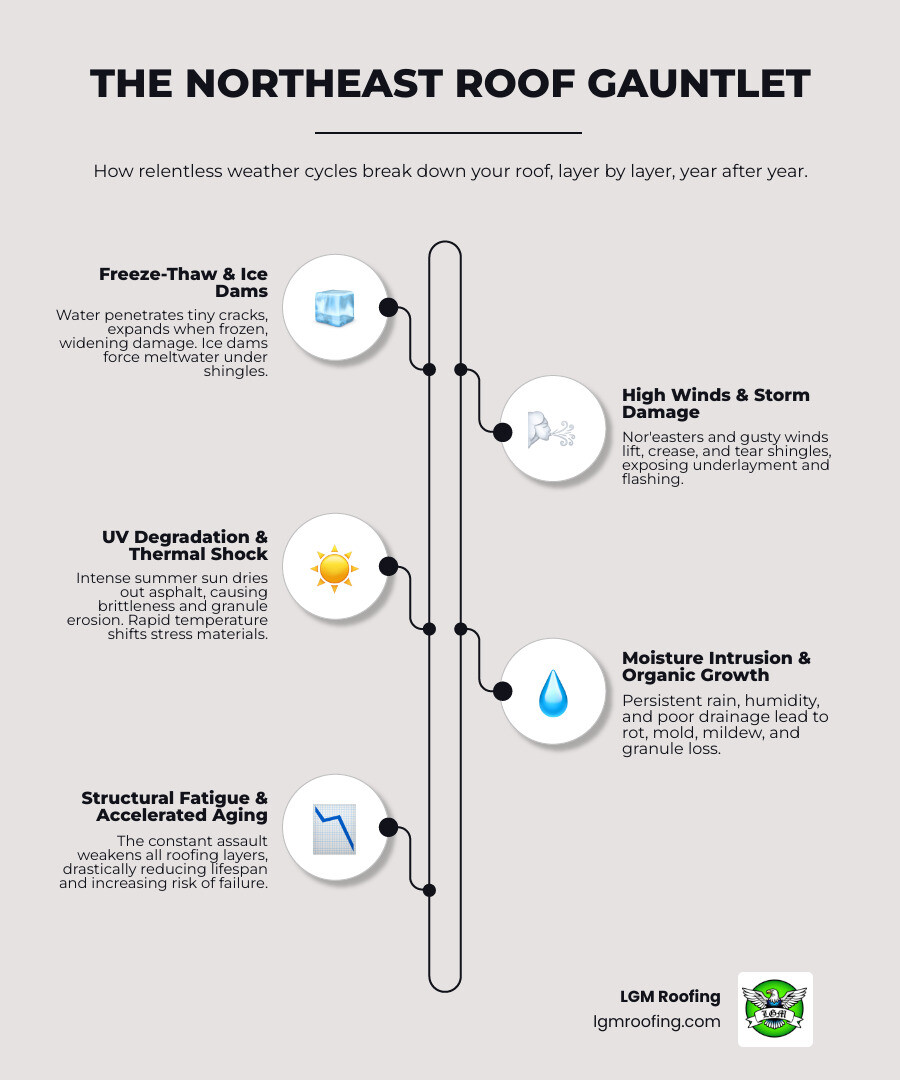
The Brutal Reality: How Northeast Climate Affects Your Roof
Living in cities like Bloomfield, Paterson, or Wayne, NJ, means your home is on the front lines of a climate that “chews through” building materials. As we move through April 2026, we are seeing more frequent and intense weather patterns that refuse to let our roofs rest. The core of the problem lies in the relentless fluctuation.
The Expansion and Contraction Trap
The Northeast experiences dozens more freeze-thaw cycles than the U.S. average. When temperatures hit 45°F during a sunny afternoon, snow melts and water seeps into the tiniest pores of your shingles and the seams of your flashing. When the sun goes down and the temperature drops to 20°F, that water freezes and expands. This creates micro-cracks that grow larger with every cycle. Over time, these cracks lead to significant Signs of Roof Damage that homeowners often don’t notice until a puddle appears on the living room floor.
Moisture and Humidity
New Jersey’s high humidity levels, especially in the spring and summer, create a breeding ground for biological growth. Moisture trapped under shingles or in poorly ventilated attics leads to rotting wood, mold, and mildew. These are among the Top 7 Roofing Problems in New Jersey Homes, as they compromise the structural integrity of the roof deck itself. If your roofing material remains damp for extended periods, it loses its ability to shed water effectively, accelerating the need for a full replacement.
Winter Warfare: Snow Loads and Ice Dams
Winter in the Northeast is a heavy-hitter—literally. While snow can act as a temporary insulator, it also brings a massive amount of weight. Most modern roofs in our area are engineered to support loads of about 65 pounds per square foot. However, when we get hit with heavy, wet “lake-effect” style snow or back-to-back blizzards, that weight can exceed the safety margin, leading to sagging sections or even structural failure.
If you find yourself in the middle of a winter crisis, you may need Emergency Roof Repair in Edison NJ for Stormy Nights to address leaks caused by the sheer pressure of snow and ice.
The Ice Dam Disaster
Ice dams are perhaps the most misunderstood winter threat. They form when heat escapes from your attic and melts the bottom layer of snow on your roof. This meltwater runs down to the colder eaves (the edges of the roof), where it refreezes into a thick band of ice. This “dam” prevents further meltwater from draining, forcing it back up under the shingles.
Ice Dam Warning Signs:
- Large icicles forming only on the eaves, not the gutters.
- Ice coming out of the soffit vents.
- Water stains on the ceiling near exterior walls.
- Heavy ice buildup in the gutters that causes them to sag.
How northeast climate affects your roof during heavy snowfall
The cycle of melting and refreezing is a “perfect storm” for shingle lifting. As the ice dam grows, it exerts upward pressure on the shingles, breaking the sealant bonds. Once those bonds are broken, the roof is vulnerable to water intrusion every time it rains or snows for the rest of the season. This is why a high-quality ice and water shield is non-negotiable for New Jersey homes.
Wind, Rain, and Summer UV Degradation
While winter gets all the headlines, the other three seasons are just as busy damaging your home. Nor’easters are famous for bringing wind gusts of 60–70 mph. These winds create “uplift,” where the pressure difference literally tries to suck the shingles off the roof.
Wind and Storm Damage
Strong winds don’t just blow shingles away; they crease them. A creased shingle has lost its structural integrity and will likely fail during the next rainstorm. We often see flashing displacement around chimneys and vents after these storms, which creates a direct path for water to enter your home. You should always ask: Is Your Roof Ready for Summer Storms? Prevent Wind & Water Damage in NJ before the hurricane season peaks.
The Silent Killer: UV Rays and Thermal Shock
In the peak of a New Jersey summer, your roof can reach temperatures exceeding 150°F. The sun’s UV rays dry out the oils in asphalt shingles, making them brittle and prone to cracking. This is known as “thermal shock”—the rapid expansion and contraction of materials as they go from 150°F in the sun to 70°F during a sudden afternoon thunderstorm.
Keep an eye out for these 5 Signs Summer Heat is Damaging Your Roof, such as excessive granule loss in your gutters. Those granules are the “sunscreen” for your roof; once they wash away, the fiberglass mat underneath is exposed to rapid decay.
Choosing the Right Shield: Best Materials for Regional Durability
When it’s time to move beyond repairs, choosing the right material is the most significant decision you’ll make. The how northeast climate affects your roof factor means that “standard” isn’t good enough.
| Material Type | Manufacturer “Ideal” Life | Realistic Northeast Life |
|---|---|---|
| 3-Tab Asphalt Shingles | 20–25 Years | 12–18 Years |
| Architectural Shingles | 25–30 Years | 18–25 Years |
| Metal Roofing | 50+ Years | 40–50 Years |
| Synthetic Slate | 40–50 Years | 30–40 Years |
| Natural Slate | 75–100 Years | 60–100 Years |
Architectural Shingles vs. Metal
For most homeowners in Piscataway or Paterson, architectural shingles are the go-to choice. They are thicker and more wind-resistant than old-fashioned 3-tab shingles. However, if you want the ultimate protection, metal roofing is the gold standard. Modern metal systems are engineered to withstand winds up to 120 mph and naturally shed snow, which virtually eliminates the risk of ice dams.
If you are debating between a patch job and a full upgrade, check our guide on How Often to Replace Your Roof: By Material & Climate. For long-term protection, our Roof Replacement Services focus on using materials that can handle the unique salt air corrosion and wind loads of the Jersey coast.
How northeast climate affects your roof lifespan and material choice
The 18-year average for asphalt roofs in our region is a sobering statistic. While manufacturers might promise 30 years, the humidity and freeze-thaw cycles usually take a decade off that estimate. This makes impact-resistant shingles or metal roofing much more attractive when you consider the “cost per year” of the roof’s life.
Proactive Protection: Maintenance and Installation Standards
You can’t change the weather, but you can change how your roof responds to it. Proper installation is 90% of the battle. Even the best “ice and water shield” will fail if the workmanship is poor.
The Power of Ventilation and Insulation
Proper attic ventilation is the secret to a long-lasting roof. You need a balanced system of intake vents (usually at the soffits) and ridge vents at the top. This allows hot, moist air to escape. Without it, your shingles will literally “cook” from the inside out in the summer, and you’ll be certain to have ice dams in the winter.
Furthermore, your attic insulation needs a high R-value to keep your home’s heat from reaching the roof deck. This is a critical step we emphasize during our End of Summer Roof Maintenance Checklist for NJ Homeowners.
Maintenance Tasks You Can’t Ignore:
- Gutter Cleaning: Clogged gutters cause water to pool at the roof’s edge, leading to rot and foundation issues.
- Tree Trimming: Overhanging branches drop debris that traps moisture and can scrape off shingle granules during windstorms.
- Annual Inspections: Catching a loose piece of flashing in October can save you from a $10,000 interior repair in January. We recommend Free Roof Estimates in Bloomfield NJ: Why Summer is Ideal because the materials are flexible and easy to inspect before the winter freeze.
Frequently Asked Questions about Northeast Roofing
Why do roofs fail faster in New England and New Jersey?
The primary reason is the frequency of freeze-thaw cycles and high humidity. While a roof in Arizona deals with heat, it doesn’t deal with water expanding inside its cracks 50 times a year. In NJ, the combination of salt air (near the coast), heavy snow weight, and 70 mph wind gusts creates a “multi-front war” that wears down materials much faster than in milder climates.
How do I prevent ice dams from forming every winter?
The most effective way is a three-pronged approach:
- Increase attic insulation to keep heat in the house.
- Seal air leaks (like around light fixtures or attic hatches) that let warm air reach the roof deck.
- Ensure your attic has proper ventilation so any heat that does escape is quickly carried away. During installation, we also use specialized ice and water shield membranes that extend further up the roof than the standard building code requires.
Is metal roofing better than asphalt for high-wind areas?
Yes. Metal roofing panels often interlock, creating a single continuous surface that is much harder for the wind to “grab” compared to individual asphalt shingles. Most metal roofs are rated for 120-140 mph winds, whereas standard asphalt shingles may begin to fail or crease at 60-70 mph.
Conclusion: Putting 25 Years of Experience to Work for You
At LGM Roofing, we’ve spent over 25 years watching the New Jersey sky and learning exactly what it takes to keep a home dry. We don’t just “slap on shingles.” We build roofing systems designed to survive the Nor’easters, the humidity, and the heavy snow loads that define our region.
Whether you are in Wayne, Bloomfield, or Piscataway, your roof is your home’s first and most important line of defense. Don’t wait for a leak to tell you that the climate has won. From minor repairs to full, storm-resilient replacements with solid warranties, we are here to ensure your home stays protected for decades to come.
If you’re concerned about your roof’s condition after the latest storm, or if you simply want to ensure you’re ready for the next one, explore our Roof Replacement Services or contact us today for a professional evaluation. We’re not just contractors; we’re your neighbors, and we’re committed to excellence in every shingle we lay.
Ready for a roof you can trust?
Get a free, no-pressure estimate. Family-owned since 2006, GAF Master Elite, and rated 4.9 by 130 homeowners on Google.