
How to Get Paid for Upgrading Your NJ Home Exterior
Discover energy efficient siding and window rebates in NJ for 2026. Get up to $7,500 + federal tax credits. Save on upgrades now!

How to Get Paid for Upgrading Your NJ Home Exterior
Why NJ Homeowners Are Leaving Money on the Table With Exterior Upgrades
Energy efficient siding and window rebates in NJ are more accessible right now than most homeowners realize — and thousands of dollars in incentives go unclaimed every single year simply because people don’t know where to look.
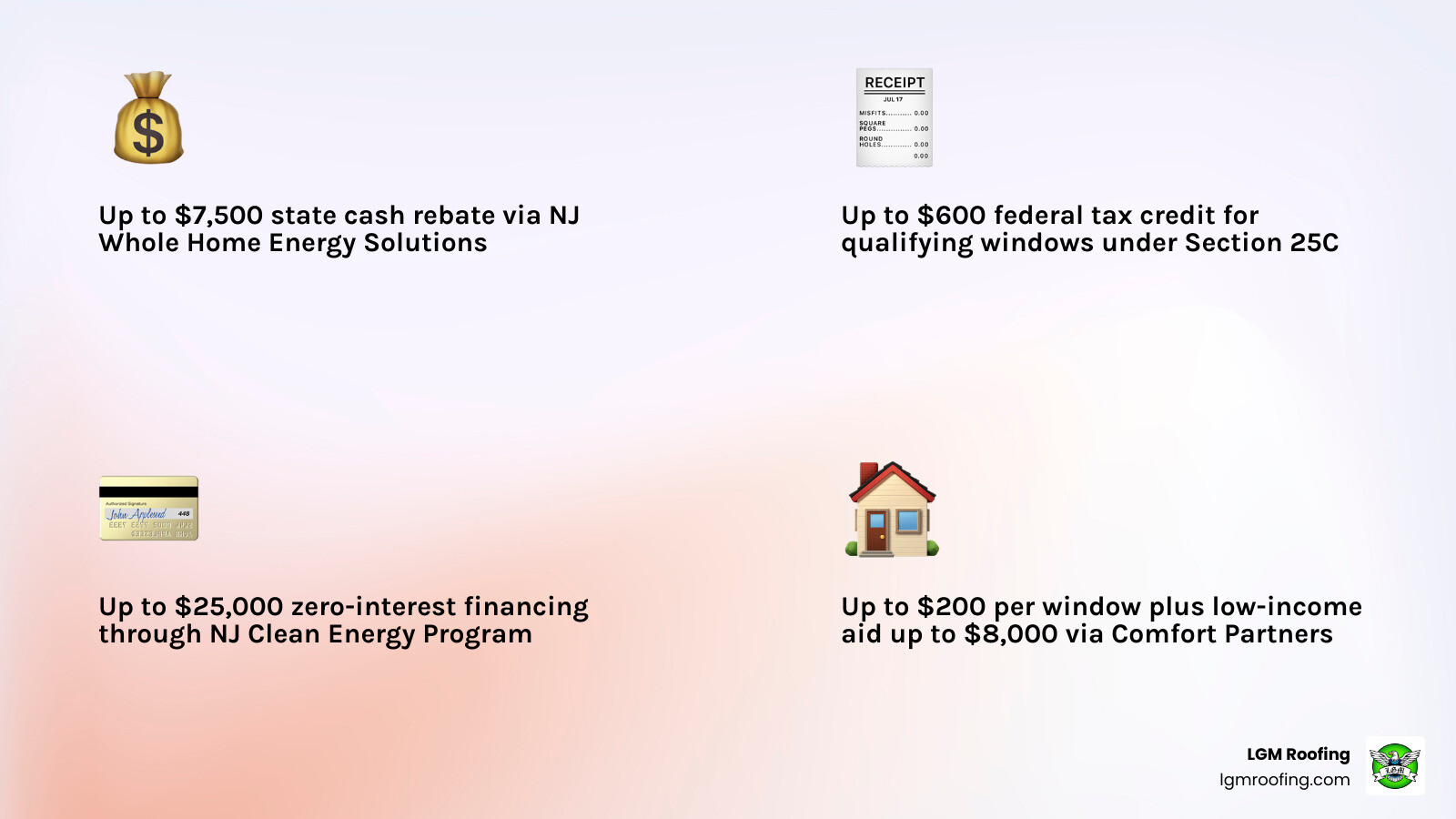
Here’s a quick snapshot of what’s available in 2026:
| Incentive Type | Program | Maximum Benefit |
|---|---|---|
| State Cash Rebate | NJ Whole Home Energy Solutions | Up to $7,500 |
| Federal Tax Credit | Section 25C (IRS Form 5695) | Up to $600 for windows |
| Zero-Interest Financing | NJ Clean Energy Program | Up to $25,000 |
| Per-Window State Rebate | NJ Clean Energy Program (NJCEP) | Up to $200 per window |
| Low-Income Assistance | Comfort Partners / HOMES Rebates | Up to $8,000 |
These programs stack. A homeowner replacing windows and adding insulated siding as part of a whole-home upgrade can combine federal tax credits, NJCEP rebates, and utility incentives to cut total project costs by more than 30%.
The catch? You have to know the rules — the right certifications, the right contractors, and the right timing — or you risk missing out entirely.
This guide walks you through every program, every requirement, and every step so you don’t leave money behind.
I’m Darwin Mizhirumbay, founder of LGM Roofing and a second-generation exterior contractor serving New Jersey homeowners across roofing, siding, and window installation. My hands-on experience navigating energy efficient siding and window rebates in NJ for our clients has shown me exactly where homeowners get tripped up — and how to make sure they get every dollar they’re owed. Let’s get into it.
Navigating Energy Efficient Siding and Window Rebates in NJ for 2026
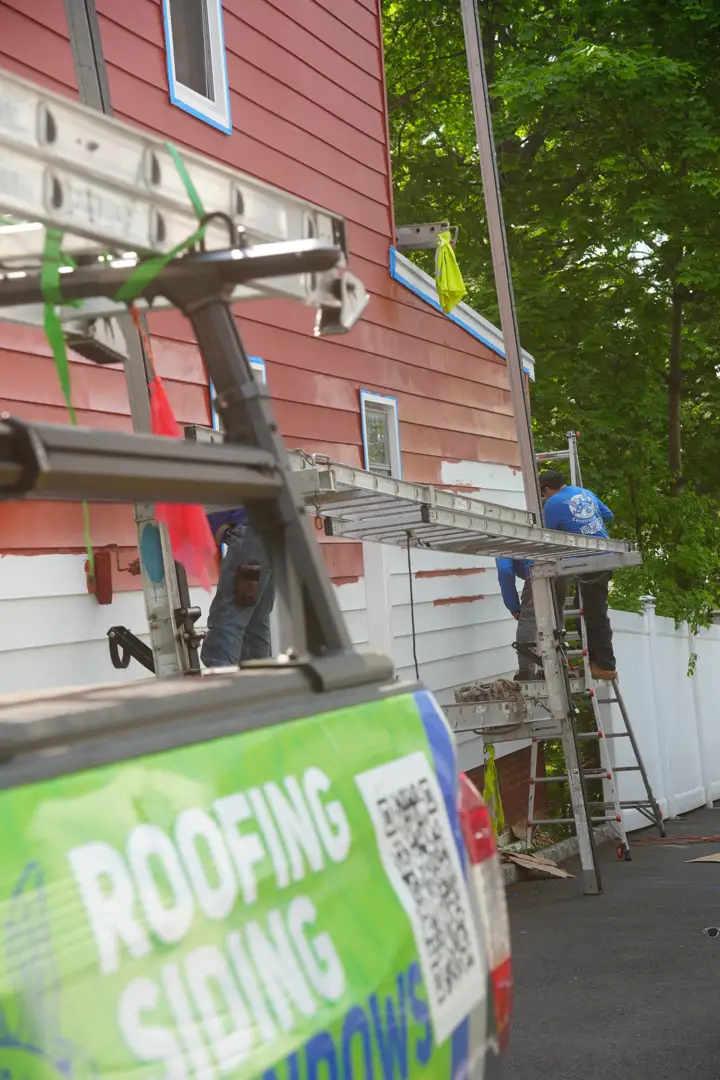
If you live in Wayne, Paterson, or anywhere in our service area, you know that New Jersey weather is a rollercoaster. Your home’s exterior—the “building shell”—is all that stands between you and a massive utility bill. In 2026, the New Jersey Clean Energy Program (NJCEP) and major utility providers have shifted toward a “performance-based” model. This means the more energy you save, the more cash you get back.
The flagship program for 2026 is the Whole Home Energy Solutions program. Instead of just giving you a small flat rate for a single window, this program looks at how your upgrades work together. To qualify, your project must reach a 5% projected energy savings threshold. Once you hit that 5% mark, you unlock a $2,000 base rebate. For every percentage point of savings you achieve beyond that, the state adds another $200, up to a maximum incentive of $7,500.
This is a game-changer for anyone looking at How To Get Paid For Making Your Nj Home More Efficient/. By combining window replacements with high-performance siding, you aren’t just making your home look better; you’re building a thermal envelope that pays you back.
| Energy Savings Percentage | Rebate Amount |
|---|---|
| 5% (Minimum) | $2,000 |
| 10% | $3,000 |
| 20% | $5,000 |
| 30%+ | $7,500 (Max) |
Does Energy Efficient Siding and Window Rebates in NJ Apply to My Project?
One of the most common questions we hear at LGM Roofing is whether siding actually qualifies for these big checks. The answer is yes, but with a specific strategy. Standard vinyl siding won’t trigger these rebates on its own. However, insulated siding acts as a continuous layer of protection over your home’s studs, significantly increasing the R-Value (thermal resistance) of your walls.
When we perform a Siding Installation/ using energy-efficient materials, we focus on the “thermal envelope.” By sealing air leaks and adding high-quality insulation behind the siding, we help you reach that 5% savings threshold required for the Whole Home incentives. It’s about more than just aesthetics—it’s about engineering a home that keeps the heat in during a Paterson winter and the cool air in during a humid Jersey July.
Meeting Energy Star Requirements for Window Rebates
To claim the specific $200 per-window rebate or the federal tax credits, your windows must meet strict technical standards. You can’t just pick any glass from a big-box store. For 2026, the NJCEP requires windows to have a U-Factor of less than 0.30.
When you are considering Window Remodeling/, we look for these specific features:
- Double-pane or Triple-pane glass: These create pockets of air or gas that block heat transfer.
- Low-E coatings: A thin, invisible metallic layer that reflects heat back to its source.
- Argon gas fill: An odorless, non-toxic gas between panes that provides better insulation than plain air.
- Solar Heat Gain Coefficient (SHGC): This measures how much solar radiation enters your home. In NJ, we need a balance that keeps you warm in winter without baking you in summer.
Federal Tax Credits for Exterior Upgrades Under the Inflation Reduction Act
While state rebates put cash in your pocket now, federal tax credits help you out when you file your returns. Under the Inflation Reduction Act’s Section 25C, homeowners can claim a 30% tax credit on the cost of energy-efficient improvements.
For windows and skylights, there is a specific annual cap of $600. However, the total annual limit for all home improvements (including insulation and doors) is $1,200. This is why we often suggest a multi-year strategy. If you’re doing a massive overhaul, we can help you plan your Window Remodeling New Jersey Guide/ across two tax years to maximize your federal savings.
To claim these, you’ll need to file IRS Form 5695. Starting in 2025 and continuing through 2026, the IRS also requires a “Qualified Manufacturer PIN” or code to prove the product meets the “Energy Star Most Efficient” criteria. Don’t worry—we ensure all documentation is handed over to you so your tax professional has everything they need.
Common Mistakes to Avoid with Energy Efficient Siding and Window Rebates in NJ
We’ve seen many homeowners in Bloomfield and Piscataway miss out on thousands because of simple clerical errors. Here is what to watch out for:
- Buying Non-Certified Products: If the window doesn’t have the Energy Star label and a U-Value under 0.30, you get $0.
- Missing Deadlines: Many NJ utility rebates must be submitted within 60 to 90 days of installation. If you wait until tax season, you’re too late.
- Using Unlicensed Contractors: To qualify for NJCEP or Whole Home incentives, your contractor must be BPI-certified (Building Performance Institute). LGM Roofing maintains the highest standards of certification to ensure your project is eligible.
- Incomplete Documentation: You need the itemized receipt, the NFRC (National Fenestration Rating Council) labels from the windows, and the contractor’s certification number.
- Fiscal Cycle Timing: State funding is often “first-come, first-served.” If the state’s budget for the year is exhausted by October, you might have to wait until the next cycle.
Financing Options and Income-Based Assistance Programs
We know that even with rebates, upgrading an entire home is a significant investment. That’s why we point our clients toward the 0% APR Financing options available through the NJ Clean Energy Program. You can access up to $25,000 for a 10-year term with zero interest. This allows the energy savings on your monthly bill to essentially “pay” for the upgrade over time.
For our neighbors who may be on a tighter budget, there are specific programs designed for Low-to-Moderate Income (LMI) households:
- Comfort Partners: A free program for income-qualified families that provides energy-saving improvements like air sealing and insulation at no cost.
- HEEHR & HOMES Rebates: These federal-state hybrid programs can provide up to $8,000 for households that fall below 80% of the Area Median Income (AMI).
When you work with professional Siding Contractors/, we help you identify which of these “stackable” incentives apply to your specific household income and location.
The Role of Home Energy Audits in Qualifying for Rebates
You cannot guess your way into a $7,500 rebate. The state requires proof. This starts with a Home Energy Audit performed by a BPI-certified professional.
During the audit, the technician will perform a “Blower Door Test.” They seal your front door with a giant fan to depressurize the house, which reveals exactly where air is leaking out—usually around old windows and through uninsulated siding. This audit creates a “baseline” of your home’s performance.
The auditor then uses specialized software to create “Modeled Savings.” They can show that “If LGM Roofing installs these 12 Energy Star windows and adds R-6 insulated siding, this home will save 12% on energy.” That 12% projection is what unlocks your $3,400 rebate ($2,000 base + $1,400 for the extra percentage points).
We also encourage our clients to look into Pearl Certification. This is a third-party verification that stays with your home’s deed. When you go to sell your house in Wayne or Piscataway, the Pearl Certification proves to the appraiser and the buyer that your home is high-performing, often increasing the resale value significantly.
Frequently Asked Questions about NJ Exterior Rebates
Can I bundle window and siding upgrades for higher rebates?
Absolutely. In fact, bundling is the most effective way to reach the higher tiers of the Whole Home Energy Solutions program. A single window might only save you 0.5% in energy, but doing all windows plus insulated siding can easily push you over the 10% or 15% savings mark, doubling or tripling your cash-back amount. We call this “efficiency stacking.”
What is the maximum I can save with combined incentives?
While every home is different, a typical NJ homeowner can see a massive reduction in project costs. By combining the $7,500 maximum state rebate with the $1,200 annual federal tax credit and utilizing the $25,000 zero-interest financing, many residents reduce their out-of-pocket project costs by 30% or more. In one case study, a homeowner saved $1,600 just on a 10-window replacement by stacking a $1,000 NJCEP rebate with a $600 federal credit.
Do I need a home energy audit to qualify for the Whole Home program?
Yes. A professional audit is mandatory for the Whole Home program. It ensures that the upgrades being made are actually going to result in the energy savings the state is paying for. The audit must be performed by a BPI-certified contractor to be accepted by the NJBPU (New Jersey Board of Public Utilities) portal.
Conclusion
Upgrading your home’s exterior is a major decision, but in 2026, the financial incentives make it a smarter investment than ever before. Whether you are in Paterson, Wayne, or Bloomfield, the key to maximizing energy efficient siding and window rebates in NJ is working with a team that understands the technical requirements and the paperwork.
At LGM Roofing, we bring over 25 years of experience to every project. As a GAF Master Elite certified contractor, we don’t just provide superior warranties; we provide the expertise needed to ensure your windows and siding meet the highest energy standards. We take pride in helping our neighbors build more comfortable, valuable, and efficient homes.
Ready to stop overpaying on your utility bills and start getting paid for your upgrades? From professional Siding Installation/ to expert window remodeling, we are here to guide you through every step of the rebate process. Let’s make your New Jersey home the most efficient one on the block.
Ready for a roof you can trust?
Get a free, no-pressure estimate. Family-owned since 2006, GAF Master Elite, and rated 4.9 by 130 homeowners on Google.