
The Ins and Outs of How Weather Affects Roof Installation Quality
Does weather affect roof installation quality? Learn how rain, cold, and heat impact your New Jersey roof replacement and why professional timing matters.

The Ins and Outs of How Weather Affects Roof Installation Quality
How Does Weather Affect Roof Installation Quality Across Seasons?
Seasonal shifts in New Jersey directly dictate how roofing components behave during installation and restoration. Whether homeowners need prompt roof repair, emergency roof repair after severe storm activity, or targeted roof leak repair, timing the project correctly is essential for maintaining material integrity and ensuring long-term durability against harsh local weather. When atmospheric elements are ignored during installation or repairs, hidden vulnerabilities develop that degrade performance years down the road. Understanding how storms affect your roof and siding without you knowing starts with recognizing how seasonal changes impact initial craftsmanship.
Rain and Moisture Risks During Installation
Rain is one of the most damaging factors during a roof installation. Industry data shows that 40% of all weather-related insurance claims involve water damage, and improperly installed roofs exposed to wet conditions during installation are 25% more likely to experience premature failure.
When active precipitation hits an exposed roof deck, the structural sheathing—typically made of plywood or Oriented Strand Board (OSB)—absorbs water quickly. Wet roof sheathing swells, warps, and loses structural integrity. Trapping moisture under self-sealing shingles or synthetic underlayments creates a breeding ground for mold, causes deck rot, and prevents adhesive strips from bonding properly.
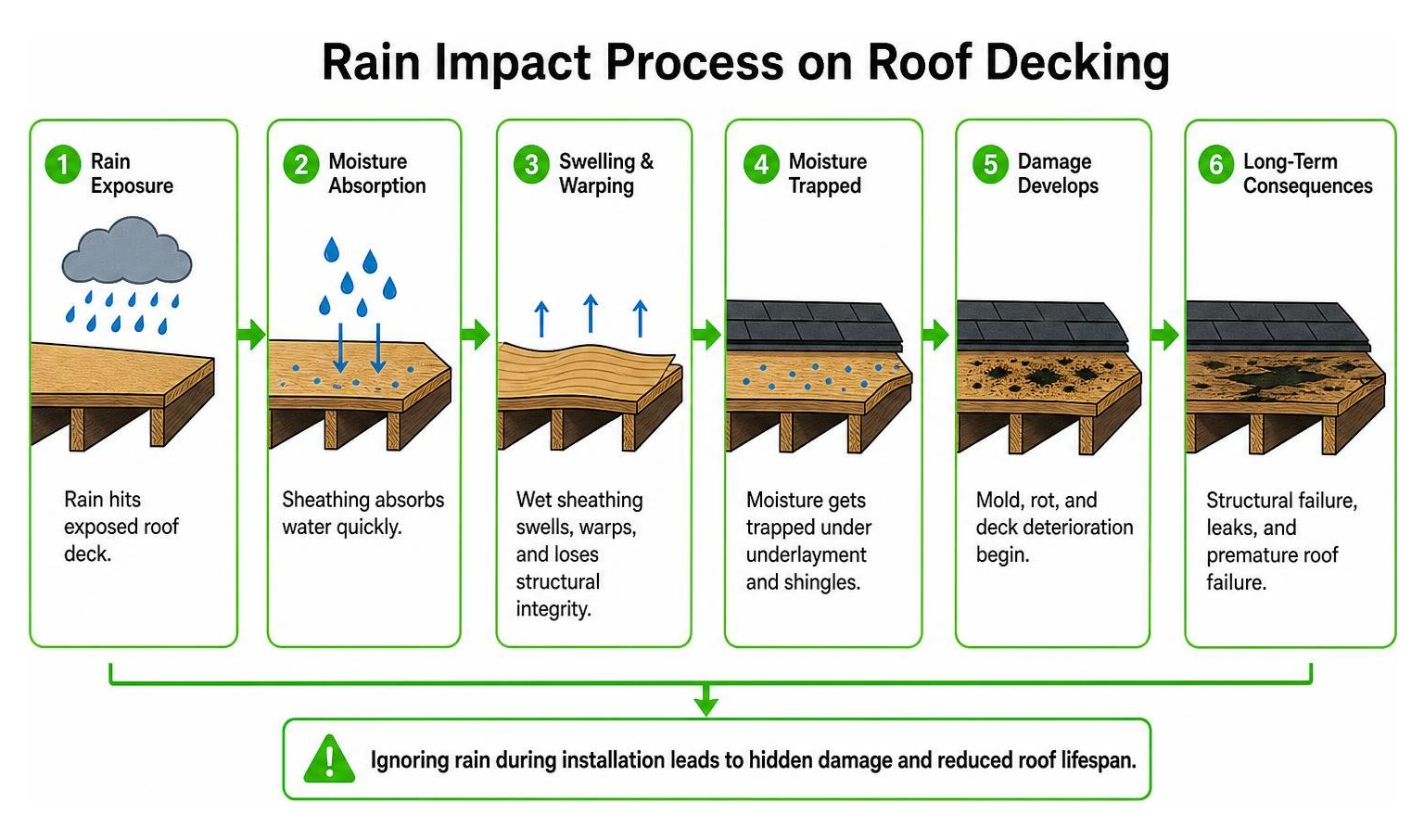
Cold Temperatures and Thermal Sealing Thresholds
When ambient temperatures fall below the standard 40°F threshold, asphalt shingles lose flexibility and become brittle. Cold weather causes asphalt materials to crack easily when hand-nailed or secured with pneumatic nail guns.
Furthermore, cold weather severely impairs the shingle’s thermal sealing process. Self-sealing asphalt shingles rely on heat from direct sunlight to melt their factory-applied adhesive strips and bond firmly to the underlying shingle course. Below 40°F, or under persistent cloudy conditions, this thermal seal fails to activate, leaving the roof vulnerable to wind blow-offs. While specialized techniques allow crews to know how to replace a roof in winter even when you don’t feel like it, installing materials outside specified thermal windows without taking proper cold-weather precautions can jeopardize manufacturer warranty coverage.
Temperature Extremes: How Heat and Cold Impact Materials
Both high-heat conditions and freezing environments alter material properties, requiring installation crews to adapt their daily techniques.
Extreme Heat and Shingle Softening

While warm weather helps shingle adhesive strips seal quickly, extreme summer heat presents its own distinct challenges. When ambient temperatures surpass the 85°F mark, surface temperatures on a dark roof can quickly spike above 150°F.
At these elevated surface temperatures, asphalt shingles soften significantly. Foot traffic from crew members walking across hot shingles can cause severe scuffing, dislodge protective mineral granules, and tear the structural fiberglass mat. To protect the roof’s aesthetic and structural integrity, professional contractors adjust daily schedules to start work at dawn, completing heavy shingle laydown before peak afternoon heat hits.
Freeze-Thaw Dynamics and Cold Weather Warranties
In regions like New Jersey, freeze-thaw cycles pose a constant threat to roofing structures. Moisture trapped beneath freshly laid shingles during winter or late fall freezes and expands as temperatures drop overnight. This cycle causes wood deck delamination and forces shingle layers apart before they ever have a chance to seal.
To prevent freeze-thaw damage to roofing and siding, installers must ensure all substrate surfaces are bone-dry and implement specialized cold-weather protocols, such as manual shingle sealing with approved roofing cement when temperatures sit near freezing.
Wind and High Humidity: The Hidden Threats
Temperature and rain dominate most weather discussions, but wind speeds and ambient humidity levels are equally critical to roof installation safety and overall performance.
How Does Weather Affect Roof Installation Quality in High Wind Conditions?
High winds present immediate physical hazards and installation flaws. Professional crews halt installation activities when sustained winds or gusts exceed 25 mph.
- Underlayment Lift: High winds catch unsealed synthetic underlayments or felt paper, tearing sheets away from deck fasteners and leaving the wood bare.
- Shingle Blow-Off: Unsealed shingles act like sails in heavy gusts, creasing the underlying fiberglass substrate or blowing off entirely before the adhesive strip sets.
- Safety Hazards: Maneuvering heavy 4×8 plywood sheets or carrying heavy shingle bundles on high ladders during strong winds endangers worker safety.
- Debris Control: Tear-off debris can blow into neighboring yards or homes, creating safety hazards and property risks.
Humidity and Curing Failures
Humidity is often called the silent quality killer in roof installation. Even without active rainfall, relative humidity levels above 85% impede proper drying and curing. High atmospheric moisture forms invisible micro-condensation on exposed roof decking and underlayments early in the morning.
Installing asphalt shingles over damp, humid surfaces prevents adhesive strips from bonding, leads to trapped moisture beneath barrier layers, and causes rot. Checking weather forecasts for humidity trends helps determine the best times to check your shingles and plan a replacement project safely.
Ideal Conditions for Roof Replacement
Planning a successful roofing project requires balancing moderate temperatures, low humidity, and dry weather forecasts.
Perfect Temperature and Moisture Windows
The sweet spot for installing an asphalt shingle roof falls between 55°F and 85°F with relative humidity below 70% and clear, sunny skies. These conditions allow shingles to remain pliable without softening and ensure thermal adhesive strips activate quickly to seal the roof against future windstorms.
| Factor | Ideal Conditions | Sub-Optimal / High-Risk Conditions | Installation Impact |
|---|---|---|---|
| Ambient Temperature | 55°F to 85°F | Below 40°F or Above 85°F | Affects shingle pliability, thermal sealing, and resistance to foot traffic scuffs. |
| Precipitation | 0% (Dry Decking) | Active rain, snow, or heavy dew | Wet decks cause wood warping, rot, adhesive failure, and void warranties. |
| Wind Speed | 0 to 15 mph | Exceeding 20 – 25 mph | High winds lift underlayment, blow unsealed shingles, and threaten crew safety. |
| Humidity | Below 70% | Above 85% | Delays sealant curing and traps microscopic surface condensation. |
| Wait Time After Rain | 0 hours (Clear) | Under 24 hours without testing | Decking requires 24–48 hours to dry completely before laydown resumes. |
Allowing 24 to 48 hours of dry weather after heavy rain before resuming roof deck work ensures trapped wood moisture won’t compromise the installation. Choosing optimal installation timing maximizes the material’s structural lifespan, which is fully detailed in our comprehensive guide to how long a roof lasts in the Northeast.
How Does Weather Affect Roof Installation Quality and Materials Choice?
Local weather trends strongly influence which roofing materials deliver the highest return on investment. While asphalt shingles represent the reliable standard for many homes across communities like Wayne, Paterson, Bloomfield, and Piscataway, LGM Roofing brings exceptional local expertise and dependable craftsmanship to ensure every installation withstands regional weather extremes. Homeowners weighing Northeast weather vs. your roof: which material wins? often rely on our expert team when evaluating material choices for high-wind or heavy-snow zones.
Comparing snow, ice, and your roof across metal vs. shingles in cold climates reveals that while metal systems excel at shedding heavy snow loads, asphalt shingles installed under proper thermal conditions provide exceptional insulation, resilience, and classic aesthetic charm when backed by robust GAF system warranties.
Professional Weather Protocols for Roofing Projects
Top-tier contractors don’t leave roof replacements to chance; they utilize standardized jobsite weather management protocols.
Emergency Tarping and Deck Protection
When unpredictable pop-up weather threatens an ongoing tear-off, professional installers take swift preventative steps:
- Continuous Monitoring: Job supervisors monitor live radar screens for localized cloud build-ups.
- Sectional Removal: Crews strip only the amount of old shingle material that can be fully re-roofed or dried-in with underlayment during the same shift.
- Heavy-Duty Tarping: Commercial-grade, heavy-duty waterproof tarps are kept on-site, weighted down and nailed securely with wood batten strips if rain approaches suddenly.
- Moisture Testing: Handheld moisture meters verify that wood deck moisture content falls into acceptable ranges before laying down new underlayment.
Strategic Scheduling and Delay Management
Weather delays can be frustrating, but forcing a roof replacement through rain or freezing conditions compromises quality. Reliable contractors track detailed local forecasts and adjust daily schedules accordingly. Knowing how best roofing practices for the Northeast shield against nor’easters helps protect home exterior investments, whether working on a cozy suburban home or high-end custom properties in Short Hills or Alpine where premium architectural shingles and specialized flashing solutions require pristine installation conditions.
Alongside roof protection, homeowners should pay equal attention to complementary exterior upgrades. Proper exterior maintenance includes pairing a newly installed roof with durable siding, energy-efficient window replacements, and reinforced entry doors to create a complete weather-tight protective barrier around the entire residence.
Frequently Asked Questions About Weather and Roof Replacement
Can roofers install shingles during light rain?
No. Reputable roofing contractors will not install shingles during active precipitation, including light drizzle or misty rain. Rain makes roof decks slick and unsafe for crews, warps plywood sheathing, and prevents self-sealing adhesive strips from bonding to the shingle layer below, which voids manufacturer system warranties.
What is the coldest temperature for asphalt shingle installation?
The standard minimum ambient temperature for asphalt shingle installation is 40°F. When temperatures drop below this mark, asphalt becomes brittle and prone to cracking during nailing. If emergency repairs or installations must occur in cold weather, shingles must be stored in heated areas prior to laydown and manually sealed using manufacturer-approved cold-weather manual adhesive application.
How long must a roof deck dry after rain before work resumes?
A wet roof deck typically requires 24 to 48 hours of continuous dry weather, sunlight, and adequate airflow to dry thoroughly after heavy rainfall. Responsible contractors verify that wood decking is completely dry to the touch and test moisture levels using digital moisture meters before laying down underlayment or new shingles.
Conclusion
Knowing does weather affect roof installation quality empowers homeowners to make informed decisions for their properties. Rain, extreme temperatures, high winds, and elevated humidity directly dictate material performance, crew safety, and system longevity. Pressuring an installation through poor weather leads to trapped moisture, unsealed shingles, and shortened roof lifespans.
At LGM Roofing, our 25+ years of general contracting experience across New Jersey means we never compromise on quality. As a GAF Master Elite Contractor, we prioritize proper jobsite weather management, precise installation standards, and complete warranty protection for your peace of mind.
Ready to protect your home with a expert replacement planned for optimal results? Schedule your expert replacement consultation with LGM Roofing today.
{"@context": "https://schema.org", "@graph": [{"@type": "Article", "headline": "Does Weather Affect Roof Installation Quality | LGM Roofing", "description": "Does weather affect roof installation quality? Learn how rain, cold, heat, and wind impact roofing in NJ. Contact LGM Roofing today.", "author": {"@type": "Person", "name": "Darwin Mizhirumbay"}, "publisher": {"@type": "Organization", "name": "LGM Roofing", "logo": {"@type": "ImageObject", "url": "https://storage.googleapis.com/ai-templates.appspot.com/bot/7Zj5auvscV25wHoNyvEk/full-logo/scraped-logo-6a3c57aee7317175.png"}}, "datePublished": "2026-08-12T22:47:43+00:00", "dateModified": "2026-08-13T02:47:50.150594", "mainEntityOfPage": {"@type": "WebPage", "@id": "https://lgmroofing.com/the-ins-and-outs-of-how-weather-affects-roof-installation-quality/"}, "image": "https://storage.googleapis.com/ai-templates.appspot.com/bot/7Zj5auvscV25wHoNyvEk/customImages/17-Oct%2027%202025%2011_30am-tq9x_compressed.jpg"}, {"@type": "FAQPage", "mainEntity": [{"@type": "Question", "name": "How does weather affect roof installation quality?", "acceptedAnswer": {"@type": "Answer", "text": "Weather affects how roofing materials perform during installation, and ignoring seasonal conditions can create hidden vulnerabilities that reduce long-term durability. In New Jersey, rain, moisture, cold temperatures, and limited sunlight can all interfere with proper installation and repair quality."}}, {"@type": "Question", "name": "Why is rain bad during roof installation?", "acceptedAnswer": {"@type": "Answer", "text": "Rain can soak an exposed roof deck, causing plywood or OSB sheathing to swell, warp, and lose structural integrity. Moisture trapped under shingles or underlayment can lead to mold, deck rot, and poor adhesive bonding."}}, {"@type": "Question", "name": "Can wet roof sheathing cause roof problems later?", "acceptedAnswer": {"@type": "Answer", "text": "Yes, wet roof sheathing can warp, weaken, and trap moisture beneath roofing materials. This can cause mold growth, deck rot, failed shingle adhesion, and a higher risk of premature roof failure."}}, {"@type": "Question", "name": "What temperature is too cold to install asphalt shingles?", "acceptedAnswer": {"@type": "Answer", "text": "Asphalt shingles can become brittle and lose flexibility when temperatures fall below about 40°F. Below this threshold, shingles may crack during installation and their self-sealing adhesive strips may not activate properly."}}, {"@type": "Question", "name": "How does cold weather affect shingle sealing?", "acceptedAnswer": {"@type": "Answer", "text": "Cold weather can prevent the factory-applied adhesive strips on asphalt shingles from melting and bonding to the underlying shingle course. If the thermal seal does not activate, the roof may be more vulnerable to wind blow-offs and potential warranty issues if proper precautions are not taken."}}]}]}Ready for a roof you can trust?
Get a free, no-pressure estimate. Family-owned since 2006, GAF Master Elite, and rated 4.9 by 130 homeowners on Google.