
The Ultimate Guide to Filing a Roof Damage Insurance Claim
Learn how to file a roof insurance claim after storm damage in NJ: step-by-step guide, expert tips & insurance navigation for homeowners.

The Ultimate Guide to Filing a Roof Damage Insurance Claim
What Every New Jersey Homeowner Needs to Know About Filing a Roof Insurance Claim After Storm Damage
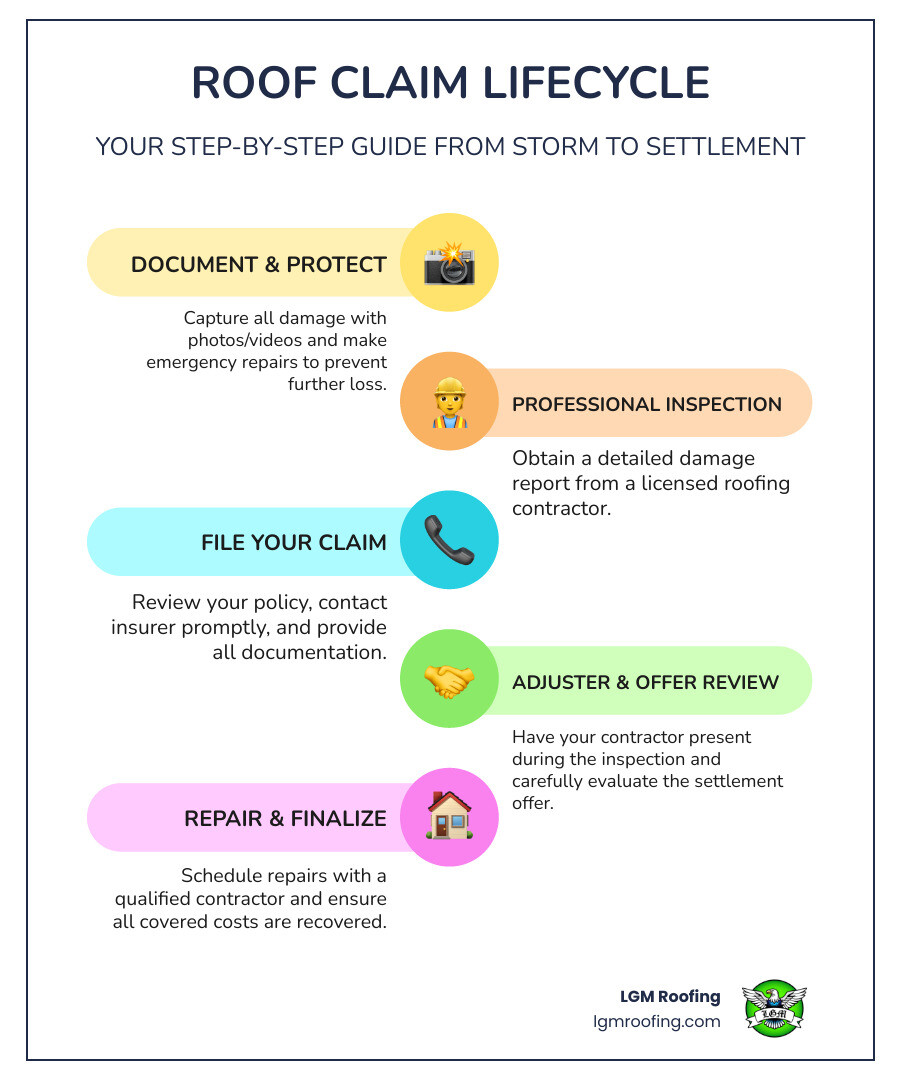
Knowing how to file a roof insurance claim after storm damage can be the difference between a full roof replacement covered by your insurer and thousands of dollars paid out of pocket. Here is a quick overview of the process:
- Document the damage – Take photos and videos of all visible damage immediately after the storm, before anything is touched or repaired.
- Make temporary repairs – Apply tarps or other emergency fixes to prevent further water intrusion. Keep all receipts.
- Get a professional inspection – Contact a licensed roofing contractor to produce a detailed damage report before the adjuster arrives.
- Review your policy – Understand your coverage type (ACV vs. RCV), deductible amount, and filing deadline.
- File your claim promptly – Contact your insurance company, provide your documentation, and get a claim number.
- Prepare for the adjuster’s visit – Have your roofing contractor present during the inspection to ensure no damage is overlooked.
- Review the settlement offer – Compare the insurer’s estimate against your contractor’s report and negotiate if the offer falls short.
- Schedule repairs and close the claim – Work with a licensed contractor, submit proof of completed repairs, and recover any held depreciation if you have an RCV policy.
Storm damage is stressful. But with the right steps, the claims process does not have to be. Wind and hail alone accounted for more than half of all residential roofing claims in 2024, and with roof repair and replacement costs reaching nearly $31 billion nationwide that same year, knowing how to protect your investment matters more than ever.
New Jersey homeowners face a unique mix of weather threats – nor’easters, coastal windstorms, summer hail, and heavy snow loads – that can compromise a roof quickly and in ways that are not always obvious from the ground. Insurance companies are also tightening their documentation requirements, making it increasingly important to approach the process with a clear, organized strategy from day one.
I’m Darwin Mizhirumbay, co-owner of LGM Roofing and a second-generation roofing professional who has helped New Jersey homeowners navigate exactly how to file a roof insurance claim after storm damage from inspection through final settlement. In the guide below, I’ll walk you through every step so you can approach your insurer with confidence and get the coverage your home deserves.
Identifying Covered Storm Damage on Your New Jersey Property
Before you pick up the phone to call your agent, you need to know what you’re looking at. In New Jersey, our roofs take a beating from all four seasons. Whether you’re in Wayne, NJ, or closer to the coast in Piscataway, NJ, the type of damage you find will dictate how we approach your claim.
Standard homeowners insurance policies typically cover “sudden and accidental” damage. This includes wind, hail, fire, and falling objects (like that oak tree limb that didn’t survive the Nor’easter). However, insurance is not a maintenance plan. They won’t pay for a new roof just because yours is old or has some moss growing on it.
Wind Uplift and Shingle Damage
When high winds whip through Paterson, NJ, they can create a vacuum effect known as wind uplift. This lifts the shingles, breaking the sealant bond. Even if the shingle lays back down, the seal is gone, making it a prime candidate for a leak during the next rain. Look for missing shingles, creased shingles (where they’ve folded back), or shingles that are visibly lifted at the edges.
Hail Bruising
Hail is a bit of a “silent killer” for roofs. While large hail leaves obvious dents in your gutters and siding, smaller hailstones can cause “bruising” on asphalt shingles. This knocks away the protective granules, exposing the underlying bitumen to UV rays, which causes the shingle to become brittle and fail prematurely. If you see circular patterns of granule loss or dark spots that feel soft to the touch, you have hail damage.
Falling Debris and Structural Compromise
Heavy snow loads and fallen branches can cause immediate structural issues. If you notice a sag in your roofline or cracked rafters in the attic, the damage is likely more than just skin-deep. Knowing the signs of roof damage early can prevent a minor leak from becoming a major interior renovation project.
Ice Damming and Coastal Impact
In New Jersey, winter brings the threat of ice dams. When heat escapes your attic and melts snow on the roof, the water runs down to the cold eaves and freezes into a dam. This backs up water under your shingles. While some policies cover the resulting interior water damage, they may not cover the roof repair itself unless the dam was caused by a covered storm event. Similarly, coastal wind damage can be more severe, often requiring specific “wind-rated” shingles to meet local building codes. You can learn more about these regional issues in our guide on the top 7 roofing problems in new jersey homes and how to spot them.
How to file a roof insurance claim after storm damage: A Step-by-Step Process
Filing a claim is not just about making a phone call; it’s about building an evidentiary case. Think of yourself as a detective. The more evidence you gather, the harder it is for the insurance company to say “no.”
Step 1: Immediate Documentation
As soon as it is safe to go outside after a storm, grab your smartphone. Take photos of everything. Start with wide shots of the whole house, then move in closer to the roof (stay on the ground unless you’re a pro!). Look for “collateral damage”—dents in gutters, shredded window screens, or chipped paint on your deck. These are indicators adjusters look for to confirm a storm’s intensity. Don’t forget the interior; if you see water stains on the ceiling, photograph them immediately to assist in protecting your home from damaging leaks.
Step 2: Policy Review and Understanding Coverage
Before you file, you must know what kind of policy you have. This is where many homeowners get a nasty surprise.
| Feature | Actual Cash Value (ACV) | Replacement Cost Value (RCV) |
|---|---|---|
| Payout Basis | Depreciated value based on age | Full cost to replace at today’s prices |
| Out-of-Pocket | Higher (you pay the difference) | Lower (usually just your deductible) |
| Recommendation | Good for budget premiums | Best for total protection |
If you have an ACV policy and your 20-year-old roof is damaged, the insurer will only pay what a 20-year-old roof is worth—which isn’t much. An RCV policy, however, covers the full cost of a brand-new roof (minus your deductible). Also, check for a separate “Wind and Hail Deductible,” which can sometimes be 1% to 2% of your home’s total insured value rather than a flat dollar amount.
Step 3: Temporary Mitigation
You have a legal obligation under your policy to prevent further damage. This is called “mitigation.” If there’s a hole in your roof, you need to tarp it. If you don’t, and a second storm causes interior mold, the insurance company might deny that part of the claim. Keep all receipts for tarps, plywood, or emergency labor, as these are usually reimbursable. For more on storm readiness, check our advice on is your roof ready for summer storms how to prevent wind water damage in nj.
Step 4: Officially Filing the Claim
Call your insurer’s claims hotline or use their mobile app. Be factual. State the date of the storm and the type of damage you’ve observed. Avoid speculating on the “total cost” or saying things like “it’s just a few shingles.” Once you have your claim number, keep it in a dedicated folder (digital or physical) along with the name and contact info of every person you speak to.
Working with Professionals for a Successful Claim
One of the biggest mistakes we see in Bloomfield, NJ, and surrounding areas is homeowners trying to go toe-to-toe with an insurance adjuster alone. The adjuster works for the insurance company. We work for you.
Contractor Advocacy
When we provide insurance support, we act as your technical advocate. We speak the same language as the adjuster. We use industry-standard software like Xactimate to ensure our estimates are aligned with what the insurance company expects to see. Having a pro by your side ensures that “hidden” damage—like fractured fiberglass mats inside the shingles—is identified and documented.
Why you need a professional inspection before how to file a roof insurance claim after storm damage
A professional inspection is your roadmap. Many storm-related issues, like granule loss and hairline cracks, aren’t visible from the ground. We often find that what looks like a simple repair is actually a full replacement once we see the extent of the shingle failure.
In places like Bloomfield, the weather can change in an instant, making timing critical. If you’re searching for a roof inspection near me, look for a team that provides a written report with photo evidence. In fact, free roof estimates in bloomfield nj why summer is the ideal time to book one because it allows us to catch damage before the heavy winter snow arrives.
Preparing for the adjuster visit and how to file a roof insurance claim after storm damage
The adjuster’s visit is the “main event.” It usually happens within 48 hours to a week of filing your claim. We strongly recommend that you schedule your roofing contractor to be present during this meeting.
Why? Because adjusters are human. They might be tired, they might be in a hurry, or they might miss a dent on a vent pipe that proves hail was present. When we are there, we can point out the specific damage we found during our initial inspection. We can also help you determine can my roof be repaired or does it need to be replaced 7 ways to tell, providing the adjuster with the technical justification for a full replacement if necessary.
Navigating Payouts, Denials, and Roof Restoration
Once the inspection is over, the waiting game begins. Usually, you’ll receive an approval or denial within a week to ten days.
Understanding the Settlement Checks
If you have an RCV policy, you will typically receive two checks. The first is for the Actual Cash Value (ACV)—the value of the roof today, minus depreciation and your deductible. The second check, known as Recoverable Depreciation, is released only after the work is completed and we submit a final invoice to the insurance company.
If you have a mortgage, the check will likely be made out to both you and your mortgage company. You’ll need to send it to them for endorsement, which can add a few weeks to the process, so plan accordingly!
Handling Denials and Lowball Offers
If your claim is denied, don’t panic. It happens. Sometimes it’s a simple matter of missing documentation. You have the right to request a re-inspection with a different adjuster. You can also hire a Public Adjuster or consult with a lawyer if you feel the insurer is acting in bad faith.
Before you decide on the next steps, review the roof repair vs replacement in nj how to decide guide to see if the insurer’s offer for a “partial repair” is actually a viable long-term solution for your home.
Frequently Asked Questions about Roof Insurance Claims
Will filing a roof insurance claim increase my premiums?
This is the #1 question we get in Wayne and Paterson. Generally, insurance companies cannot raise your individual rates for an “Act of God” claim like a storm. However, they can raise rates for an entire zip code if a major storm (like a hurricane) impacts thousands of homes. If you’ve filed multiple claims in a short period, you might be seen as a higher risk, but a single storm claim shouldn’t cause a spike.
How long do I have to file a claim after a storm in New Jersey?
The timeframe varies by policy, but most New Jersey insurers require you to file within 6 to 12 months of the event. In 2026, we are seeing some providers tighten this window to 30 or 60 days for “prompt reporting.” The sooner you file, the easier it is to prove the damage was caused by a specific storm and not just general wear and tear.
Can I make temporary repairs before the adjuster arrives?
Yes! In fact, you should. As we mentioned earlier, you are required to mitigate further damage. Just make sure you take photos of the damage before you cover it up with a tarp. Do not, however, make permanent repairs or replace the whole roof before the adjuster sees it, as they may refuse to pay for work they couldn’t inspect first.
Conclusion
Navigating how to file a roof insurance claim after storm damage is a marathon, not a sprint. It requires patience, meticulous documentation, and the right partners. With roof replacement costs having increased by 30% nationwide from 2022 to 2024, you cannot afford to leave money on the table due to a poorly handled claim.
At LGM Roofing, we bring over 25 years of New Jersey construction expertise to every project. Whether you are in Wayne, Paterson, Bloomfield, or Piscataway, we understand the local codes and the local weather. We don’t just fix roofs; we provide comprehensive insurance support to ensure our neighbors get the fair treatment they deserve from their insurance providers.
If a storm has left you worried about the state of your home, don’t wait for the next rain to find out if you have a problem. Contact us today for a professional inspection, and let’s get your home back to its best.
Ready to start your claim? Get expert insurance support from LGM Roofing today!
Ready for a roof you can trust?
Get a free, no-pressure estimate. Family-owned since 2006, GAF Master Elite, and rated 4.9 by 130 homeowners on Google.