
Is Your Roof Over the Hill? How to Spot the End
Spot roof damage signs, age factors & repair vs replacement tips. Learn how to know when to replace your roof in NJ before it’s too late!

Is Your Roof Over the Hill? How to Spot the End
Your Roof Is Trying to Tell You Something — Are You Listening?
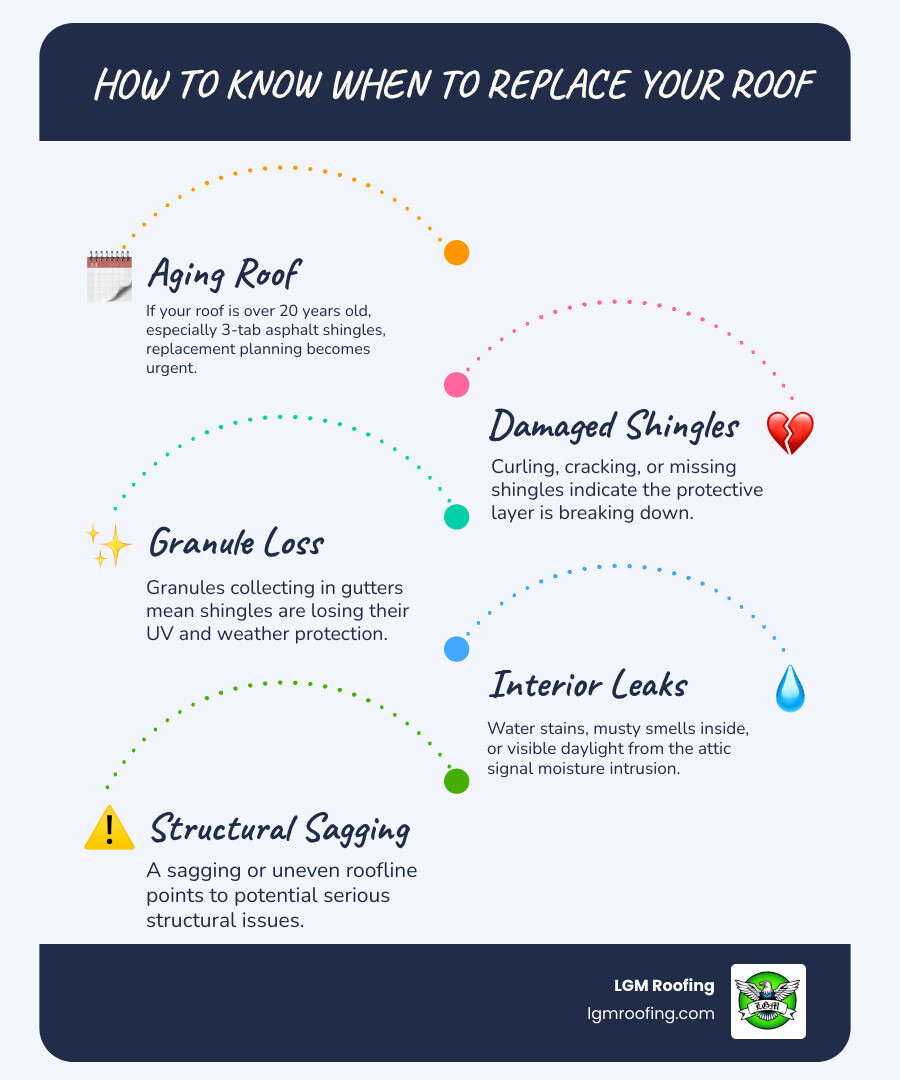
How to know when to replace your roof is one of the most important questions you can ask as a homeowner — and the answer could save you thousands in preventable damage. Most asphalt shingle roofs last between 15 and 30 years, but age alone does not tell the whole story. Curling shingles, granule loss, water stains on your ceiling, and a sagging roofline are all signs your roof may be past its prime.
Here is a quick summary of the most common indicators:
- Roof age over 20 years — replacement planning becomes urgent, especially for 3-tab asphalt shingles
- Curling, cracking, or missing shingles — the protective layer is breaking down
- Granules collecting in your gutters — shingles are losing their UV and weather protection
- Water stains or musty smells inside — moisture is getting through the roof system
- Sagging or uneven roofline — a potential structural issue requiring immediate attention
- Damaged or rusted flashing — water intrusion around chimneys, skylights, and vents
- Visible moss, mold, or algae growth — moisture is being trapped against the roof surface
- Daylight visible through attic boards — a serious gap in your roof’s protective barrier
- Repair costs exceeding 30% of a full replacement — replacement becomes the smarter financial choice
Any one of these signs is worth taking seriously. Several appearing together is a clear signal to act.
Your roof does not fail all at once. It sends warnings — subtle at first, then harder to ignore. The problem is that most homeowners only notice damage after it has already spread into the attic, insulation, or interior walls. By then, what could have been a straightforward roof replacement has become a much more costly project.
I’m Darwin Mizhirumbay, co-owner of LGM Roofing and a second-generation roofing professional who grew up watching my father build this company from the ground up since 2006 — giving me a hands-on understanding of how to know when to replace your roof before small issues turn into expensive structural problems. In the sections ahead, I’ll walk you through every warning sign, material lifespan, and decision point you need to protect your New Jersey home.
Visible Exterior Signs: How to Know When to Replace Your Roof
When we talk about how to know when to replace your roof, the most obvious evidence is usually sitting right above your head. You don’t necessarily need to climb a ladder to see the trouble; often, a pair of binoculars and a walk around your property in Wayne or Paterson will reveal the truth.
The first thing we look for is the physical condition of the shingles. Asphalt shingles are designed to lay flat. When they start to fail, they exhibit “curling” or “cupping.” Cupping happens when the edges of the shingles turn upward, while curling is when the edges remain flat but the middle starts to come up. Both are major Signs of Roof Damage that indicate the asphalt is hardening and losing its ability to protect your home.
Beyond just the shape, keep an eye out for these exterior warning signs:
- Missing Shingle Tabs: If you see “bald spots” or areas where the shingle has completely snapped off, your roof’s water-shedding ability is compromised.
- Cracked Flashing: Flashing is the metal material (often galvanized steel or aluminum) that seals the “breaks” in your roof, such as around chimneys, vents, and skylights. If this is rusted or the caulking is cracked, leaks are inevitable.
- Granule Loss: Those tiny pebbles in your gutters aren’t just dirt. They are the UV protection for your shingles. Widespread loss means your roof is “going bald.”
- Rusted Gutters: This often indicates standing water or debris accumulation that is eroding the adjacent roof areas and fascia boards.
- Chimney Seals: If the flashing around your chimney is failing, it’s a common entry point for water.
In our Roof Replacement Bloomfield: Complete Guide, we emphasize that seeing these signs across more than one slope of your roof usually means a patch job won’t cut it anymore.
Interior and Structural Red Flags
Sometimes the roof looks fine from the street, but the real story is unfolding in your attic. We always recommend an attic inspection at least twice a year. If you’re wondering, Can My Roof Be Repaired or Does It Need to Be Replaced? 7 Ways to Tell, the attic usually provides the definitive answer.
Structural integrity is the most serious concern. A sagging ridgeline or “drooping” areas on the roof deck are red alerts. This often points to long-term water damage that has rotted the wooden decking or even the rafters. If you walk on the roof (which we don’t recommend for homeowners!) and feel “soft spots” or a “spongy” sensation, the underlying wood is likely compromised.
Inside the living space, look for:
- Peeling Paint: Moisture trapped in the walls can cause paint to bubble or peel near the ceiling.
- Musty Odors: A persistent damp smell in the upper floors or attic often points to mold growth fueled by a slow leak.
- Increased Energy Bills: If your roof and insulation are failing, your HVAC system has to work harder to maintain temperatures in Piscataway’s humid summers and cold winters.
For a deeper dive into these nuances, check out our guide on Roof Repair vs. Replacement: How to Know What Your NJ Home Really Needs.
Spotting Interior Damage: How to Know When to Replace Your Roof
The “Daylight Test” is one of the simplest DIY checks. On a sunny day, turn off the lights in your attic. If you see pinpricks of light or large gaps through the roof boards, you have a direct path for water and pests to enter.
You should also look for:
- Dark Spots on Decking: Discoloration on the underside of the roof boards indicates active or past water penetration.
- Rust Around Nails: Black or rust-brown stains around roofing nails in the attic are early indicators that moisture is seeping through the shingle layers.
- Damp Insulation: If your fiberglass or cellulose insulation feels wet or looks matted down, it has been compromised by a leak.
Many of these issues are covered in our list of the Top 7 Roofing Problems in New Jersey Homes and How to Spot Them.
The Role of Age and Material Lifespan
In the year 2026, age is more than just a number—it’s a deadline. If your roof was installed around 2006, it is officially “over the hill” for standard asphalt materials. Understanding the expected lifespan of your specific material is crucial for Roof Replacement planning.
| Roofing Material | Typical Lifespan (Years) |
|---|---|
| 3-Tab Asphalt Shingles | 15 – 20 |
| Architectural Asphalt Shingles | 25 – 30 |
| Wood Shingles / Shakes | 20 – 30 |
| Metal Roofing (Steel/Aluminum) | 40 – 70 |
| Clay or Concrete Tiles | 50 – 100 |
| Natural Slate | 100+ |
As you can see, the material makes a massive difference. While a slate roof might still be a “teenager” at 50 years old, an asphalt roof is likely on its last legs. For more detail on how our local weather affects these timelines, see How Often Should You Replace Your Roof? A Breakdown by Material & Climate.
Factoring in Material Age: How to Know When to Replace Your Roof
How do you find out exactly how old your roof is? If you didn’t own the home when it was installed, check your home inspection report or search local building permits in Bloomfield or Wayne.
Once a roof hits the 20-year milestone, the urgency for a professional inspection increases. Even if it “looks fine,” the chemical bonds in the asphalt are breaking down. By the 25-year mark, most asphalt roofs are considered at the end of their functional life. Proactive planning in 2026 prevents the “emergency” replacement that always seems to happen during a January blizzard or an August thunderstorm. If you’re unsure of your roof’s birthday, searching for a Roof Inspection Near Me is the best first step.
Repair vs. Replacement: Making the Right Choice in NJ
We often get asked: “Can’t you just fix the leak?” The answer depends on the 30% rule. If the cost of repairs exceeds 30% of the price of a total replacement, it is almost always smarter to invest in a new roof. Patching an old roof is like putting a new tire on a car with a blown transmission; it doesn’t solve the underlying problem.
Our team helps homeowners navigate Roof Repair vs. Replacement in NJ: How to Decide by looking at the “context” of the damage.
- Isolated Damage: A few shingles blown off by a windstorm on a 5-year-old roof? That’s a repair.
- Widespread Wear: Curling shingles across three different slopes on a 20-year-old roof? That’s a replacement.
We also have to consider biological growth. Moss, mold, and algae are common in New Jersey. While black algae streaks are mostly cosmetic (though they do indicate an older roof), moss is a different beast. Moss traps moisture against the shingles, which can lead to rot in our freezing winters.
A common question is whether you can just put a new layer of shingles over the old ones. While some NJ regulations allow for two layers, we generally advise against it. It adds immense weight and hides potential rot in the decking. You can read more about why in our article: Is Shingling Over Your Old Roof a Smart Move? and the specific Can You Install a New Roof Over an Old One? Pros, Cons & NJ Regulations.
Frequently Asked Questions about Roof Replacement
What does granule loss in my gutters signify?
Think of granules as the “sunscreen” for your shingles. They are made of crushed stone and minerals that protect the underlying asphalt from UV rays and provide fire resistance. A small amount of loss is normal after a heavy rain, but if you find piles of granules at the base of your downspouts, your shingles are losing their protective coating. This makes them brittle and prone to cracking. If your roof is over 10 years old and showing significant loss, it’s time to book an assessment. Free Roof Estimates in Bloomfield NJ: Why Summer Is the Ideal Time to Book One can help you get ahead of this issue.
How does homeowners insurance cover a new roof?
Insurance typically covers “acts of nature”—sudden and accidental damage from wind, hail, or fallen trees. It generally does not cover general wear and tear or a roof that has simply reached the end of its life.
Crucially, many insurers change their coverage as a roof ages. Once a roof reaches 15 to 20 years old, many companies switch from Replacement Cost Value (RCV)—which pays for a new roof—to Actual Cash Value (ACV), which only pays what your old roof is currently worth (depreciated value). This is a major reason why Why August Is the Perfect Month to Schedule a Roof Replacement in NJ is a popular time for homeowners to act before the next storm season hits.
When should I schedule a professional inspection?
We recommend a professional check-up twice a year—once in the spring to assess winter damage and once in the fall to prep for the coming snow. You should also call us after any major storm involving hail or high winds.
While a ground-level DIY check is a great start, a pro will look at the flashing, the ventilation balance, and the condition of the pipe boots that you can’t see from the driveway. If you’re concerned about the Roof Inspection Cost Bloomfield, a small fee for an inspection is much cheaper than a $20,000 mold remediation project later.
Conclusion
Deciding how to know when to replace your roof shouldn’t be a guessing game. By keeping a watchful eye on your shingles, checking your attic for daylight, and respecting the 20-year milestone, you can protect your home’s structural integrity and its value.
At LGM Roofing, we bring over 25 years of experience as a GAF Master Elite general contractor in New Jersey. We understand the unique challenges our weather poses to homes in Wayne, Paterson, Bloomfield, and Piscataway. Our commitment to excellence, exceptional service, and solid warranty means you can rest easy knowing your “first line of defense” is in expert hands. Don’t wait for the first leak to appear on your living room ceiling—proactive maintenance is the key to a stress-free home.
For more information or to schedule an assessment, visit our More info about roofing services page. Let us help you keep your home safe, dry, and beautiful for the next 30 years.
Ready for a roof you can trust?
Get a free, no-pressure estimate. Family-owned since 2006, GAF Master Elite, and rated 4.9 by 130 homeowners on Google.