
Shingle Longevity 101: What Really Affects Your Roof’s Life
Discover the average lifespan of asphalt shingles. Learn key factors affecting durability, spot wear signs, and extend your roof’s life.

Shingle Longevity 101: What Really Affects Your Roof’s Life
How Long Do Asphalt Shingles Actually Last? A New Jersey Homeowner’s Reality Check
The average lifespan of asphalt shingles is one of the most important things to understand before investing in a new roof — and the answer is rarely as simple as what’s printed on the packaging.
Here’s a quick breakdown by shingle type:
| Shingle Type | Average Lifespan |
|---|---|
| 3-Tab Asphalt Shingles | 15-20 years |
| Architectural (Dimensional) Shingles | 25-30 years |
| Luxury / Premium Shingles | 30-40 years |
These ranges reflect real-world performance under typical conditions. Manufacturer warranties can stretch longer, but as we’ll cover in detail, those numbers come from lab testing — not your New Jersey rooftop in January.
In practice, where your roof actually lands within those ranges depends on a mix of factors: how it was installed, how well your attic breathes, what the weather throws at it, and how consistently it’s maintained. Some homeowners squeeze 30 years out of a “20-year” roof with great ventilation and regular upkeep. Others watch a “30-year” shingle fail in 12. The gap between those two outcomes is exactly what this guide is here to explain.
I’m Darwin Mizhirumbay, co-owner of LGM Roofing and a second-generation roofing professional who grew up watching the real-world factors that separate a long-lasting roof from a premature replacement — and understanding the average lifespan of asphalt shingles is where every smart roofing decision starts. Let’s walk through everything you need to know.
Understanding the Average Lifespan of Asphalt Shingles
When we talk about the average lifespan of asphalt shingles, we are looking at the functional service life of the material—the period during which it effectively keeps water out of your home. In the roofing industry, asphalt shingles have been the gold standard since the 1920s because they strike a perfect balance between cost and protection.
To understand why some shingles last longer than others, we have to look at what’s inside them. Modern shingles are typically built on a fiberglass mat. This mat is coated with a layer of asphalt for waterproofing and then topped with mineral granules. These granules aren’t just for color; they are the “armor” that protects the asphalt from the sun’s harsh UV rays. Some older or specialized shingles use an organic mat made of cellulose (paper), which contains more asphalt and can be more rugged, but fiberglass has become the industry favorite in New Jersey because it’s more fire-resistant and cost-effective.
Knowing how often should you replace your roof starts with identifying which of these materials is currently over your head.
Average Lifespan of Asphalt Shingles by Type
Not all asphalt shingles are created equal. We generally categorize them into three main buckets:
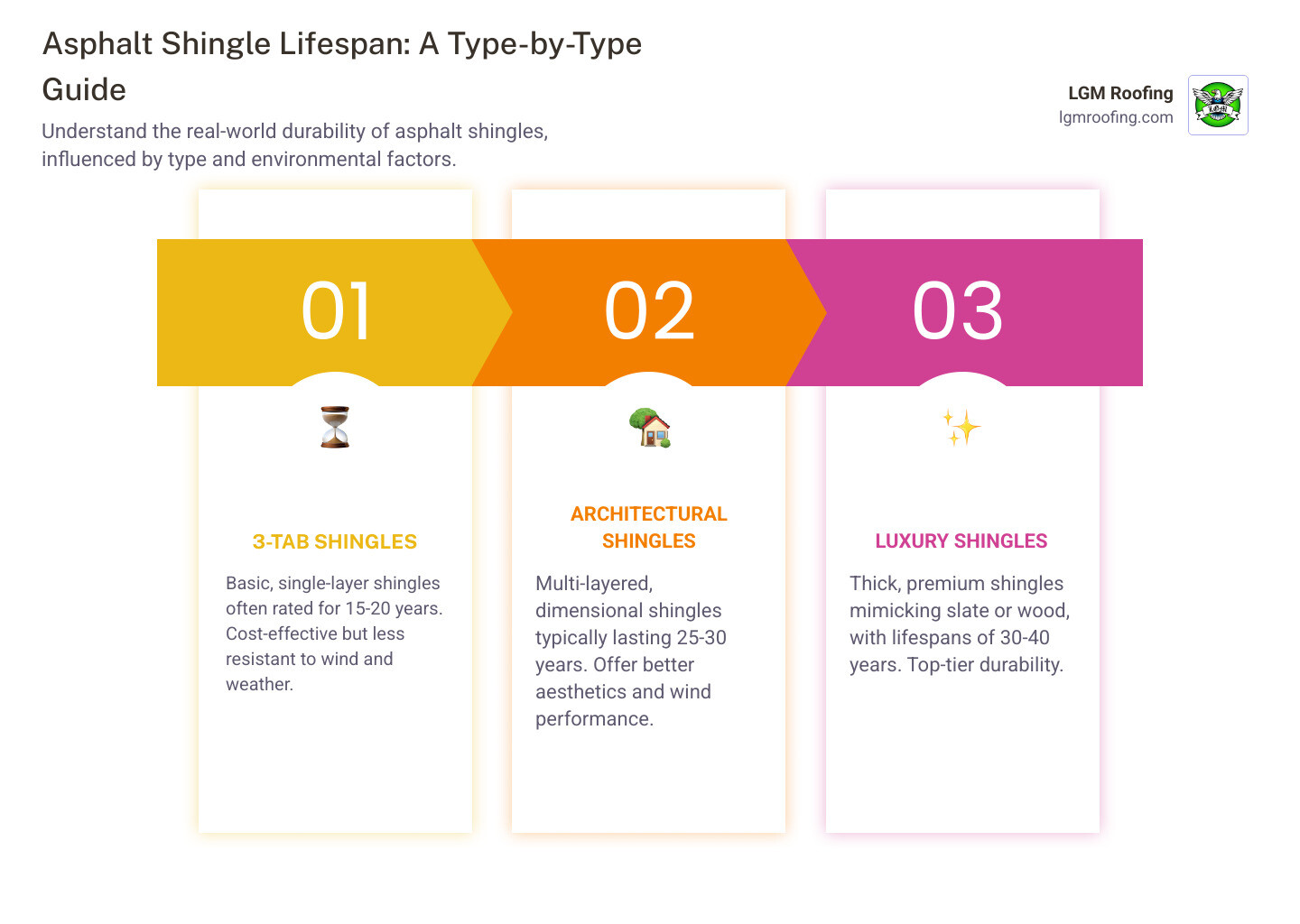
- 3-Tab Shingles: These are the most basic and economical option. They are flat, single-layer shingles with cutouts that make them look like three separate pieces. In our experience in areas like Wayne and Paterson, these typically last 15 to 20 years. Their wind ratings are usually lower (around 60-70 MPH), making them less ideal for storm-prone coastal areas.
- Architectural (Dimensional/Laminated) Shingles: These are the most popular choice for New Jersey homeowners today. They are made of multiple layers of material laminated together, giving them a thicker, textured look. Because they are beefier, they offer better weather resistance and typically last 25 to 30 years.
- Luxury / Premium Shingles: These are high-end products designed to mimic the look of natural slate or cedar shakes. They are significantly thicker and heavier than architectural shingles. Under ideal conditions, these premium products can reach a lifespan of 30 to 40 years.
Real-World Performance vs. Manufacturer Warranties
Here is a bit of “insider” info: there is often a gap between the warranty on the box and the reality on your roof. You might see shingles marketed as having a “Lifetime Warranty,” but in the roofing world, “lifetime” usually refers to the expected service life of the product, not your actual lifetime!
Most manufacturer warranties are prorated, meaning the value of the coverage drops every year the roof gets older. Furthermore, these warranties usually only cover manufacturing defects. They won’t help you if the roof fails because of improper installation, lack of ventilation, or severe NJ weather. This is why a workmanship warranty from your contractor is just as important as the material warranty from the manufacturer. Lab testing is done in controlled environments, but your roof has to deal with 95-degree summers and freezing winters.
Environmental and Structural Factors Impacting Longevity
In New Jersey, our climate is particularly tough on roofs. We deal with thermal cycling—the constant expansion and contraction of materials as they heat up during the day and cool down at night. Over time, this causes the asphalt to become brittle.
UV radiation is another silent killer. The sun’s rays slowly break down the chemical bonds in the asphalt. Once the granules start to fall off, the asphalt is exposed, and the shingle begins to crack and leak. If you want to stay ahead of these issues, it helps to know the top 7 roofing problems in New Jersey homes.
The Role of Attic Ventilation and Insulation
If your roof “cooks” from the inside out, it won’t matter how high-quality your shingles are. Proper attic ventilation is the secret to a long-lasting roof. You need a balanced system of intake vents (usually at the soffits) and exhaust vents (at the ridge or gables).
Without airflow, heat builds up in the attic during summer, reaching temperatures over 150°F. This excessive heat bakes the shingles from underneath, significantly shortening the average lifespan of asphalt shingles. In the winter, poor ventilation leads to moisture trapment and the dreaded ice dams, which can force water under your shingles and into your walls.
Impact of Roof Pitch and Orientation
The shape and direction of your roof also play a role.
- Pitch: A steep-slope roof sheds water and snow much faster than a shallow one. Water sitting on a low-slope roof has more time to find a way in.
- Orientation: South-facing slopes usually fail faster than north-facing ones because they receive the most direct sunlight and thermal stress throughout the day.
Identifying When Your Shingles Need Professional Attention
As a homeowner in Piscataway or Bloomfield, you don’t need to climb a ladder to see if your roof is struggling. You can often spot the signs of roof damage from the ground with a pair of binoculars.
Visible Indicators of Shingle Failure
Keep an eye out for these “red flags”:
- Granule Loss: If your gutters are full of what looks like coarse sand, your shingles are losing their protective coating.
- Curling or Cupping: This is a sign that the shingles are drying out and losing their shape.
- Cracked Shingles: Thermal stress eventually leads to physical breaks in the shingle surface.
- Algae and Moss: Dark streaks (algae) are mostly aesthetic, but moss is a real problem. Moss roots can lift shingles and hold moisture against the roof surface, accelerating rot.
If you are seeing these signs, you might be asking, “Can my roof be repaired or does it need to be replaced?” We usually recommend a professional inspection to see if the damage is localized or systemic.
Structural Red Flags and Leaks
Sometimes the problems are deeper than the shingles. A sagging roof deck is a major warning sign that the structural plywood underneath has rotted or weakened. Inside your home, look for water spots on the ceiling, mold growth in the attic, or deteriorated insulation. Leaks often start around “penetrations” like chimneys, skylights, and vent pipes where the flashing (the metal seal) has pulled away or rusted.
Proactive Maintenance to Protect Your Investment
You wouldn’t drive a car for 20 years without an oil change, and your roof is no different. Annual inspections (especially after a rough NJ winter) can catch small issues before they become $20,000 headaches.
Our best maintenance tips include:
- Gutter Cleaning: Prevent water backup that can rot your roof edges.
- Debris Removal: Don’t let leaves or branches sit on the roof; they trap moisture.
- Branch Trimming: Keep trees at least 6-10 feet away so they don’t rub against the shingles or drop heavy limbs.
Maximizing the Average Lifespan of Asphalt Shingles
Beyond basic cleaning, you can look into shingle rejuvenation treatments like Roof Maxx, which use soy-based oils to restore flexibility to old shingles. However, these are most effective when the shingles are still in relatively good shape.
Some homeowners ask, “Is shingling over your old roof a smart move?” While a “layover” can save money upfront, it often shortens the life of the new shingles because they trap more heat. We almost always recommend a full tear-off to inspect the wood underneath.
The Importance of Quality Installation
Even the best shingles will fail if they are nailed down wrong. At LGM Roofing, we emphasize the 6-nail method for architectural shingles, which significantly increases wind resistance. The quality of the underlayment (the waterproof barrier under the shingles), the drip edge, and the starter shingles all contribute to whether your roof reaches its 30-year goal or fails at year 15.
If you’re considering a new roof, check out the New Jersey regulations on can you install a new roof over an old one to make sure your project is up to code.
Repair vs. Replacement: Deciding the Future of Your NJ Roof
The big question: repair or replace? As a rule of thumb, if less than 20-30% of the roof is damaged and the shingles are still flexible, a targeted repair is often the way to go. However, if the roof is over 20 years old and shingles are brittle, “patching” it can be like putting a band-aid on a sinking ship.
Check out our guide on roof repair vs replacement in NJ for a deeper dive into this decision.
When Targeted Repairs Suffice
Repairs are great for:
- Replacing a cracked pipe boot.
- Resealing flashing around a chimney.
- Replacing a few shingles blown off by a recent storm.
If you aren’t sure, we can help you figure out how to know what your NJ home really needs through a comprehensive assessment.
Frequently Asked Questions
How long do 30-year architectural shingles really last?
In the New Jersey climate, a “30-year” shingle typically provides a solid 22 to 25 years of service. Reaching the full 30 years requires perfect attic ventilation and proactive maintenance.
Does the color of my shingles affect their lifespan?
Yes! Lighter-colored shingles reflect more sunlight and absorb less heat. This can keep your attic cooler and potentially slow down the “cooking” process of the asphalt, extending the roof’s life slightly compared to a black or dark charcoal roof.
Can I extend the average lifespan of asphalt shingles with coatings?
There are “cool roof” coatings and rejuvenation treatments that can help. While they won’t make a 20-year roof last for 50 years, they can often add 5 to 10 years of life to a roof that is starting to show its age but is still structurally sound.
Conclusion
At LGM Roofing, we’ve spent over 25 years helping homeowners in New Jersey—from Paterson to Piscataway—protect their greatest investment. The average lifespan of asphalt shingles is a helpful guideline, but your roof’s actual performance comes down to the quality of the workmanship and the care you give it over the years.
Whether you need a quick repair for a leaky skylight or a full architectural shingle replacement, our team is committed to excellence and exceptional service. Don’t wait for a ceiling stain to tell you your roof is failing. Explore our professional roofing services today and let us help you maximize the life of your home’s first line of defense.
Ready for a roof you can trust?
Get a free, no-pressure estimate. Family-owned since 2006, GAF Master Elite, and rated 4.9 by 130 homeowners on Google.