
Signs Your Roof Repair Is Just a Band-Aid for a Bullet Hole
Spot signs that roof repair is no longer enough: granule loss, leaks, sagging, attic damage. Learn when NJ roofs need full replacement!

Signs Your Roof Repair Is Just a Band-Aid for a Bullet Hole
Why Knowing the Signs That Roof Repair Is No Longer Enough Could Save You Thousands
Recognizing the signs that roof repair is no longer enough is one of the most important — and most overlooked — decisions a homeowner can make. Most people only think about their roof after a water stain appears on the ceiling or a shingle blows into the yard. By that point, what could have been a straightforward replacement has often become a much bigger problem involving damaged decking, soaked insulation, and potential mold.
Here is a quick look at the most common signs that repair has stopped being the right answer:
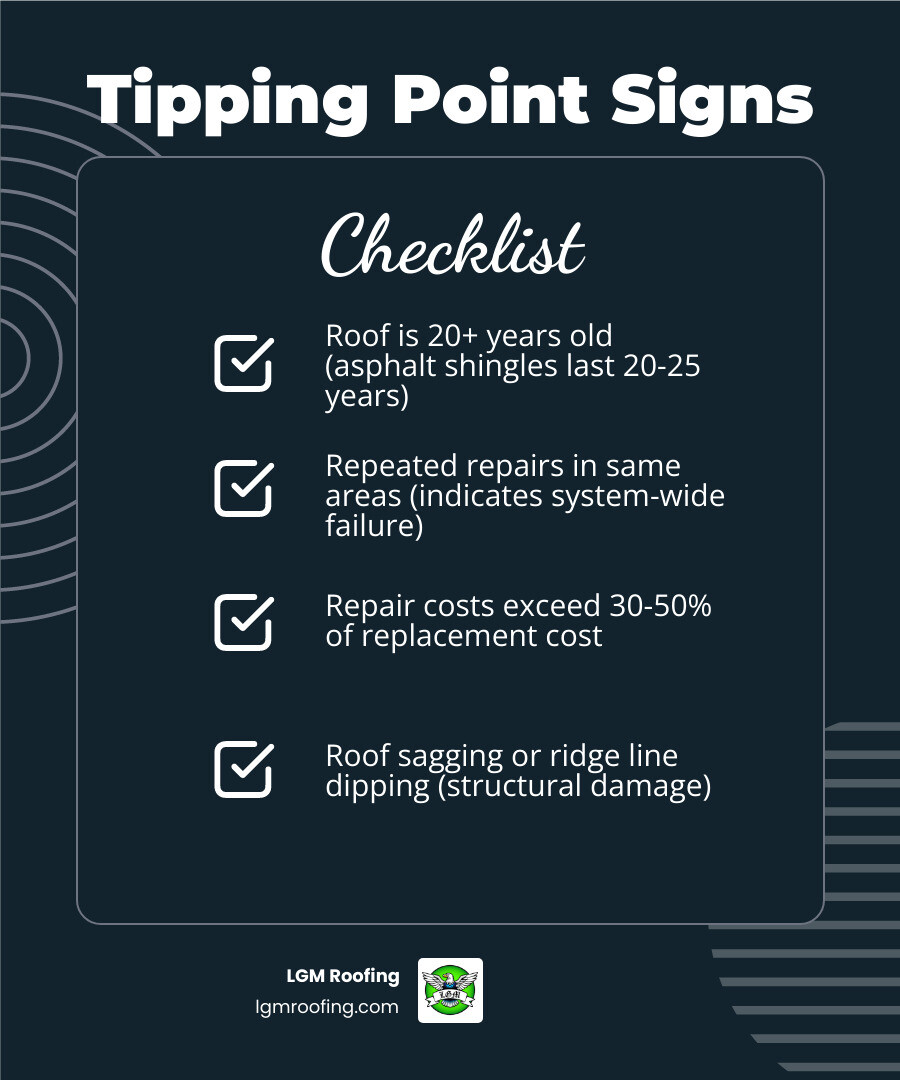
- Your roof is 20 years old or more — asphalt shingles typically last 20–25 years
- You are repairing the same area repeatedly — recurring leaks signal a system-wide failure, not an isolated problem
- Shingles are curling, cracking, or missing in multiple areas — widespread damage cannot be solved one shingle at a time
- You are finding granules in your gutters — heavy granule loss means shingles have lost their UV protection and are breaking down
- Your roof is sagging or the ridge line dips — this points to structural damage that repair cannot fix
- Your repair estimate exceeds 30–50% of full replacement cost — at that threshold, replacement is the smarter long-term investment
- You see daylight, stains, or mold in your attic — interior signs often mean the damage is already deeper than the surface
The hard truth is that roofs are complete systems. When enough components fail, patching individual spots does not restore the system — it just delays the inevitable, often at a higher total cost.
I’m Darwin Mizhirumbay, co-owner of LGM Roofing and a second-generation roofing professional who has worked alongside contractors and homeowners navigating exactly these repair-vs.-replacement decisions — including the signs that roof repair is no longer enough to protect a home long-term. In this guide, I’ll walk you through every major indicator so you can make a confident, informed decision.
The Tipping Point: Signs That Roof Repair Is No Longer Enough
Every roof eventually reaches a “point of no return.” In our 25+ years of experience serving New Jersey, we have seen homeowners spend thousands on a series of small patches, only to realize two years later that the entire structure needs to be replaced anyway. This is the definition of throwing good money after bad.
To help you decide, we often look at two major “rules of thumb” used in the industry:
- The 30% Rule: If more than 30% of your roof surface shows signs of damage — such as missing shingles, widespread curling, or moss growth — a repair is statistically likely to fail. At this stage, the integrity of the entire system is compromised.
- The 50% Rule: If a repair estimate costs more than 50% of what a new roof would cost, it is time to stop patching.
| Feature | Isolated Damage (Repair) | Systemic Failure (Replacement) |
|---|---|---|
| Scope | Small, localized area (e.g., one leak) | Multiple leaks or damage on various slopes |
| Shingle Condition | Still flexible, granules intact | Brittle, curling, or “bald” |
| Roof Age | Under 15 years | 20+ years |
| Structural Integrity | Solid deck and straight ridge-line | Sagging areas or soft spots in the wood |
When you cross these thresholds, continuing to patch is like putting a small bandage on a major structural wound. For a deeper dive into these metrics, check out our guide on Roof Repair vs Replacement in NJ: How to Decide.
What Are the Visible Signs My NJ Roof Is Failing?

In New Jersey, our roofs take a beating from all four seasons. From the scorching July sun to the freezing January winds, the constant cycle of thermal expansion and contraction causes materials to fatigue. The most obvious signs that roof repair is no longer enough are visible right from your driveway.
Curling and Buckling: When shingles begin to curl (the edges turn upward) or cup (the center rises), it means the asphalt is drying out and losing its ability to shed water. This is often caused by years of UV degradation and improper attic ventilation. Once shingles lose their flat profile, they are easily caught by the wind and can be ripped off entirely.
Cracking: If you see cracks spider-webbing across your shingles, the material has become brittle. Brittle shingles cannot be effectively repaired because the act of nailing down a new shingle next to an old, brittle one often causes the old one to shatter. You can learn more about identifying these issues in our article on Signs of Roof Damage.
Widespread Granule Loss and Shingle Bald Spots
Have you ever cleaned your gutters and found what looks like coarse black sand? Those are protective granules. Manufacturers add these to asphalt shingles to shield the underlying bitumen from the sun’s harsh UV rays.
While a small amount of granule loss is normal for a brand-new roof as it “settles,” heavy accumulation in your downspouts is a major red flag. When shingles lose their granules, they lose their “sunscreen.” The sun then bakes the asphalt, making it thin and prone to leaks. If you see “bald spots” where the black substrate is visible through the colored surface, your shingles have reached the end of their functional life.
When Recurring Leaks Prove That Roof Repair Is No Longer Enough
One leak is a nuisance; three leaks in the same year is a pattern. If you find yourself calling a contractor every time a Nor’easter blows through, your roof is telling you that its protective barriers have failed.
Often, these leaks occur at “transition points” like chimneys, vents, or valleys. While you can certainly perform a Roof Repair on a single piece of flashing, widespread flashing deterioration usually happens because the entire roof was installed at the same time. If the chimney flashing is rusted through, the vent boots and valley tin are likely right behind it.
Are There Hidden Warning Signs Inside My Attic?
Sometimes the most dangerous signs that roof repair is no longer enough aren’t visible from the ground. We always recommend taking a flashlight into your attic during a heavy rainstorm or on a bright, sunny day.
- Daylight through the boards: If you see pinpricks of light coming through the roof deck, water is getting in.
- Damp insulation: If your fiberglass insulation feels heavy or looks matted and crusty, it has been absorbing moisture for a long time. This destroys your home’s energy efficiency.
- Mold and Mildew: A musty smell in the attic is a sign of poor ventilation and persistent moisture. Mold can trigger respiratory issues for your family and indicates that the wood structure is rotting.
For homeowners in Piscataway or Wayne, NJ, these interior checks are vital. You can find more specific local tips in our guide on the Top 7 Roofing Problems in New Jersey Homes and How to Spot Them.
Age-Related Signs That Roof Repair Is No Longer Enough
As of May 2026, many homes built during the mid-2000s housing boom are hitting the critical 20-year mark. While some high-end architectural shingles are rated for longer, the reality of New Jersey weather means most asphalt systems start to fail between years 20 and 25.
If your roof was installed in 2006 or earlier, it has likely survived two decades of snow loads, summer humidity, and high winds. Even if it “looks okay” from the street, the chemical bonds holding the shingles together have likely degraded. At this age, a repair is often just a temporary fix for a system that is fundamentally worn out. Explore our framework on Can My Roof Be Repaired or Does It Need to Be Replaced? 7 Ways to Tell to see where your home stands.
Structural Sagging and Decking Failure
A roof should be a series of straight planes. If you notice a dip in the ridge-line or “waves” in the shingle surface, you are looking at a structural emergency.
Sagging usually occurs because the plywood decking underneath the shingles has rotted due to long-term water intrusion. When wood stays wet, it loses its structural strength and begins to bow under the weight of the shingles. In New Jersey, where heavy snow can add thousands of pounds of pressure to your roof, a sagging deck is a collapse risk. This is a situation where Roof Replacement is the only safe option.
How Does the New Jersey Climate Affect My Roof’s Lifespan?
Living in areas like Paterson or Bloomfield means your roof faces unique challenges. Our climate is famous for “freeze-thaw cycles.” During the day, snow melts on your roof and runs toward the gutters. At night, it refreezes, creating an “ice dam.” This ice forces water back up under the shingles, where it can rot the wood deck.
Furthermore, our proximity to the coast means we occasionally face the brunt of Nor’easters. These storms bring sustained high winds that can break the adhesive seal on older shingles. Once that seal is broken, the shingles are no longer “water-tight,” even if they are still attached to the roof. Proper attic ventilation is the only way to combat these issues, as it keeps the roof deck at a consistent temperature. For more on local climate impacts, read Roof Repair vs. Replacement: How to Know What Your NJ Home Really Needs.
Is a Full Roof Replacement More Cost-Effective Than Patching?
While the upfront cost of a replacement is higher than a patch, the long-term ROI is significantly better. Here is why:
- Energy Efficiency: Modern roofing systems include advanced underlayments and reflective shingles that can lower your cooling costs by 15–25%.
- Property Value: A new roof is one of the top three things home buyers look for. It provides peace of mind and significantly increases curb appeal.
- Insurance Benefits: Many insurance companies in New Jersey offer discounts for homes with new, impact-resistant roofs. Conversely, some may even cancel your policy if your roof is over 20 years old and showing signs of wear.
- The “Clean Slate” Advantage: A full tear-off allows us to inspect and replace rotted decking that a simple patch would just cover up.
Deciding between a quick fix and a permanent solution is tough. Our To Patch or Not to Patch: Your Ultimate Roofing Decision Guide helps break down the math. If you’re curious about the difference between just adding a layer and doing it right, check out The Shingle Truth: Reroofing vs Full Tear-Off Comparison.
Frequently Asked Questions
How long do asphalt shingle roofs typically last in New Jersey?
In our region, the typical lifespan is 20 to 25 years. Factors like the quality of the original installation, the color of the shingles (darker shingles absorb more heat), and the effectiveness of your attic ventilation can add or subtract 5 years from that window.
When does the cost of roof repair exceed the value of replacement?
As a general rule, if the repair costs more than 30% of a replacement quote, or if you have had to make three or more repairs in the last two years, replacement is the more financially sound choice. You are essentially paying for a new roof one patch at a time without getting the warranty benefits.
Can a sagging roofline be fixed with a simple repair?
No. A sagging roofline indicates that the structural support — either the rafters or the plywood decking — has been compromised. This requires removing the shingles, replacing the damaged wood, and often reinforcing the structure before new shingles can be installed.
Conclusion
At LGM Roofing, we understand that your home is your most valuable asset. For over 25 years, we have helped New Jersey families in areas like Alpine and Short Hills protect their investments with expert craftsmanship and honest advice. As a GAF Master Elite certified contractor, we don’t just “slap on shingles”—we install complete roofing systems backed by GAF’s enhanced warranties, including Golden Pledge.
If you have noticed any of the signs that roof repair is no longer enough, don’t wait for the next big storm to turn a small leak into a major disaster. Schedule a professional roof assessment today and let us provide the clarity and protection your home deserves.
Ready for a roof you can trust?
Get a free, no-pressure estimate. Family-owned since 2006, GAF Master Elite, and rated 4.9 by 130 homeowners on Google.